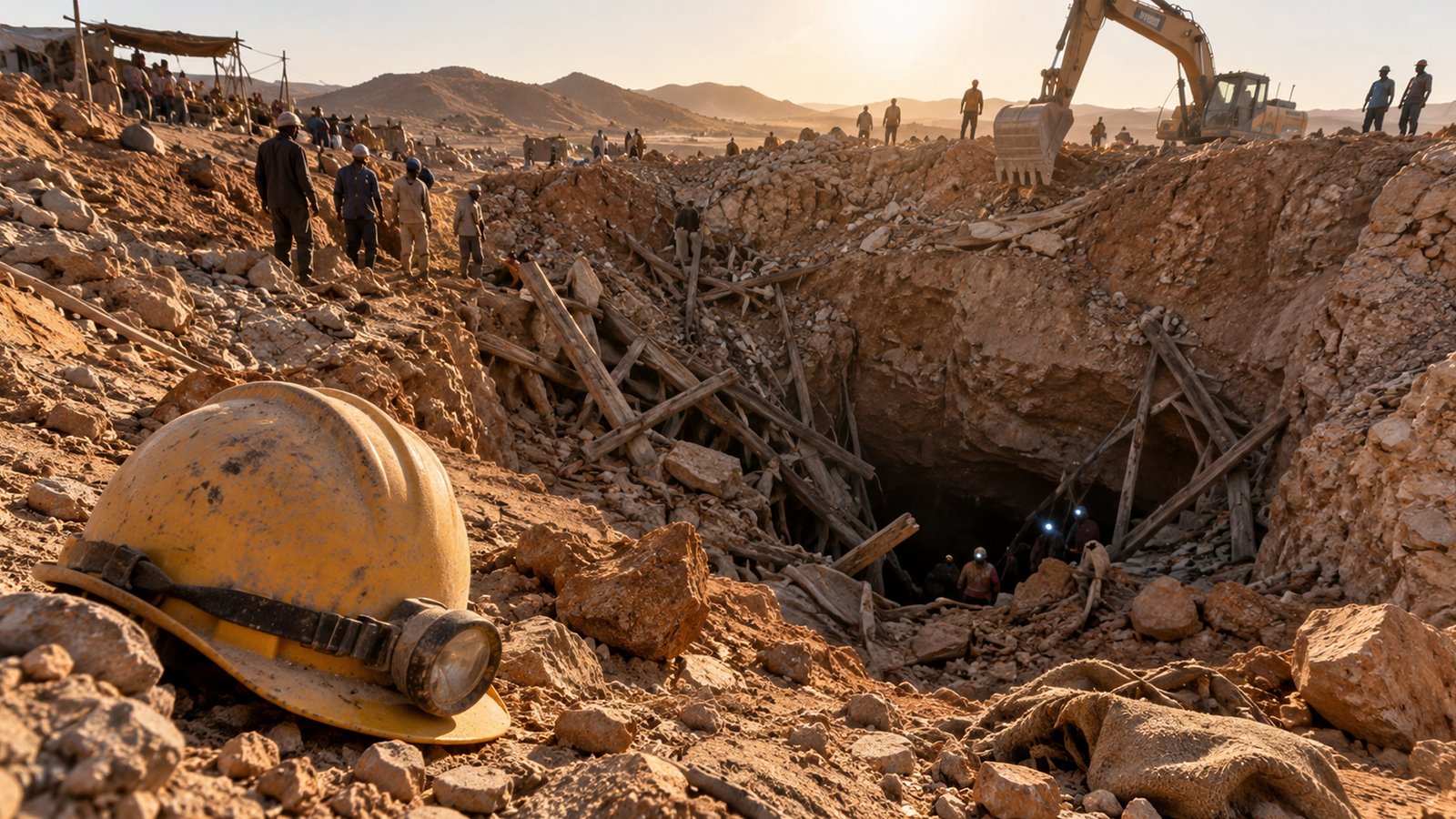
A gold mine collapse in Sudan’s West Kordofan province has killed at least 82 people, with dozens more still missing as rescue teams struggle to search through tonnes of rubble.
The disaster occurred at the al-Zara gold mine near Nuhud, an area controlled by the paramilitary Rapid Support Forces (RSF). The mine is an informal operation where workers extract gold with limited safety measures and equipment.
The collapse began in one of the mine shafts and spread to several interconnected shafts, trapping workers underground. Local officials said 82 bodies had been recovered by Wednesday, while many others remained unaccounted for. The death toll could rise as rescue teams continue searching the site.
Survivors described a desperate rescue operation in which workers and local volunteers attempted to clear soil and rocks using whatever equipment was available. The effort has been severely hampered by a shortage of heavy machinery.
Only one privately owned forklift was reportedly available to help remove the collapsed material. Some sections of the mine are more than 30 metres deep, making it extremely difficult to reach people who may still be trapped.
The collapse covered a large area of fragile, sandy ground. Rescue workers have had to proceed carefully because further movement of the soil could create additional danger.
Earlier estimates had put the death toll considerably lower. A medical group monitoring the situation reported that 67 bodies had initially been recovered, while local monitoring groups put the number of dead or missing at around 70. The figure later rose to 82 as more bodies were brought out.
The uncertainty reflects the difficult conditions at the mine and the lack of proper emergency services in the remote area. With many workers still unaccounted for, authorities have not ruled out a further rise in casualties.
The al-Zara mine is part of Sudan’s large informal gold-mining sector. Thousands of small-scale mines operate across the country, providing income for communities at a time when Sudan’s economy has been devastated by years of conflict.
Gold is one of Sudan’s most important sources of revenue. Much of the country’s production comes from artisanal and small-scale mining, where workers often operate without adequate protective equipment, structural assessments or emergency rescue facilities.
The latest collapse has again exposed the dangers faced by miners working in these conditions. Previous mine accidents have also claimed dozens of lives. A collapse in 2023 killed 14 miners, while another in 2021 killed 38.
The dangers have become even greater in areas affected by Sudan’s ongoing conflict. The country has been fighting a devastating war since April 2023, when clashes erupted between the Sudanese military and the RSF.
West Kordofan is among the regions where the RSF has significant control. The conflict has disrupted government services, weakened emergency response systems and made it difficult for authorities to regulate economic activity.
The war has also increased the importance of gold to the competing sides. Gold-producing areas in Darfur and Kordofan have become strategically important, while gold has also been smuggled out of Sudan. United Nations-commissioned experts have previously linked gold revenues to the financing of armed groups.
For miners in remote areas, however, the industry is often less about politics and more about survival. Informal mining provides livelihoods for large numbers of people who have few other ways to earn money, particularly as the war has destroyed businesses and displaced millions.
That dependence can push workers into dangerous shafts and makes it difficult for authorities to enforce safety rules. Mines can be dug quickly, expanded without proper engineering assessments and operated without emergency equipment.
The scale of the latest disaster has also made rescue efforts particularly challenging. Survivors said people remained trapped underground, but rescuers lacked the machinery needed to move large quantities of soil and rocks quickly.
The search has therefore depended heavily on miners, local volunteers and basic equipment. Every delay reduces the chances of finding survivors, while unstable ground continues to pose risks to those working at the site.
Sudan is already facing one of the world’s worst humanitarian crises. The war has killed tens of thousands of people and displaced millions, while some parts of the country have faced famine and severe shortages of food and medical supplies.
The mine collapse adds another layer of suffering to communities already struggling with the effects of war.
Authorities and local groups are continuing efforts to recover bodies and search for missing workers. The final death toll is still uncertain because the rescue operation remains incomplete.
The disaster has also renewed concerns about Sudan’s informal gold-mining industry and the lack of basic safety standards at many sites. Without proper inspections, protective equipment and emergency response systems, miners remain vulnerable to collapses and other accidents.
As rescuers continue working through the rubble at al-Zara, families are still waiting for news of relatives who went underground to earn a living and have not returned.
The tragedy has left West Kordofan mourning while once again exposing the human cost of Sudan’s dangerous and largely unregulated gold-mining industry.