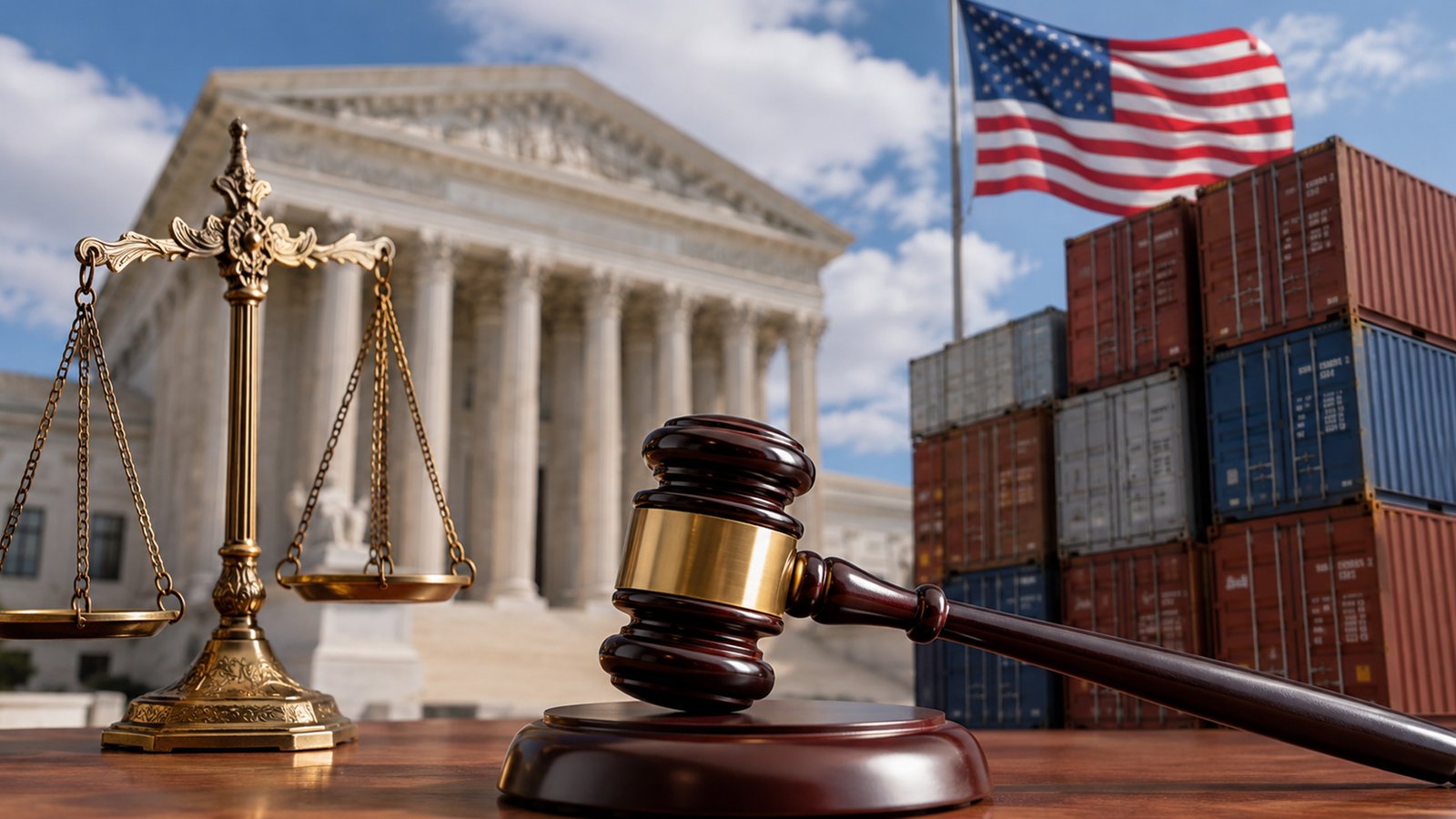
Twenty-five US states have sued the Trump administration over its latest tariffs on imports from 60 trading partners, including India, arguing that the new duties are unlawful and amount to an attempt to bring back import taxes that were struck down by the US Supreme Court earlier this year.
The lawsuit, filed on August 3 in the US Court of International Trade, is the latest legal challenge to President Donald Trump’s aggressive trade policy. The states are asking the court to block the tariffs, declare them unlawful and order refunds for duties already collected.
The new tariffs range between 10% and 12.5% and affect goods from 60 economies, including the European Union. Together, the affected trading partners account for almost all US imports. The Trump administration says the tariffs are aimed at countries that have failed to effectively stop goods made using forced labour from entering their markets.
But the states argue that the forced-labour justification is being used as a pretext to impose broad tariffs that the administration can no longer impose under the legal authority it previously relied upon.
New York Attorney General Letitia James, one of the leading figures behind the lawsuit, accused the administration of attempting to raise taxes on American families and businesses after losing its earlier tariff battle before the Supreme Court. The states say the new policy could increase costs for importers, businesses and consumers across the country.
The coalition includes New York, California, Arizona, Colorado, Connecticut, Delaware, Hawaii, Illinois, Kentucky, Massachusetts, Maryland, Maine, Michigan, Minnesota, Nevada, New Jersey, New Mexico, North Carolina, Oregon, Pennsylvania, Rhode Island, Virginia, Vermont, Washington and Wisconsin. Most of the states are led by Democratic governors or attorneys general.
The dispute is closely linked to a major US Supreme Court ruling in February 2026. The court ruled that the International Emergency Economic Powers Act, or IEEPA, did not give the president the authority to impose tariffs. Trump had previously used the law to introduce sweeping import duties, arguing that the long-running US trade deficit represented a national emergency.
That ruling forced the administration to reconsider its tariff strategy and left the government facing the possibility of refunding duties already paid by importers.
Trump then introduced temporary 10% worldwide tariffs, but those measures expired on July 24. Instead of abandoning the broader tariff strategy, the administration moved to a different legal route — Section 301 of the Trade Act of 1974.
Section 301 gives the US president authority to impose tariffs or other trade measures against countries found to engage in unfair trade practices. Trump previously used the provision during his first presidency to impose tariffs on Chinese imports.
The administration now argues that countries failing to effectively prevent the importation of goods produced with forced labour are engaging in practices that unfairly burden US commerce. The White House says the Section 301 tariffs are therefore legally justified and necessary to protect American workers and businesses.
White House spokesman Kush Desai said the United States was using its lawful authority to address foreign policies that burden American commerce. The administration also argues that Section 301 has already survived legal challenges and provides a stronger foundation for the latest tariffs than IEEPA did.
The states strongly disagree. Their lawsuit argues that the administration has not properly demonstrated that each of the targeted economies is responsible for the practices being cited or explained how imposing tariffs would actually eliminate forced labour.
That issue could become central to the court case. Two other lawsuits were already filed in July by small businesses challenging the same Section 301 tariffs. Those businesses similarly argue that the administration failed to meet the legal requirements needed to impose the duties.
The legal battle could have significant implications for US trade policy. If the court blocks the new tariffs, the Trump administration could once again be forced to find another legal mechanism for pursuing its broader protectionist agenda.
For American companies, the uncertainty comes at a difficult time. Tariffs raise the cost of imported goods and raw materials, potentially forcing businesses to absorb higher expenses or pass them on to consumers through higher prices. Industries that rely heavily on global supply chains could face particular pressure.
The dispute is also being closely watched outside the United States. Countries affected by the tariffs, including India, face higher costs for goods entering the American market. The new US tariff policy could therefore influence export competitiveness, trade negotiations and the broader relationship between Washington and its trading partners.
The outcome of the case could determine whether the administration can continue using Section 301 tariffs on such a wide scale. It could also clarify the limits of presidential authority over US trade policy after the Supreme Court’s earlier ruling on IEEPA.