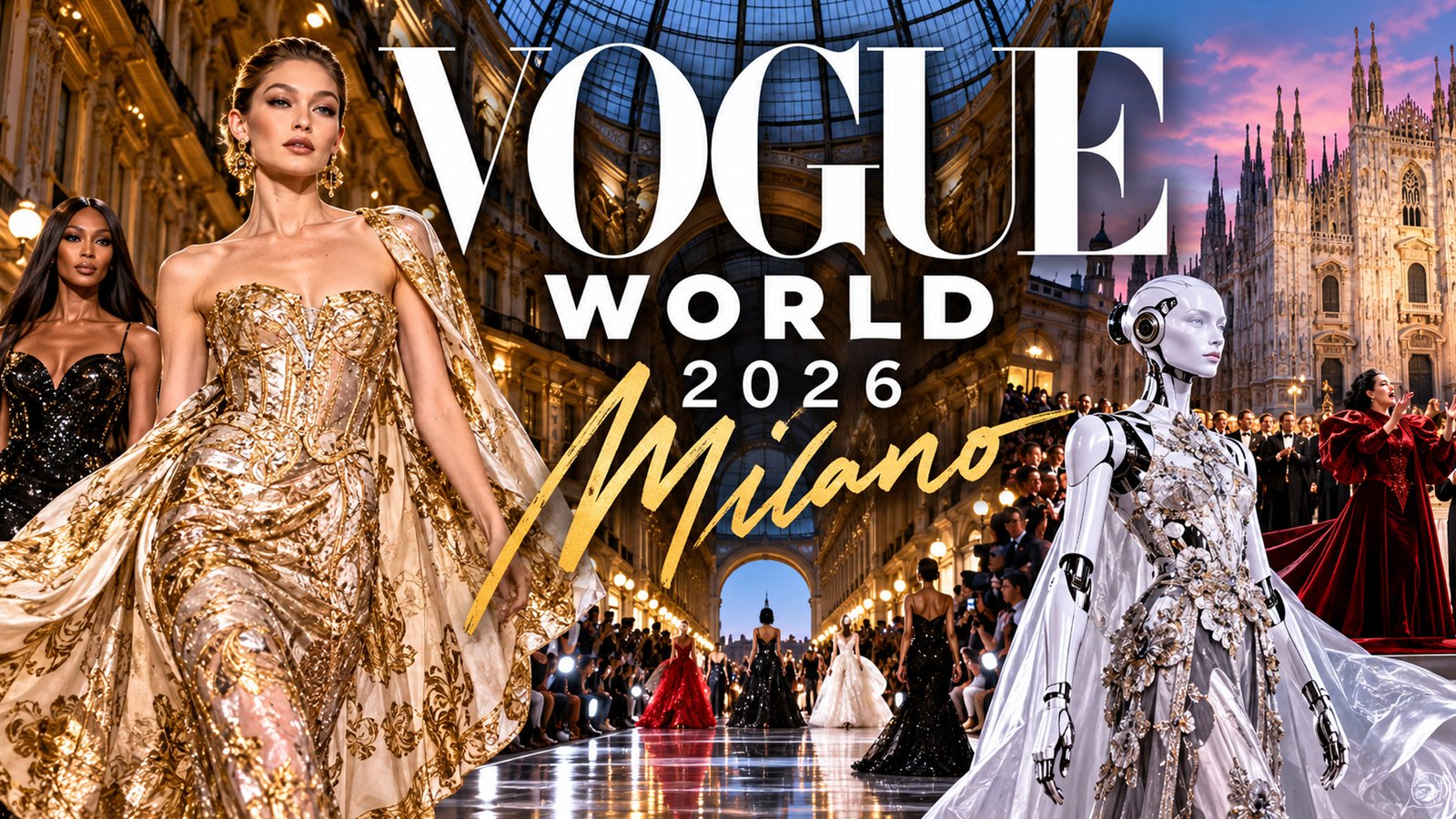
Milan turned into a giant stage for fashion, music and craftsmanship on September 22, as Vogue World: Milano 2026 brought celebrities, designers and models together at the historic Galleria Vittorio Emanuele II.
The fifth edition of the global Vogue event arrived in Milan on the opening day of Milan Fashion Week. This time, the spectacle looked beyond the runway, placing Italy’s long tradition of craftsmanship alongside ideas about technology and the future of fashion.
The show moved through different periods of Italian history, from Renaissance craftsmanship and the Industrial Revolution to the changing role of technology. Fashion was presented through a mix of runway looks, music and performances, turning the landmark shopping arcade into an unusual fashion venue.
The setting itself was part of the attraction. The Galleria Vittorio Emanuele II, one of Milan’s best-known landmarks, provided the backdrop, with luxury names including Prada, Louis Vuitton, Chanel, Dior, Gucci and Bottega Veneta surrounding the event.
Among the biggest names on the runway were Gigi Hadid, Jennifer Lopez, Cardi B, Vittoria Ceretti, Anok Yai and Paloma Elsesser. The event also brought together designers and celebrities from across the fashion and entertainment industries.
Gigi Hadid was among the stars who opened the show, appearing in Valentino Haute Couture. Jennifer Lopez made a surprise appearance in a black Dolce & Gabbana gown with sequined detailing and sheer opera gloves. Cardi B joined the runway in a vintage Versace look, adding another pop-culture moment to the evening.
But one of the most talked-about appearances for Indian audiences came from Rashmika Mandanna, who made her Vogue World debut in Milan.
The actor chose a dramatic black couture gown by Indian designer Anamika Khanna, from the designer’s Moonlit Palace collection. The sculpted lace corset dress combined sheer lace, intricate embroidery, structured corsetry and silver metal detailing.
What made the outfit particularly striking was the amount of work behind it. Artisans at Khanna’s atelier spent 350 hours creating the dress, working on its lace embroidery, corsetry, metal details and surface embellishment.
Mandanna paired the gown with Swarovski jewellery, including statement rings and wing-inspired ear cuffs. She completed the look with Aquazzura heels and a Gucci bag.
The appearance gave Indian couture a prominent place at an international fashion event that was itself built around craftsmanship. Rather than relying only on spectacle, Vogue World used the Milan show to highlight the people and skills behind luxury fashion.
That focus on craftsmanship also connected with the event’s wider message. Vogue described the Milan edition as a celebration of Italian craft and innovation, moving between the country’s artistic heritage and its fashion future.
Behind the glamorous show is another important story: Vogue World is increasingly becoming a business platform for Condé Nast, Vogue’s parent company.
The Milan event was designed not only as a fashion show but also as a major media and sponsorship property. According to Business of Fashion, the event had about 500 spectators, while sponsorships formed an important part of its revenue model.
Presenting sponsors included Alo Yoga, eBay, Eli Lilly and Company, and Meta Glasses. Some front-row seats were reportedly priced as high as €25,000, although Vogue did not disclose how much it received from sponsors or whether the event has generated a profit.
The model reflects how fashion brands and media companies are increasingly turning major live events into experiences that can generate attention both on the ground and online.
Vogue World has travelled through New York, London, Paris and Los Angeles before reaching Milan. Each edition has used a different cultural setting to connect fashion with other forms of entertainment and creative expression.
The Milan edition also looked towards the future. Robots appeared during the show as part of a section exploring the growing presence of robotics and artificial intelligence in everyday life. The moment underlined the show’s larger contrast between human craftsmanship and rapidly developing technology.
That contrast gave Vogue World 2026 a distinctive character. On one side were hours of handwork, embroidery and couture construction. On the other were technology, digital audiences and even robots on the runway.