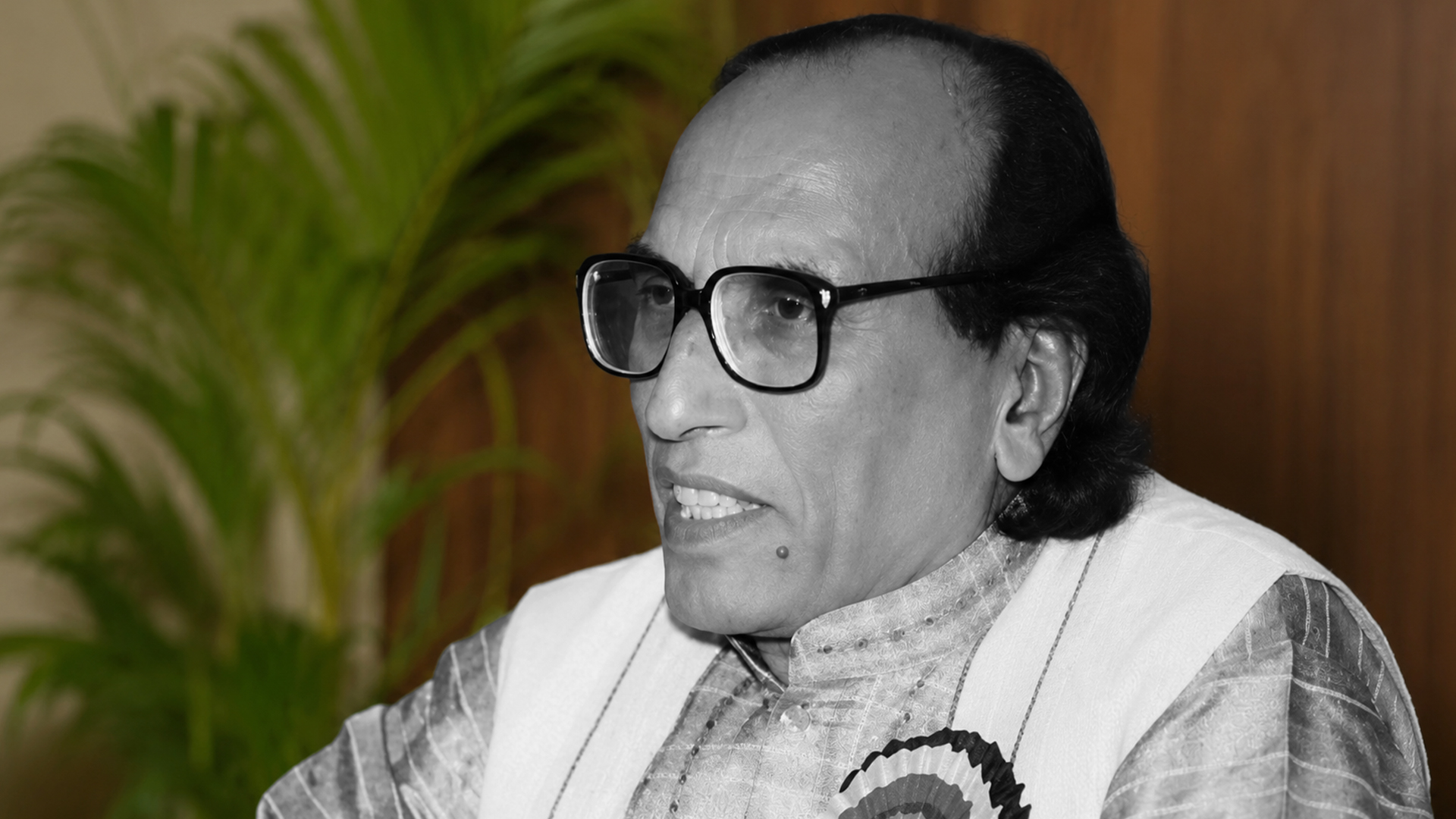
Renowned Urdu poet Bashir Badr passed away at the age of 91, bringing to a close a remarkable literary journey that touched millions of hearts. Known for his soulful ghazals and simple yet deeply meaningful poetry, Badr was considered one of the most loved voices in modern Urdu literature.
He reportedly died at his residence, leaving behind a rich legacy of poems that continue to resonate with readers in India and around the world. News of his death has saddened writers, artists, and admirers who grew up reading and listening to his memorable verses.
Born in Ayodhya in 1935, Bashir Badr became a familiar and respected figure in mushairas, where his poetry often drew loud applause and emotional responses from audiences. His words carried warmth, pain, romance and hope in a style that felt both elegant and relatable.
What made Badr special was his ability to express complex emotions in simple language. His poetry is filled with lines that continue to live in public memory. For instance, he beautifully expressed the warmth of memories in “Ujale apni yaadon ke hamare saath rehne do” (Let the light of our memories stay with us). He also captured emotional vulnerability and human relationships in verses like “Kuchh to majbooriyan rahi hongi, yun koi bewafa nahi hota” (There must have been some compulsion, no one is unfaithful without reason). Another widely remembered couplet reflects distance and hope in human connection:
“Musafir hain hum bhi, musafir ho tum bhi, kisi mod par phir mulaqat hogi” (We are travelers, you are a traveler too; we will meet again at some turn).
His poetry often explored love, heartbreak, loneliness and life in a way that was both simple and profound. Lines such as “Zindagi tu ne mujhe qabr se kam di hai zameen…” highlight his ability to turn personal pain into universal emotion.
Over the years, he received several major honours for his contribution to Urdu literature, including the Padma Shri (1999) and the Sahitya Akademi Award (1999) for his poetry collection “Aas”, two of India’s most respected literary recognitions. These awards cemented his place among the leading voices of modern Urdu poetry.
Yet, beyond awards, it was the emotional bond with readers that truly defined his legacy. Many of his lines remain etched in public memory and continue to inspire poetry lovers even today.
Writers and literary figures have described his death as a huge loss for Urdu poetry. Many remember him as a gentle personality whose presence added warmth to literary events.
Also Read: Vaibhav Sooryavanshi breaks Gayle’s sixes record in IPL 2026