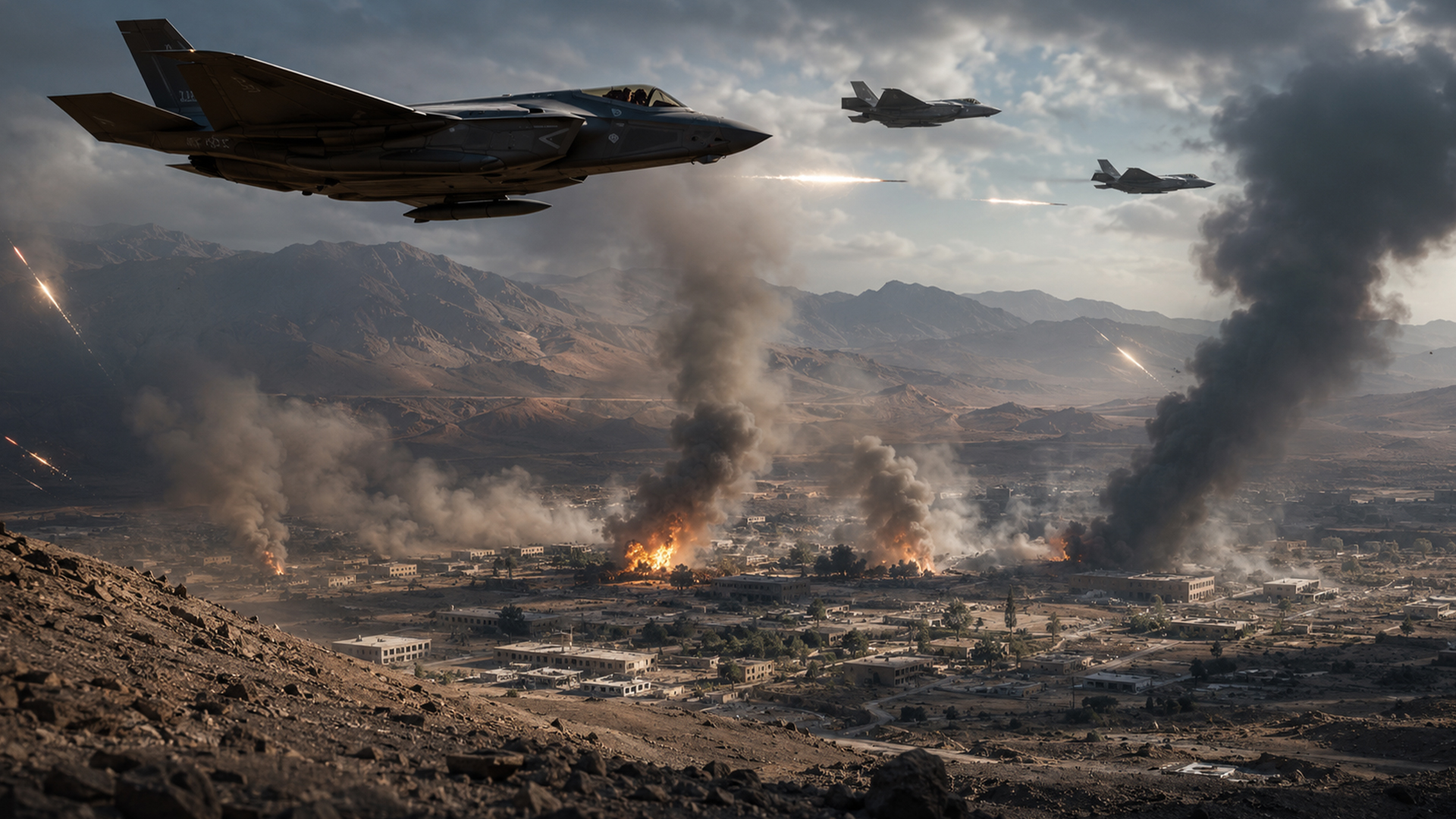
The United States launched a fresh wave of airstrikes on southern Iran, hitting locations in Bushehr, Bandar Abbas, Chabahar, Jask and nearby coastal areas, marking a sharp escalation in tensions between Washington and Tehran. The strikes came amid growing concerns over the security of the Strait of Hormuz, one of the world’s most important oil shipping routes.
According to Iranian state media, at least three people were killed and several others injured in the attacks. The casualties were reported after explosions struck areas near military installations and key infrastructure. Emergency teams were deployed to the affected sites, while residents described hearing multiple loud blasts through the night. Damage was also reported to buildings and facilities in some of the targeted areas, though the full extent is yet to be assessed.
The US said the strikes were aimed at military targets allegedly linked to recent threats against commercial shipping in the Gulf. American officials maintained that the operation was intended to protect freedom of navigation and deter further attacks in and around the Strait of Hormuz.
US President Donald Trump defended the military action, calling it a necessary response to what he described as Iran’s continued aggression in the region. He warned that Washington would launch stronger strikes if Tehran carried out further attacks or threatened international shipping.
Iran strongly condemned the airstrikes, accusing the US of violating its sovereignty and international law. Iranian officials vowed to respond, warning that the attacks would not go unanswered. The latest escalation has raised fears of retaliatory action that could draw more countries into the conflict.
The renewed fighting has also sparked concern across the Middle East, with neighbouring countries stepping up security measures amid fears of missile or drone attacks. The situation has unsettled global energy markets, as any disruption in the Strait of Hormuz could affect a significant share of the world’s oil supplies.
With casualties mounting and both sides exchanging threats, hopes for a diplomatic breakthrough appear increasingly uncertain. The latest violence has left civilians in affected areas once again facing fear, disruption and an uncertain future as the regional crisis deepens.