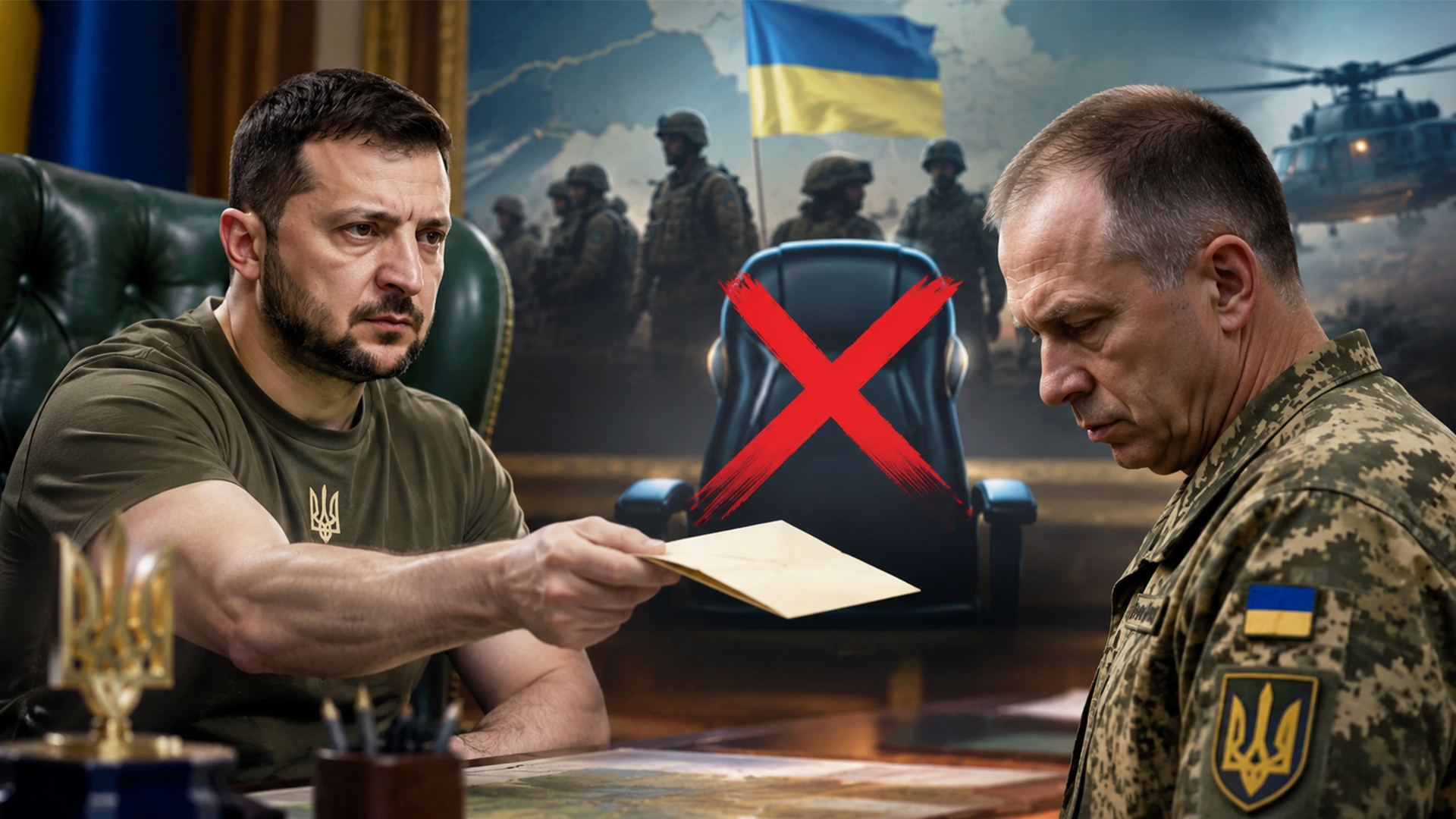
Ukrainian President Volodymyr Zelensky has dismissed Commander-in-Chief Oleksandr Syrskyi in one of the most significant military shake-ups since Russia’s full-scale invasion began. The leadership change comes as Ukraine faces mounting battlefield challenges, continued Russian advances in the east and growing pressure to improve military effectiveness after more than four years of war.
Announcing the decision, Zelensky thanked General Syrskyi for his service and contribution to Ukraine’s defence during one of the country’s most difficult periods. He said the military required “new energy” and a renewed approach to command as the war entered another critical phase.
Syrskyi, who took over as commander-in-chief in February 2024, replaced the widely respected General Valerii Zaluzhnyi. His appointment came during a period of intense fighting, with Ukrainian forces struggling to hold defensive positions against better-equipped Russian troops. Although Syrskyi was credited with helping stabilise several fronts and improving battlefield coordination, he also faced criticism over heavy troop losses and slow progress in some operations.
Despite his removal as army chief, Zelensky indicated that Syrskyi would continue serving the country in another important defence role. The President also proposed a new position for former Defence Minister Rustem Umerov as part of a broader restructuring of Ukraine’s security and defence establishment. The appointments are intended to make military planning more coordinated as Kyiv adapts to changing battlefield conditions.
The reshuffle reflects the difficult situation facing Ukraine. Russian forces have continued to intensify attacks across parts of Donetsk, Kharkiv and Zaporizhzhia, while frequent missile and drone strikes have targeted Ukrainian cities and critical infrastructure. Although Ukrainian troops have slowed some advances, they continue to face shortages of manpower, ammunition and air defence systems.
Military analysts say the command changes are aimed at improving operational efficiency, accelerating decision-making and strengthening cooperation between the armed forces and political leadership. Zelensky has repeatedly stressed that Ukraine must modernise its military structure to respond more effectively to evolving threats.
The decision also comes as Ukraine continues to rely heavily on military assistance from Western allies. Kyiv has been seeking additional air defence systems, long-range weapons and financial support to sustain its resistance against Russia. Ukrainian officials believe a more streamlined command structure could help maximise the effectiveness of international military aid.
General Syrskyi remains a highly experienced military commander. Before becoming commander-in-chief, he played a leading role in defending Kyiv during the early months of Russia’s invasion and later oversaw successful counteroffensives in the Kharkiv region. His military career has earned him respect within Ukraine’s armed forces despite criticism over some battlefield strategies.
President Zelensky emphasised that leadership changes during wartime should be viewed as part of adapting to new military realities rather than a reflection on individual service. He said every decision was focused on strengthening Ukraine’s ability to defend its sovereignty and protect its people.
The Kremlin has not officially commented on Syrskyi’s dismissal. However, Russian forces have continued offensive operations while seeking to consolidate territorial gains in eastern Ukraine. The conflict remains one of the largest and deadliest wars in Europe since the Second World War.
International observers are closely watching the developments, as any major change in Ukraine’s military leadership could influence future battlefield strategy and coordination with Western partners. Defence experts believe the transition will be carefully managed to avoid disrupting ongoing military operations.
The leadership overhaul also sends a signal that Ukraine is willing to make difficult decisions as the conflict evolves. With the war showing no signs of ending soon, Kyiv is seeking to balance battlefield resilience with institutional reform and long-term military planning.
The military reshuffle comes at a crucial stage in the Russia-Ukraine war, with fighting intensifying along several frontlines and Ukraine seeking to strengthen its defence capabilities. The new command team is expected to assume responsibilities immediately as Kyiv continues military operations while working closely with Western allies to counter the ongoing Russian offensive.