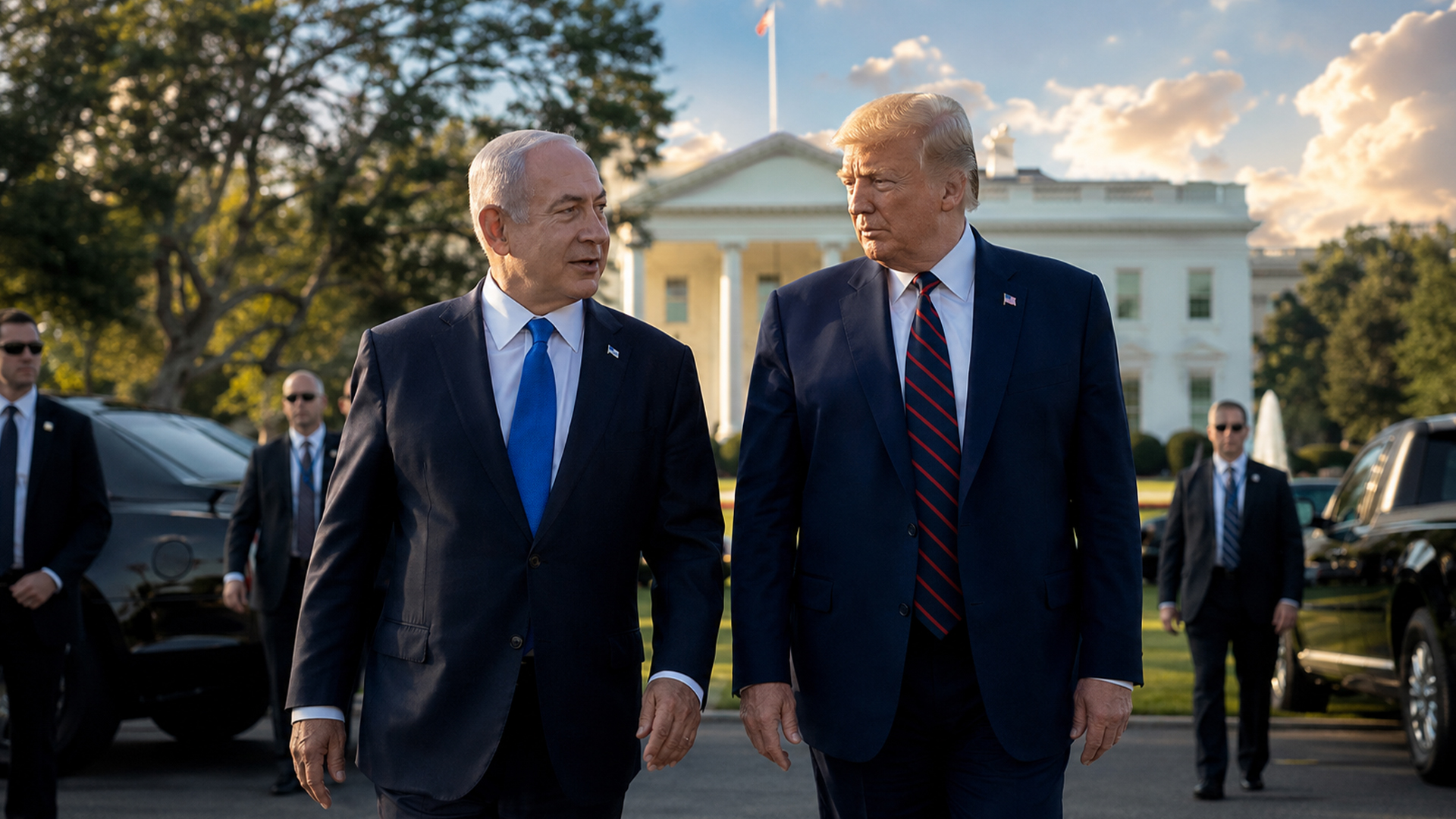
Israeli Prime Minister Benjamin Netanyahu arrived in Washington on Monday for a high-profile meeting with US President Donald Trump, with Iran emerging as the top priority on the agenda. The meeting, their first since the recent Iran-Israel conflict, is expected to influence the next phase of US-Israel cooperation as both countries assess the security and diplomatic challenges facing the Middle East.
Before leaving for the United States, Netanyahu said the discussions would primarily focus on preventing Iran from rebuilding its military and nuclear capabilities. He described the meeting as an important opportunity to strengthen Israel’s security while exploring ways to build greater regional stability following months of heightened tensions.
The visit comes just weeks after the Iran-Israel conflict significantly altered the security landscape in the region. Although direct hostilities have eased, concerns remain over Iran’s nuclear ambitions, missile programme and support for allied militant groups. Israel has repeatedly maintained that Tehran should not be allowed to restore its military strength, arguing that continued pressure is essential to prevent future conflicts.
President Trump, meanwhile, has adopted a dual-track approach towards Iran. While his administration has shown interest in reopening diplomatic engagement with Tehran, Trump has also warned that military action remains an option if negotiations fail. His administration believes diplomacy should be given a chance but insists that Iran must not use talks to advance its nuclear programme.
Officials familiar with the meeting said Netanyahu is expected to seek firm assurances from Trump that any future negotiations with Iran will address Israel’s security concerns. Israeli leaders have consistently argued that diplomatic agreements should include strict monitoring mechanisms and clear limits on Iran’s nuclear and missile activities.
Beyond Iran, the two leaders are also expected to discuss the ongoing situation in Gaza, security along Israel’s northern border with Lebanon and broader developments across the Middle East. Both governments are looking at ways to strengthen regional partnerships while preventing fresh military escalations that could destabilise the region further.
The meeting is also likely to examine opportunities for expanding cooperation with Arab nations that have normalised ties with Israel in recent years. Washington believes stronger regional partnerships could play an important role in maintaining stability and limiting Iran’s influence across the Middle East.
Although Trump and Netanyahu have maintained close political ties over the years, reports suggest they have differed at times on how aggressively Iran should be handled. While Israel has generally favoured sustained economic and military pressure, the Trump administration has shown greater willingness to combine deterrence with diplomatic engagement.
Political analysts believe Monday’s discussions will help determine whether both leaders can align their strategies. A common approach would send a strong signal to allies and adversaries alike, particularly at a time when uncertainty continues to surround Iran’s future nuclear activities.
For Netanyahu, the Washington visit also carries considerable political significance at home. With Israel preparing for elections later this year, the Prime Minister is under pressure to demonstrate that his government continues to enjoy strong backing from the United States on national security issues. His administration has repeatedly argued that preventing Iran from expanding its military capabilities remains one of Israel’s highest strategic priorities.
Trump, meanwhile, is seeking to reinforce America’s role in the Middle East without becoming involved in another prolonged military conflict. His administration has stressed that maintaining strong alliances while encouraging diplomatic solutions remains central to US foreign policy.
Security surrounding Netanyahu’s visit has been exceptionally tight amid reports of potential threats linked to Iran. Israeli security agencies reportedly implemented enhanced protection measures for the Prime Minister’s trip, reflecting the sensitive nature of the discussions and the continuing security concerns in the region.
The outcome of the Trump-Netanyahu meeting could shape future policy on Iran for months to come. Any understanding on intelligence sharing, military coordination or diplomatic engagement is expected to influence not only US-Israel relations but also wider regional security.
The talks are also being closely watched by European and Middle Eastern allies, many of whom are hoping that Washington and Jerusalem can present a coordinated strategy to prevent another regional conflict. Several countries have urged both sides to balance security concerns with diplomatic efforts to reduce tensions.
While no major announcements are expected immediately after the meeting, officials say the discussions are likely to lay the groundwork for future cooperation on Iran, regional security and broader Middle East diplomacy. With tensions still simmering despite the end of active fighting, both leaders are expected to emphasise vigilance, close coordination and continued efforts to prevent further instability.
As the Middle East enters a new and uncertain phase, the Trump-Netanyahu meeting is being seen as a defining moment that could shape the region’s diplomatic and security landscape. The decisions taken in Washington may influence how the United States and Israel respond to Iran’s future actions, while also determining the direction of regional cooperation in the months ahead.