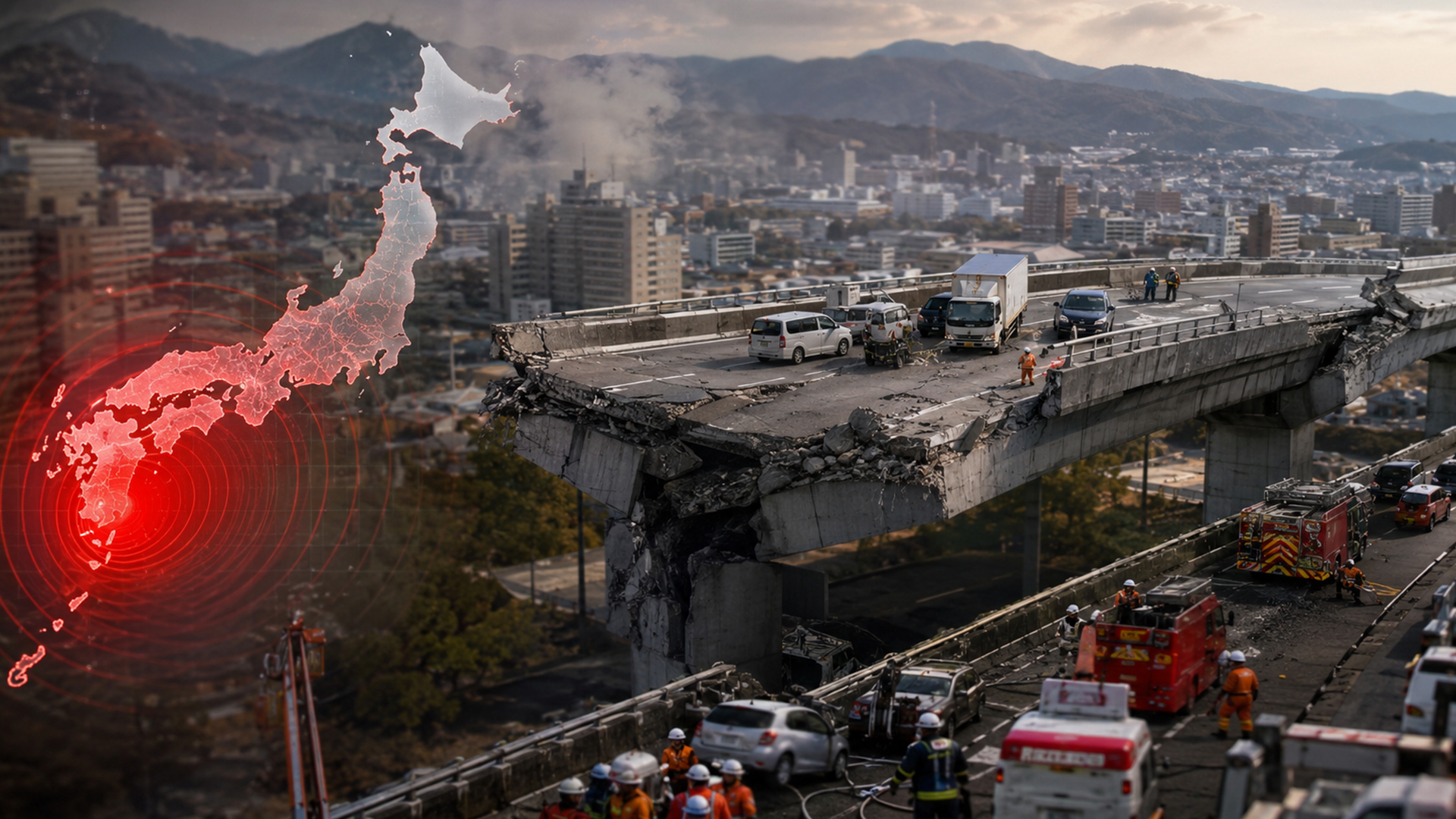
Rescue teams in Japan are working around the clock to find survivors after a powerful earthquake devastated parts of Kumamoto Prefecture on the southern island of Kyushu, leaving at least 13 people dead, hundreds injured and thousands displaced. With repeated aftershocks continuing to shake the region, emergency workers are racing against time to reach people feared trapped beneath collapsed buildings.
The earthquake, which struck on Tuesday afternoon, caused widespread destruction across Kumamoto and neighbouring areas. Buildings crumbled, roads cracked, bridges were damaged and landslides blocked several routes, making rescue efforts increasingly difficult. The tremor also triggered fires and gas leaks in some areas, adding to the challenges faced by emergency responders.
Authorities have deployed thousands of firefighters, police personnel, Self-Defense Forces and medical teams to the worst-hit locations. Search-and-rescue teams equipped with sniffer dogs, thermal imaging cameras and heavy machinery are combing through piles of debris in the hope of finding more survivors. Officials say every hour is crucial as they continue operations despite unstable structures and the risk of further collapses.
One of the most serious incidents occurred at a shopping mall in Kumamoto, where part of the building collapsed during the earthquake. Rescue workers managed to pull several people from the rubble, but others are still believed to be trapped. Families have remained at the site, anxiously waiting for updates as emergency crews carefully remove debris while trying to avoid triggering additional collapses.
Residential neighbourhoods have also suffered extensive damage. Several homes were flattened, apartment buildings developed deep structural cracks and many residents were forced to flee with little more than essential belongings. Entire communities have been left without access to safe housing as authorities continue to assess the full scale of the destruction.
The Japan earthquake has also disrupted basic services across the region. Electricity supply was cut to tens of thousands of households, while water pipelines and communication networks were damaged in several towns. Utility workers have begun restoration work, but officials warn that repairs could take several days in the hardest-hit areas.
Transport infrastructure has been severely affected as well. Sections of highways remain closed because of landslides and damaged road surfaces, while railway services, including parts of the high-speed Shinkansen network, were suspended for safety inspections. Flight operations at nearby airports also experienced delays as authorities carried out structural assessments.
More than 260,000 residents were advised to evacuate following the earthquake, with many spending the night in temporary shelters set up in schools, community centres and gymnasiums. Volunteers have distributed food, drinking water, blankets and emergency supplies, while medical teams continue treating injured residents. Officials are also monitoring conditions inside shelters, where rising temperatures have increased concerns over dehydration and heat-related illnesses.
Hospitals across Kumamoto have been dealing with a steady stream of injured people suffering fractures, cuts and other earthquake-related injuries. Some healthcare facilities have postponed non-emergency services to focus on emergency care, while additional medical staff have been brought in from neighbouring prefectures to support local hospitals.
The earthquake has also disrupted economic activity in southern Japan. Several manufacturing facilities temporarily suspended operations as engineers inspected buildings and equipment for structural damage. Major automobile and electronics manufacturers halted production at affected plants as a precaution, with companies prioritising employee safety until inspections are completed.
Historic landmarks have not been spared. Kumamoto Castle, one of Japan’s most famous cultural heritage sites, suffered fresh damage during the earthquake. Sections of its stone walls reportedly collapsed, reviving memories of the devastating 2016 Kumamoto earthquake, when the centuries-old castle sustained extensive damage and underwent years of restoration.
The Kumamoto earthquake has been followed by dozens of aftershocks, some of them strong enough to be felt across large parts of Kyushu. Seismologists have warned that further powerful tremors remain possible in the coming days. Authorities are urging residents to stay away from damaged buildings, prepare emergency supplies and follow evacuation advisories whenever necessary.
Despite the widespread destruction, officials confirmed that there have been no reports of abnormalities at nearby nuclear facilities. Continuous monitoring remains in place, and authorities say all nuclear installations are operating safely.
Prime Minister Shigeru Ishiba has directed government agencies to provide every possible assistance to affected communities. The central government in Japan has mobilised military personnel, emergency equipment and relief supplies, while helicopters continue delivering aid to remote villages cut off by damaged roads and landslides.