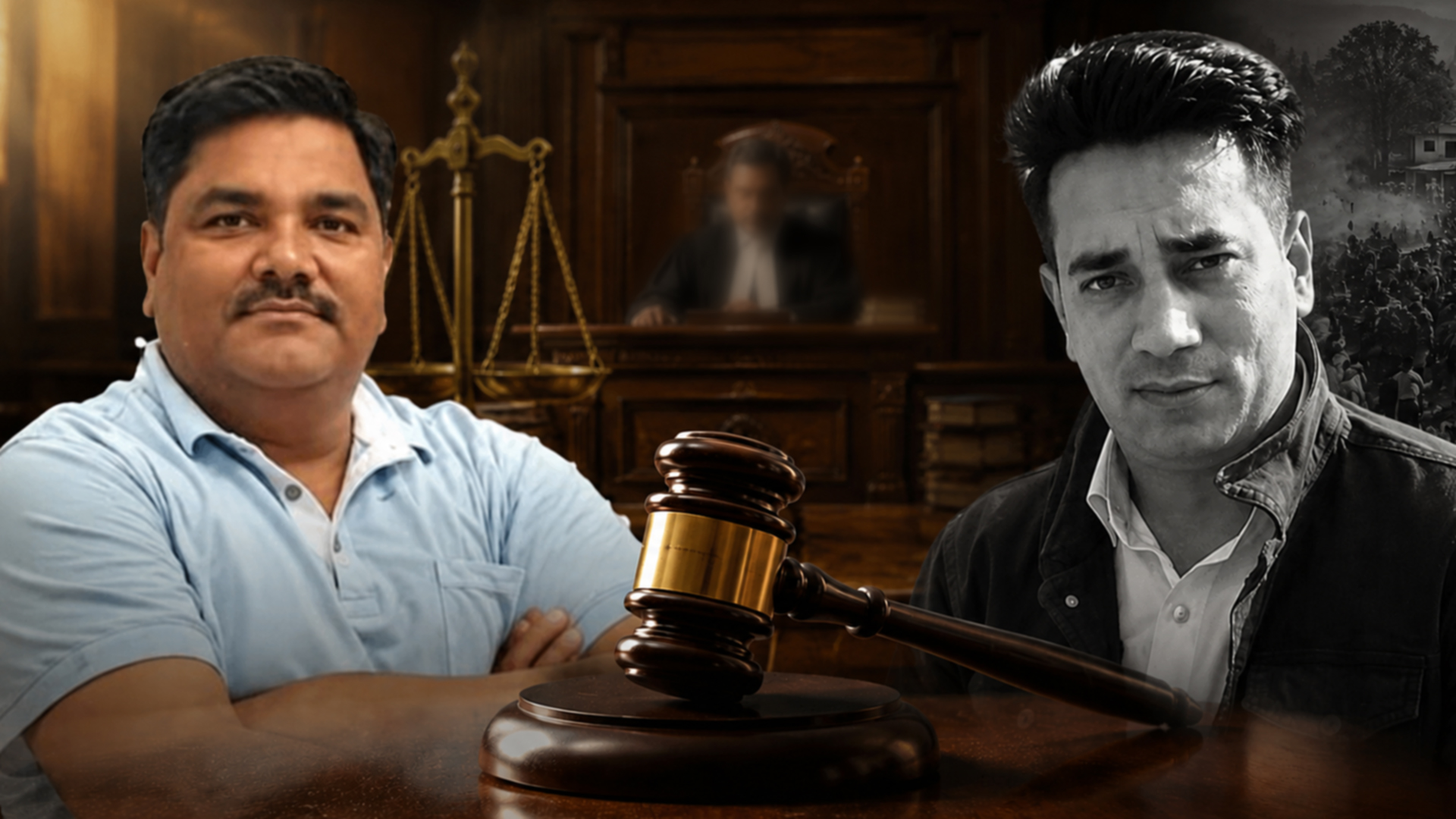
A Delhi court has sentenced former Aam Aadmi Party councillor Tahir Hussain and four others to life imprisonment for the murder of Intelligence Bureau (IB) officer Ankit Sharma during the 2020 Northeast Delhi riots. The sentence was announced by Additional Sessions Judge Sameer Bajpai at the Karkardooma court.
The four other convicts are Nazim, Kasim, Anas and Javed. The court had earlier convicted all five in the murder case, while six other accused were acquitted.
The case relates to the killing of 26-year-old Ankit Sharma during the communal violence that swept parts of Northeast Delhi in February 2020. Sharma, who worked with the Intelligence Bureau, was attacked during the violence in the Chand Bagh area. His body was later recovered from a drain.
The prosecution had sought the death penalty for the five convicts, arguing that the murder was exceptionally brutal. However, the court opted for life imprisonment, holding that the prosecution had not established that the convicts were beyond the possibility of reform.
The prosecution had highlighted the severity of the assault on Sharma. According to the case presented before the court, the IB officer suffered 51 injuries, with several of them described as fatal. Prosecutors said he was attacked by a mob before his body was taken towards the drain and dumped there.
The prosecution also argued that Hussain’s position as a municipal councillor at the time made the allegations against him particularly serious. It alleged that he was involved with the mob during the violence and played a role in the circumstances that led to Sharma’s killing.
Hussain’s defence rejected the prosecution’s allegations and sought leniency from the court. His lawyers argued that there was no direct evidence proving that he personally killed Sharma and challenged the prosecution’s theory regarding his involvement in the murder.
The defence also opposed the demand for capital punishment, arguing that the death penalty should be reserved for cases that meet the highest threshold under criminal law.
The court had earlier found Hussain and the other four accused guilty under several provisions of the Indian Penal Code, including murder, rioting, unlawful assembly, promoting enmity between groups and offences involving deadly weapons.
Hussain was, however, acquitted of the charge of criminal conspiracy.
The prosecution relied on eyewitness accounts and other evidence during the trial. The court considered the testimony of witnesses who described the events surrounding Sharma’s death and concluded that the evidence was sufficient to establish the guilt of the five accused beyond reasonable doubt.
The court also noted certain shortcomings in the investigation. However, it held that those issues did not undermine the evidence that directly established the accused’s involvement in the crime.
The sentencing is one of the significant developments in the legal cases arising from the 2020 Northeast Delhi riots. The violence left more than 50 people dead and hundreds injured, leading to several criminal investigations and prolonged court proceedings.
The Ankit Sharma murder case has remained particularly significant because of the circumstances surrounding the death of the IB officer and the involvement of a former elected representative among the accused.
The prosecution described the killing as a particularly violent attack and argued that the manner in which Sharma was assaulted warranted the maximum punishment. The defence, meanwhile, stressed the need to consider the individual circumstances of the accused while deciding the sentence.
After considering both sides, the court chose life imprisonment instead of the death penalty.
The verdict also has a political dimension because Hussain was an AAP councillor when the 2020 riots took place. His arrest and subsequent trial became part of the wider political debate surrounding the violence in Delhi.
The sentencing, however, was based on the evidence and charges in the specific murder case. Hussain and the other convicts retain the right to challenge the verdict in a higher court.
Hussain is expected to appeal against the conviction and sentence before the Delhi High Court. The appellate court will have the power to examine the evidence, conviction and punishment imposed by the trial court.
The case has taken several years to reach the sentencing stage, reflecting the complexity of the criminal proceedings arising from the Delhi riots. The court’s decision now establishes life imprisonment as the punishment for the five convicts in the Ankit Sharma murder case, subject to any appeal and further judicial review.
For Sharma’s family, the sentencing marks an important stage in a case that has remained in court since the violence of February 2020. For the accused, however, the legal battle is not necessarily over, with the possibility of an appeal before the Delhi High Court.
The life sentence ultimately reflects the court’s assessment of the seriousness of the crime while stopping short of capital punishment. The case now moves towards the appellate stage, where the conviction and sentence could face further judicial scrutiny.