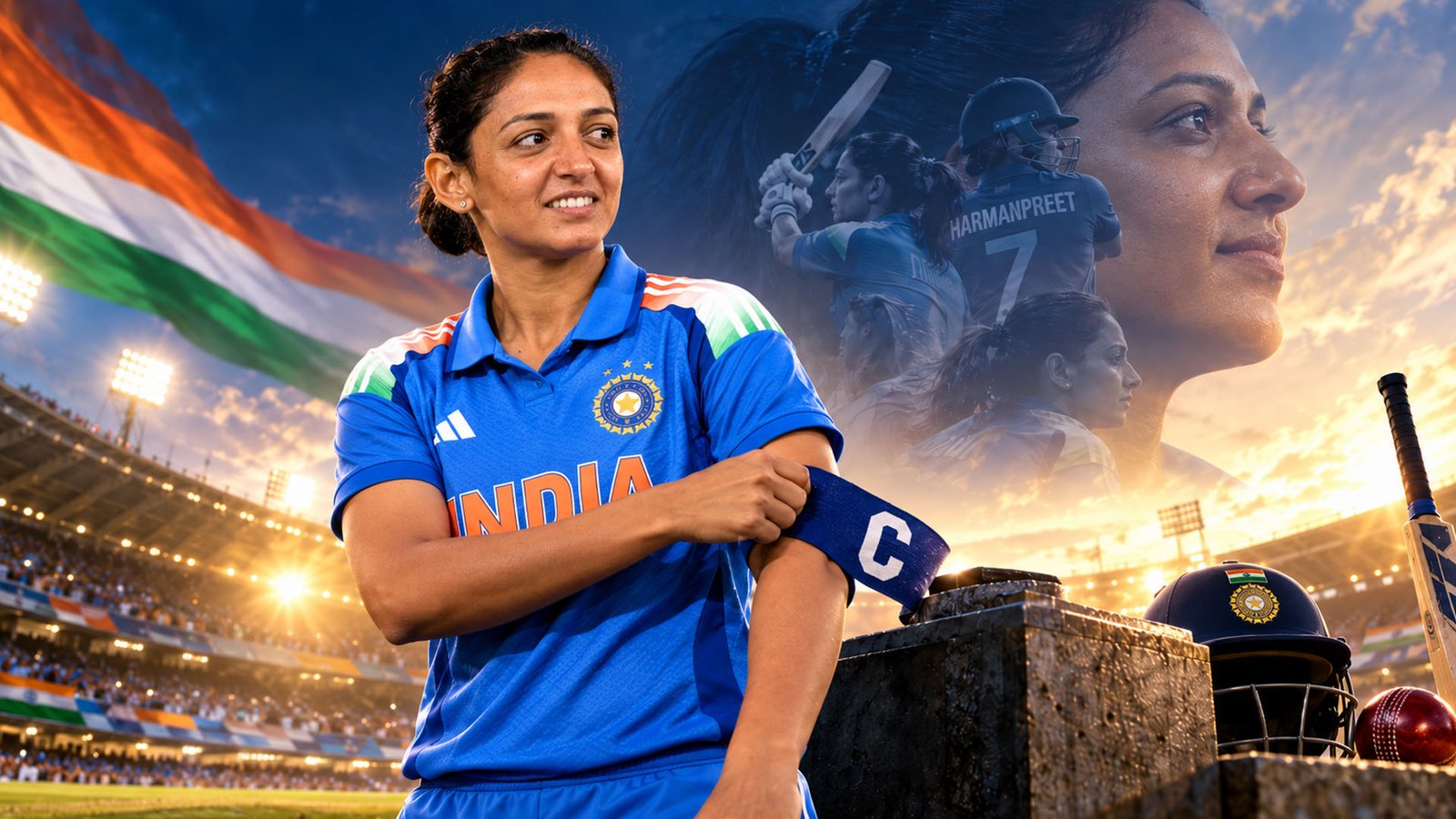
Harmanpreet Kaur has stepped down as captain of the Indian women’s cricket team across all three formats, bringing an emotional end to one of the most important leadership chapters in Indian women’s cricket. The 37-year-old announced her decision on Tuesday, October 6, saying she believes she has fulfilled her responsibility as captain and is now ready to return to the game without the weight of leadership.
The announcement came shortly after a BCCI review meeting in Guwahati, where the team’s recent performances and future direction were discussed. BCCI secretary Devajit Saikia chaired the meeting, which was attended by Harmanpreet, vice-captain Smriti Mandhana and head coach Amol Muzumdar. Her decision to leave the captaincy follows a period that included both historic victories and difficult moments for the Indian women’s team.
Harmanpreet shared the decision through an emotional social media post. She acknowledged that stepping down was not easy after years of memories, sacrifices, criticism and responsibility. At the same time, she made it clear that her international cricket journey is not over. Her message was simple: the captaincy may have ended, but her desire to play for India remains strong.
The timing of the decision is significant. Harmanpreet leaves the leadership role after guiding India to its first-ever Women’s ODI World Cup title in 2025. That victory transformed the story of Indian women’s cricket and gave Harmanpreet a place in history as the captain who finally led the team to the biggest prize in the 50-over format. India also won a second successive Asian Games gold medal in women’s T20 cricket under her leadership.
Her leadership journey began well before she became the all-format captain. Harmanpreet took over as India’s T20I captain in 2016 and spent nearly a decade leading the side in the shortest format. She became the ODI captain in 2022 following Mithali Raj’s retirement and was elevated to the all-format leadership role in 2023. Her tenure therefore covered a major period of growth and change in Indian women’s cricket.
Harmanpreet’s career has also been defined by her performances as much as her captaincy. She has been one of India’s most recognised all-rounders and among the most experienced players in women’s international cricket. Earlier this year, she became the highest-capped player in women’s international cricket when she made her 356th appearance for India, moving past New Zealand great Suzie Bates. At that stage, her international record included six Tests, 161 ODIs and 189 T20Is.
Her influence became particularly visible during some of Indian cricket’s most challenging periods. She faced criticism over tactical decisions, team selections and performances, but continued to carry the responsibility of leading the side. Her latest statement reflected that complicated journey, acknowledging the difficult days alongside the victories, celebrations and pride of representing the country.
The Indian team’s recent results have added another layer to the transition. India’s early exit from the 2026 Women’s T20 World Cup had triggered questions around the team’s leadership and strategy. Former India captain Diana Edulji had earlier called for a change in the T20I leadership while backing Harmanpreet as a player. The subsequent review process has now been followed by Harmanpreet’s decision to relinquish the captaincy herself.
Her departure from leadership also opens the door to a new phase for the India women’s cricket team. Smriti Mandhana, who was part of the BCCI review meeting, is widely viewed as one of the leading candidates for a future leadership role, although an official successor has not yet been announced. The transition will be closely watched as India prepares for its next international assignments.
Harmanpreet has not indicated that she intends to retire from international cricket. Instead, she wants to experience the game differently, with the freedom to concentrate on her batting, bowling and contribution as a senior player. That could give India another valuable option: retaining one of its most experienced cricketers while allowing a younger leader to take responsibility for the team.
Her decision also marks a natural turning point rather than the end of her association with Indian cricket. The World Cup triumph, Asian Games success and years of international experience have already established her legacy. She became the only Indian woman captain to lead the country to an ODI World Cup title, a landmark achievement that will remain central to her career.
The next challenge will be managing the transition smoothly. A new India women’s captain will inherit a team with considerable talent but also high expectations after its historic World Cup success. The selectors and BCCI will have to balance experience with the need to develop the next generation of leaders across Tests, ODIs and T20Is.
Harmanpreet’s decision ultimately closes one chapter while keeping another open. She leaves the captaincy with a record that includes India’s greatest achievement in women’s ODI cricket, but she remains available to contribute on the field. Her message to Indian cricket is therefore less about stepping away and more about changing roles.
The captaincy has ended, but Harmanpreet Kaur’s journey with Indian cricket continues. After years of leading from the front, she now gets an opportunity to rediscover the simpler side of the game — playing, competing and representing India without the additional responsibility of carrying the team’s leadership.