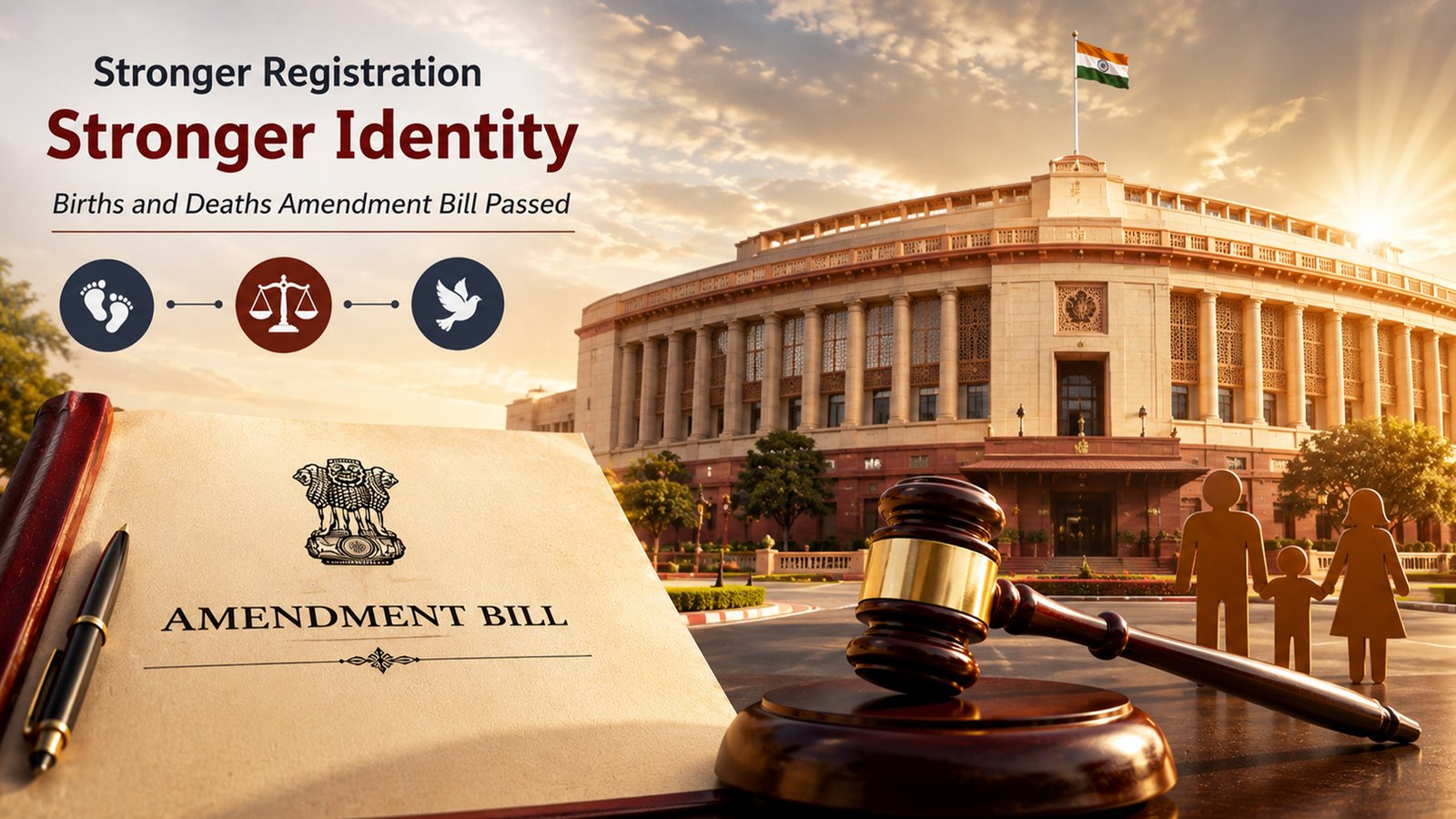
The Lok Sabha on Friday passed the Registration of Births and Deaths (Amendment) Bill, 2026, amid strong protests by Opposition members over alleged police action against students. The legislation was cleared by voice vote without a substantive debate as Opposition MPs continued their demand for a statement from Union Home Minister Amit Shah on the police crackdown. The protests also disrupted proceedings in both Houses of Parliament, with the Lok Sabha and Rajya Sabha eventually being adjourned for the day.
The Bill seeks to amend the Registration of Births and Deaths Act, 1969, particularly the rules governing delayed registration. The proposed changes are aimed at making the process more stringent and ensuring that information relating to births and deaths is properly verified when registration is sought long after the actual event. The government has argued that stronger verification will improve the reliability of India’s civil registration system and encourage citizens to register births and deaths within the prescribed period.
One of the key changes concerns registrations delayed by more than one year. Under the proposed framework, if a birth or death is registered after one year but within two years of the event, the applicant will require an order from a District Magistrate, Sub-Divisional Magistrate or an Executive Magistrate authorised by the District Magistrate. The concerned authority will have to verify the correctness of the information before permitting the registration.
The Bill introduces an even stricter process when registration is delayed by more than two years. In such cases, an order from a Judicial Magistrate of the First Class will be required. The magistrate will have to verify the authenticity of the information before directing the registration. The change effectively raises the level of scrutiny as the delay increases, making timely birth registration and death registration more important for citizens.
Birth and death certificates are important legal documents used for several purposes, including establishing age, identity and family relationships, accessing government services and completing inheritance and other legal procedures. A birth certificate can also become crucial when individuals apply for educational admissions, passports or other official documents. Similarly, a death certificate is required for settling property, insurance, pension and succession-related matters.
The proposed amendment builds on the changes made to India’s civil registration framework in 2023. The earlier amendment strengthened the digital registration system and provided for a national database of registered births and deaths. The latest Bill focuses particularly on delayed registrations and seeks to reduce the possibility of inaccurate or fraudulent entries entering official records.
However, the legislation’s passage was overshadowed by the political confrontation inside Parliament. Opposition MPs protested over alleged police action against students during demonstrations and demanded that the Home Minister make a statement. Their protests led to repeated interruptions in the Lok Sabha. Speaker Om Birla appealed to members to allow parliamentary business to continue, but the uproar persisted.
When the House resumed, the Births and Deaths Amendment Bill was taken up despite the protests. Union Minister of State for Home Nityanand Rai moved the legislation, which was subsequently passed without a detailed discussion. Parliamentary Affairs Minister Kiren Rijiju criticised the Opposition for not participating in the legislative process, arguing that members should have used the opportunity to debate the Bill rather than disrupt proceedings.
The disruption continued in the Rajya Sabha, where Opposition members raised their concerns and demanded action over the alleged police crackdown. Proceedings were eventually adjourned for the day. The developments added to the growing logjam in the Monsoon Session, with the government and Opposition remaining at odds over the handling of student protests and other issues.
The most significant aspect of the Registration of Births and Deaths Amendment Bill 2026 is the tighter procedure for delayed registration. The longer the delay, the higher the level of official or judicial scrutiny that will be required. The government is seeking to make the civil registration system more accurate, accountable and resistant to misuse, while encouraging people to report births and deaths on time.
The Bill’s passage in the Lok Sabha now moves the legislation forward in Parliament, even as political tensions continue to affect legislative proceedings. Its eventual implementation could make timely registration of births and deaths more important than ever, particularly for families dealing with old or previously unregistered records. At the same time, the manner in which the Bill was passed, without a substantive debate because of the Opposition protests, has once again highlighted the wider challenge of ensuring that important legislation receives adequate parliamentary scrutiny.