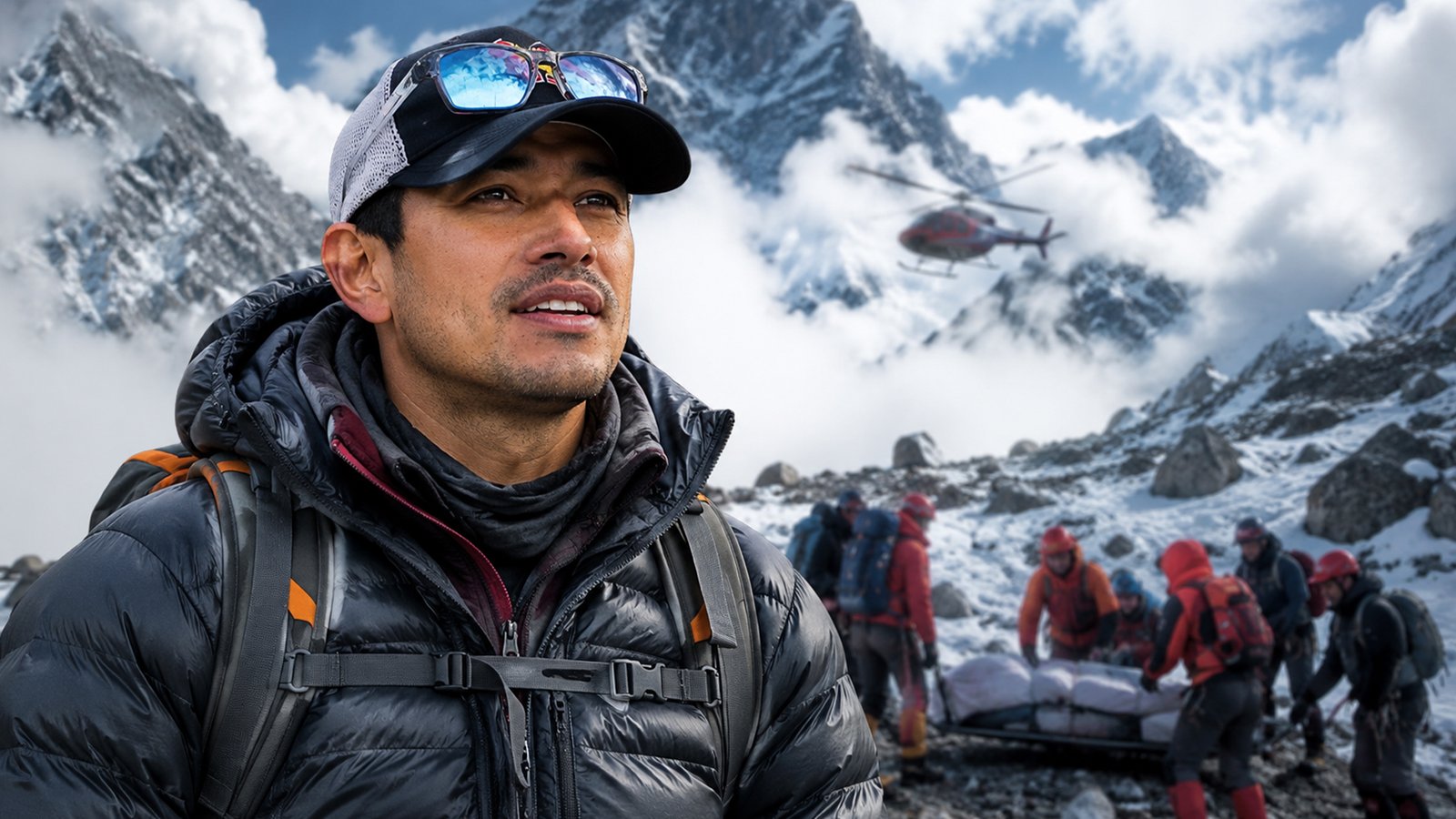
The body of renowned mountaineer Nirmal Purja has been recovered from Broad Peak in Pakistan, days after a massive avalanche swept away a 10-member climbing group, killing all those caught in the disaster. Purja, widely known as “Nims Dai”, was among the world’s best-known high-altitude climbers and had been missing since the avalanche struck on July 30.
The recovery brings a tragic end to a search that had been hampered by difficult terrain, unstable snow and severe weather. Pakistani authorities and rescue teams had been working to locate the missing climbers on Broad Peak, one of the world’s highest mountains.
Purja’s death has sent shockwaves through the international mountaineering community. The British-Nepali climber became famous in 2019 when he climbed all 14 of the world’s 8,000-metre peaks in just 189 days, setting a record that drew worldwide attention.
The avalanche struck while climbers were moving between Camp 2 and Camp 3 on Broad Peak, which rises to 8,047 metres in Pakistan’s Karakoram range. Ten climbers were caught in the avalanche, initially leaving families and fellow mountaineers waiting anxiously for news.
Early rescue efforts were complicated by dangerous conditions on the mountain. Four bodies were recovered in the initial phase of the search, while several climbers, including Purja, remained missing. Weather conditions repeatedly interrupted operations, making it difficult for rescuers to reach the avalanche site safely.
As the search continued, more bodies were located. The recovery of Purja’s body was confirmed on August 2, bringing greater clarity to the scale of the tragedy. Along with Purja, the climbers identified among the dead include Chinese climber Wang Zhong and Nepali climbers Nima Sherpa and Kili Pemba Sherpa. Earlier, the bodies of Omani climber Nathira Ahmed, American climber Mallory Geis and Nepali climber Bahadur Gurung had also been recovered.
The final search has highlighted the extreme risks involved in high-altitude mountaineering in the Karakoram. Avalanches, rapidly changing weather, falling temperatures and unstable snow can turn a climbing route into a life-threatening environment within minutes.
For Purja, the tragedy comes after a career defined by extraordinary achievements. His 2019 “Project Possible” expedition saw him summit all 14 of the world’s highest mountains in a record 189 days. The feat established him as one of the most recognisable figures in modern mountaineering.
Purja was also a former Gurkha soldier and a former member of the British Special Boat Service. His military background, physical endurance and determination became an important part of his public image as he took on some of the world‘s most difficult peaks.
Beyond his record-breaking climbs, Purja became known for leading and supporting other mountaineering expeditions. His presence on Broad Peak was therefore significant not only because of his reputation but also because of the experience he brought to an extremely demanding environment.
The Broad Peak avalanche has also raised concerns about the challenges faced by rescue teams operating at extreme altitude. Unlike conventional rescue operations, recovering climbers from high mountains often requires specialist mountaineers who themselves face considerable danger.
In such conditions, even reaching the location of an accident can take hours or days. Helicopter operations are also restricted by altitude, wind and visibility, leaving ground teams to undertake difficult searches across snow-covered terrain.
The tragedy has revived painful memories of other fatal incidents involving climbers in Pakistan’s northern mountains. The Karakoram range includes some of the world’s most demanding peaks, including K2, Broad Peak, Gasherbrum I and Gasherbrum II.
Broad Peak itself has long attracted experienced climbers because of its height and technical challenges. At more than 8,000 metres, conditions near its upper camps are severe, with thin air, extreme cold and unpredictable weather placing enormous pressure on climbers.
The deaths have prompted an outpouring of grief among climbers and followers of Nirmal Purja around the world. For many, his legacy extends beyond his records. He helped bring greater public attention to Himalayan and Karakoram mountaineering and inspired a new generation of climbers to attempt some of the world’s highest peaks.
At times even experience and preparation cannot eliminate the risks of high-altitude climbing. Elite mountaineers operating with modern equipment and extensive knowledge remain vulnerable to natural forces such as avalanches.
With Purja’s body now recovered and the deaths of all 10 climbers confirmed, the focus is shifting from rescue to recovery and remembrance. Families and fellow climbers now face the difficult task of bringing their loved ones home.
The global mountaineering community, deeply morn this loss. Purja’s career was built around pushing the limits of what was considered possible in the world’s highest mountains. His final expedition on Broad Peak has instead ended in one of the season’s most devastating climbing tragedies.