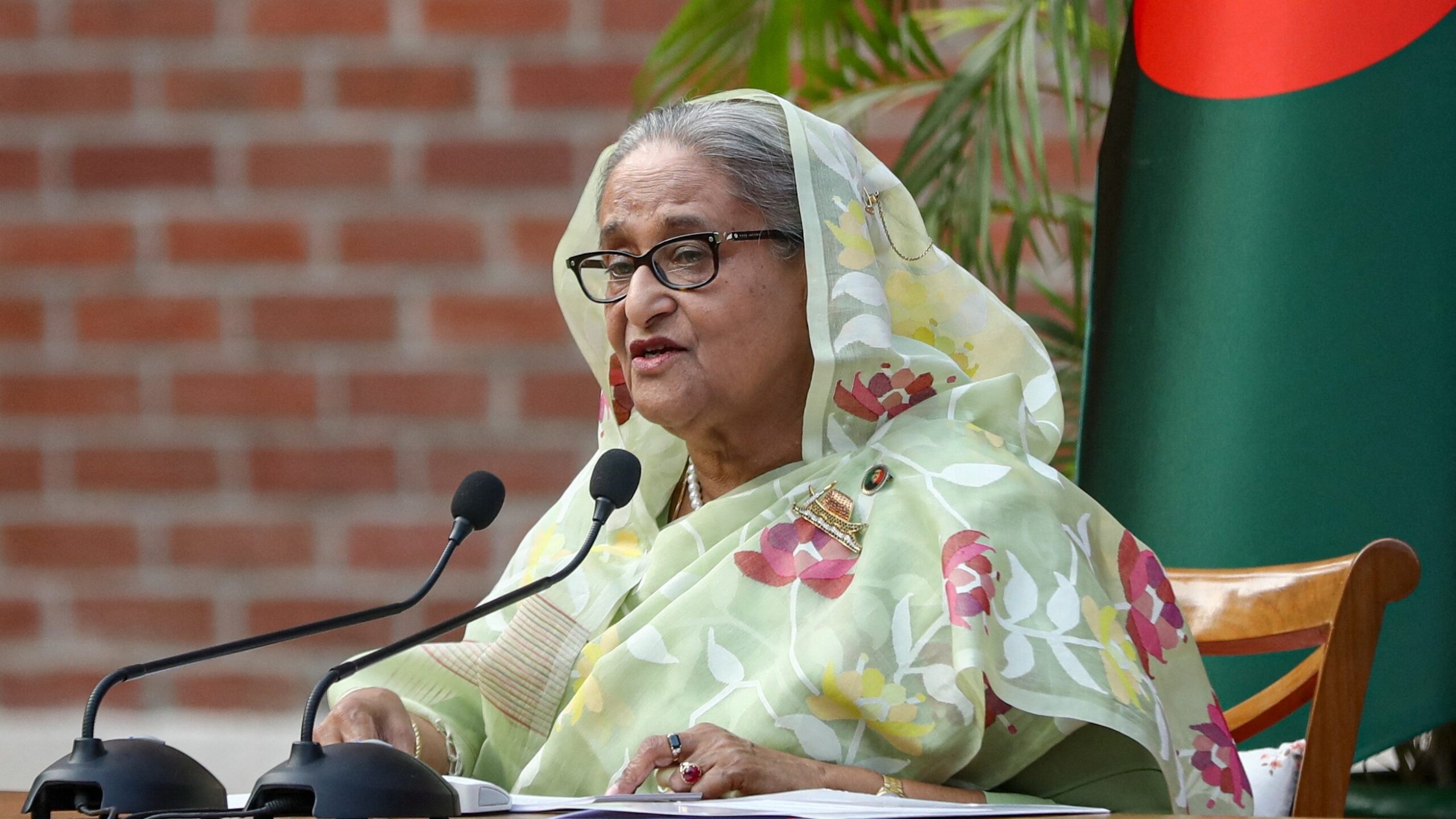
Bangladesh has reacted sharply to former Prime Minister Sheikh Hasina’s first public media interaction since she fled the country two years ago, accusing India of allowing an event that undermines Bangladesh’s sovereignty and risks further damaging already strained bilateral relations.
Hasina, who has been living in India since August 2024, said she intends to return to Bangladesh in December despite the possibility of arrest, imprisonment or even execution. Her remarks, delivered through an audio-only address at an event in New Delhi, have added a new layer of tension to the complicated relationship between Dhaka and New Delhi.
The event was organised by the Foreign Correspondents’ Club of South Asia in New Delhi to mark the second anniversary of the July-August 2024 uprising that forced Hasina from power. She did not appear on camera, and attendees heard only her voice. Her son, Sajeeb Wazed Joy, also joined the discussion through video from the United States.
Hasina struck a defiant tone, saying she was prepared to face whatever awaited her after returning home. She said her decision was not driven by a desire to regain power but by what she described as a duty towards the people of Bangladesh.
“I know they may put me in jail or kill me,” she said, while insisting that fear would not determine her decision to return. She also ruled out back-channel negotiations with the current government in Dhaka.
Hasina said she wanted to see Bangladesh return to a path of development, secularism, stability and prosperity. She called for the lifting of the ban on her Awami League party, the release of political prisoners and the withdrawal of what she described as fabricated cases.
She also appealed to the international community to support Bangladesh’s people in their pursuit of democracy, justice and peace. According to Hasina, the political crisis in Bangladesh is no longer only a domestic matter because it could affect regional security, trade, development and stability across South Asia.
Her comments, however, triggered an immediate backlash from Dhaka.
Bangladesh’s Foreign Ministry said it was “outraged” that Hasina had been permitted to engage with the media from Indian soil. It accused her and her associates of making hostile statements against Bangladesh and its people.
Dhaka described the event as an “affront to the sovereignty of Bangladesh” and said it was particularly insensitive because it took place on the second anniversary of the July Revolution. The government also said it had previously conveyed its concerns to New Delhi about the possible impact of the event on bilateral relations.
The diplomatic dispute comes at a sensitive time for India-Bangladesh relations. Dhaka has repeatedly sought Hasina’s extradition since a Bangladeshi tribunal sentenced her to death in absentia last year over alleged crimes against humanity linked to the 2024 crackdown on student-led protests.
The United Nations has estimated that nearly 1,400 people were killed during the crackdown. Hasina has denied wrongdoing and rejected the allegations against her. India has so far not handed her over to Bangladesh, despite repeated requests from Dhaka under the two countries’ 2013 extradition treaty.
India has maintained a cautious distance from the latest controversy. New Delhi has said it had no involvement in the event and would not endorse views expressed during the programme. Bangladesh, however, believes that allowing Hasina to publicly engage with the media from Indian territory is damaging to efforts to rebuild trust between the two neighbours.
The timing has also made the controversy more politically sensitive. On the same day as Hasina’s address, Bangladesh Prime Minister Tarique Rahman inaugurated a memorial museum dedicated to those killed during the 2024 uprising. The museum has been established at Hasina’s former official residence in Dhaka and documents the protests, deaths and allegations of political repression during her 15 years in power.
Hasina, meanwhile, has sought to present herself as a political leader still connected to Bangladesh despite living in exile. She said she had never been separated from the people and urged young Bangladeshis to question authority and speak out against injustice.
She also called for national reconciliation, but stressed that reconciliation should not mean impunity and that those responsible for crimes must face due legal process.
For now, her December return remains uncertain. Hasina has not announced a specific date or explained how she would enter Bangladesh or respond to the legal consequences awaiting her.
But her declaration has already reopened one of the most difficult questions in South Asian politics: how India and Bangladesh will manage the future of a former leader whose presence in India continues to carry enormous political and diplomatic weight.
With Dhaka demanding her return, Hasina insisting she will go home and New Delhi maintaining that it had no role in her latest public appearance, the Sheikh Hasina issue is likely to remain a major test for India-Bangladesh relations in the months ahead.