Prime Minister Narendra Modi has given National Handloom Day a distinctly social-media twist this year, urging people to celebrate Indian handlooms with the same enthusiasm they bring to occasions such as Friendship Day.
In a series of social media messages, Modi encouraged citizens to buy and wear handloom products and share their favourite pieces online. He also invited people to create “Get Ready With Me”, or GRWM, videos featuring handloom outfits and products, using the hashtag #NationalHandloomDay. The appeal is aimed at bringing India’s rich textile heritage closer to younger audiences while supporting the country’s weavers and artisans.
The Prime Minister’s latest message comes on National Handloom Day, observed every year on August 7. The day commemorates the launch of the Swadeshi Movement in 1905, which encouraged Indians to support indigenous industries and locally made products. The government officially designated August 7 as National Handloom Day in 2015, with the first observance inaugurated by Modi in Chennai.
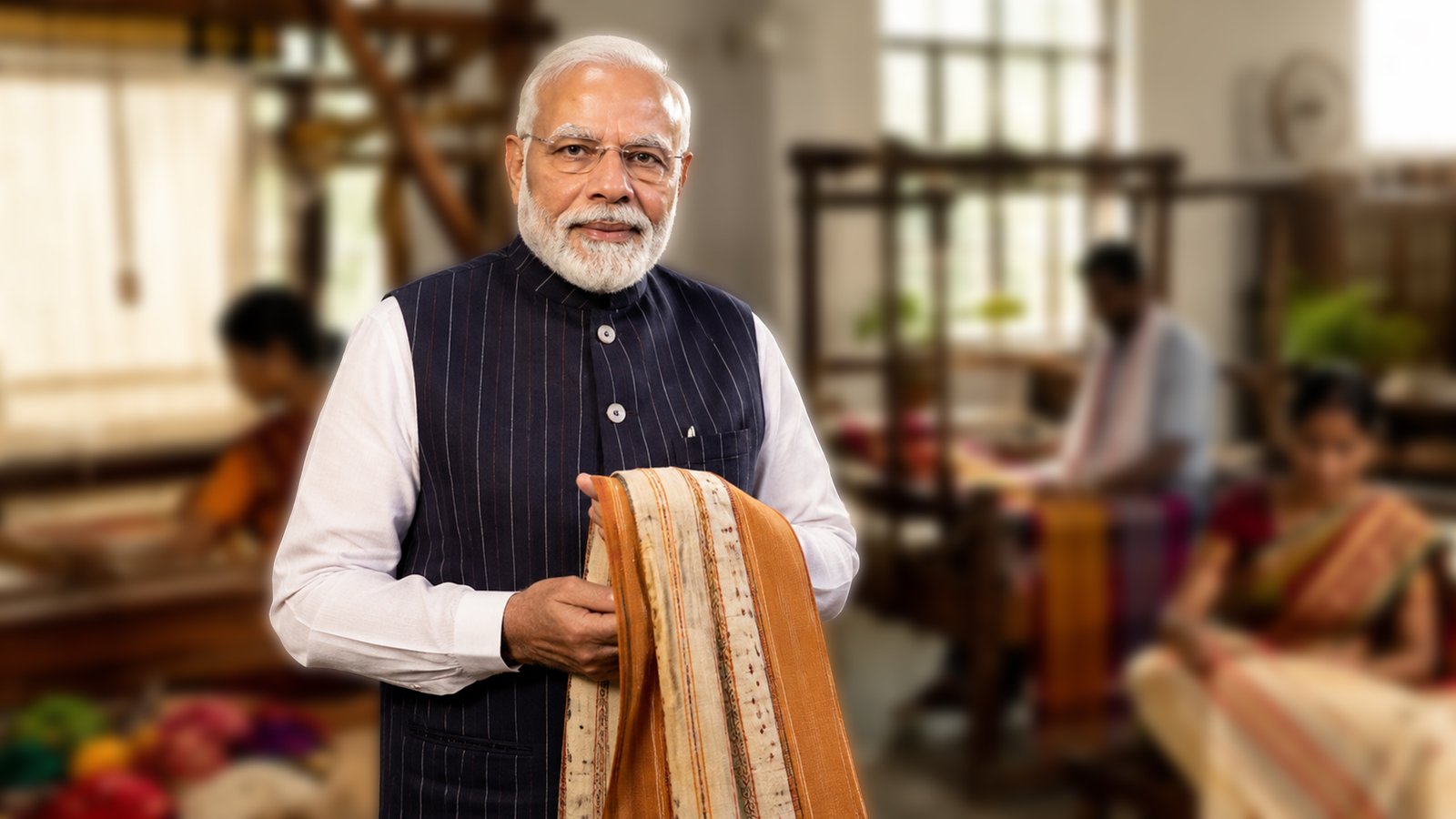
This year’s campaign seeks to make handloom feel less like something reserved for festivals, weddings or special occasions and more like a part of everyday life. Modi said every handloom product represents the hard work, skill and dedication of an artisan, while highlighting the role of weavers in preserving India’s textile traditions across generations.
The message also carries an economic dimension. Behind every sari, shawl, stole or piece of handwoven fabric is a network of weavers and artisans whose livelihoods depend on continued demand. By encouraging consumers to purchase handloom products, the government is seeking to strengthen the market for traditional textiles and promote the broader “Vocal for Local” message.
In his National Handloom Day message on Friday, PM Modi described the sector as an important pillar of rural empowerment, women-led development and the vision of an Atmanirbhar Bharat. He also urged people to share their favourite handloom products and GRWM videos online, saying such efforts could encourage those associated with the sector.
India’s handloom tradition is remarkably diverse, with different regions known for distinctive weaving techniques, fabrics, colours and motifs. From Banarasi silk in Uttar Pradesh and Sambalpuri textiles in Odisha to Kanchipuram silk in Tamil Nadu, Mysore Silk in Karnataka and Pochampally Ikat in Telangana, each weaving tradition carries a strong regional identity.
Varanasi remains one of the country’s best-known handloom destinations, particularly for Banarasi silk sarees featuring intricate zari and brocade work. Sambalpur is known for Sambalpuri handloom and the Bandha ikat technique, in which yarn is tie-dyed before weaving. Chanderi in Madhya Pradesh is associated with lightweight and elegant fabrics, while Kanchipuram is celebrated globally for its silk sarees and elaborate zari borders.
Mysuru’s handloom identity is closely linked to Mysore Silk, known for its smooth finish and traditional zari work. In Gujarat, Bhuj and the wider Kutch region are known for colourful handwoven textiles, embroidery and Bhujodi weaving. Pochampally in Telangana has earned international recognition for its distinctive geometric Ikat patterns.
The diversity of these textiles is also what makes India’s handloom sector more than a fashion category. It connects clothing with geography, history, craftsmanship and community. Many designs and techniques have been passed from one generation to another, allowing traditional skills to survive while adapting to changing consumer tastes.
For younger consumers, social media could offer a new way to discover these traditions. A GRWM video featuring a handloom sari, kurta, shawl or accessory may look like ordinary lifestyle content, but it can also introduce viewers to the fabric’s origin and the artisan community behind it.
The Prime Minister’s approach reflects this changing way of promoting Indian textiles. Instead of limiting handloom promotion to exhibitions and government campaigns, the latest appeal encourages people to become part of the conversation themselves by wearing, buying and showcasing traditional products.
The handloom sector also has an important role in rural livelihoods and women’s economic participation. Government material on the sector notes that women account for more than 70% of weavers and allied workers, highlighting the industry’s importance beyond cultural preservation.
At the same time, the long-term health of India’s handloom industry depends on more than visibility on social media. Regular consumer demand, fair returns for artisans, access to markets, design innovation, skill development and better opportunities for weavers will remain important to keeping traditional crafts economically viable.
That makes National Handloom Day both a celebration and a reminder. A handwoven product may take considerably more time, skill and patience to create than a mass-produced garment, and its value lies not only in the finished fabric but also in the human knowledge woven into it.