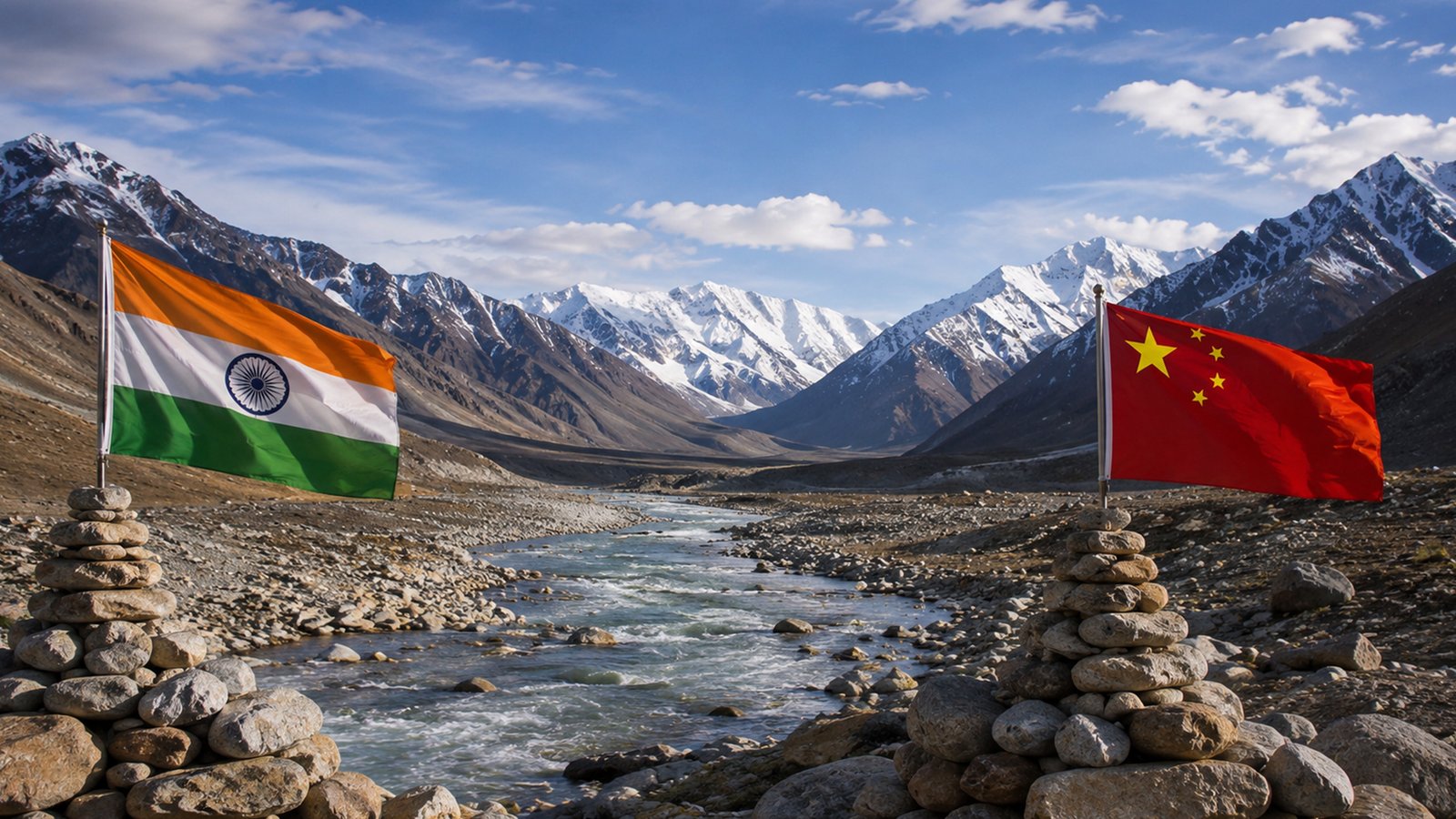
India and China have reviewed the situation along the Line of Actual Control (LAC), with both sides stressing the need to preserve peace and prevent fresh misunderstandings along the disputed border. The discussions in New Delhi also covered boundary delimitation, border management and cooperation on trans-border issues, signalling continued efforts to stabilise ties after years of military tensions.
The discussions took place during the 36th meeting of the Working Mechanism for Consultation and Coordination on India-China Border Affairs (WMCC) on August 6. The meeting came amid a broader push by both countries to keep diplomatic and military communication active and build on the relative stability seen along the border in recent months.
According to the Ministry of External Affairs (MEA), the two sides held “frank discussions” and reviewed the overall situation along the LAC. They agreed that peace and tranquillity in the border areas remain essential for the wider development of India-China bilateral relations.
The two countries also agreed to continue using existing diplomatic and military channels to deal with outstanding border issues. These include the WMCC, meetings between local military commanders and other established mechanisms. The objective is not only to address unresolved matters but also to prevent misunderstandings or miscalculations that could trigger renewed tensions along the LAC.
The Indian delegation at the latest meeting was led by Sujit Ghosh, Joint Secretary (East Asia) in the Ministry of External Affairs. China was represented by Hou Yanqi, Director General of the Boundary and Oceanic Affairs Department in its Ministry of Foreign Affairs.
The talks also followed up on the outcomes of the 24th meeting of the Special Representatives on the India-China boundary question. Officials held detailed exchanges on boundary delimitation, border management, mechanism-building and trans-border cooperation.
Boundary delimitation remains a long-term challenge for the two countries. While military disengagement and patrolling arrangements have helped reduce the immediate risk of confrontation in several areas, the larger boundary dispute remains unresolved. Both sides therefore continue to rely on dialogue and established mechanisms to manage differences while working towards a broader settlement.
An important part of the latest discussions concerned trans-border rivers. India called for an early meeting of the Expert Level Mechanism on trans-border rivers and stressed the importance of China sharing technical information about upstream projects.
The issue has particular importance for India because several major rivers originating in the Tibetan region flow downstream into the country. Information about upstream construction, water flows and other projects is therefore an important part of India’s concerns over water security and trans-border river management. The latest Indian request indicates that New Delhi wants greater transparency and regular communication on developments that could have downstream implications.
The latest meeting builds on the 35th WMCC meeting held in Beijing on May 27. At that meeting, India and China reviewed the border situation and noted progress in maintaining peace and tranquillity in the border areas. The stable situation was also seen as creating space for gradual movement towards normalisation of bilateral relations.
The relative improvement follows years of strained India-China relations after the military confrontation in eastern Ladakh in 2020. The border crisis led to a prolonged deployment of troops and significantly affected political, economic and diplomatic engagement between the two countries.
Since then, military and diplomatic negotiations have produced disengagement in several friction areas. In October 2024, India and China also reached an understanding on patrolling arrangements in the remaining areas of friction in eastern Ladakh, helping reduce tensions along the LAC. The development opened the way for renewed high-level political engagement and efforts to gradually rebuild bilateral ties.
However, the latest diplomatic engagement does not mean that the boundary dispute has been resolved. Questions relating to the alignment of the LAC, boundary delimitation and military confidence-building measures remain sensitive.
For both countries, maintaining stability on the ground is therefore a priority. Regular communication between military commanders and diplomatic officials can help prevent local incidents from escalating into larger confrontations.
The latest India-China talks also underline a cautious approach to improving bilateral relations. New Delhi has consistently maintained that peace and tranquillity along the border are necessary for normal relations with Beijing. At the same time, India continues to press for resolution of outstanding issues rather than allowing temporary calm to obscure unresolved concerns.
The continuation of the WMCC and other military and diplomatic mechanisms gives both sides a structured channel to address these differences. For now, the focus remains on maintaining stability along the LAC, improving border management, strengthening communication and expanding cooperation on issues such as trans-border rivers.
The latest talks therefore represent another step in a gradual and carefully managed effort to keep the India-China border peaceful while the two sides work through the much larger and more complicated boundary question.