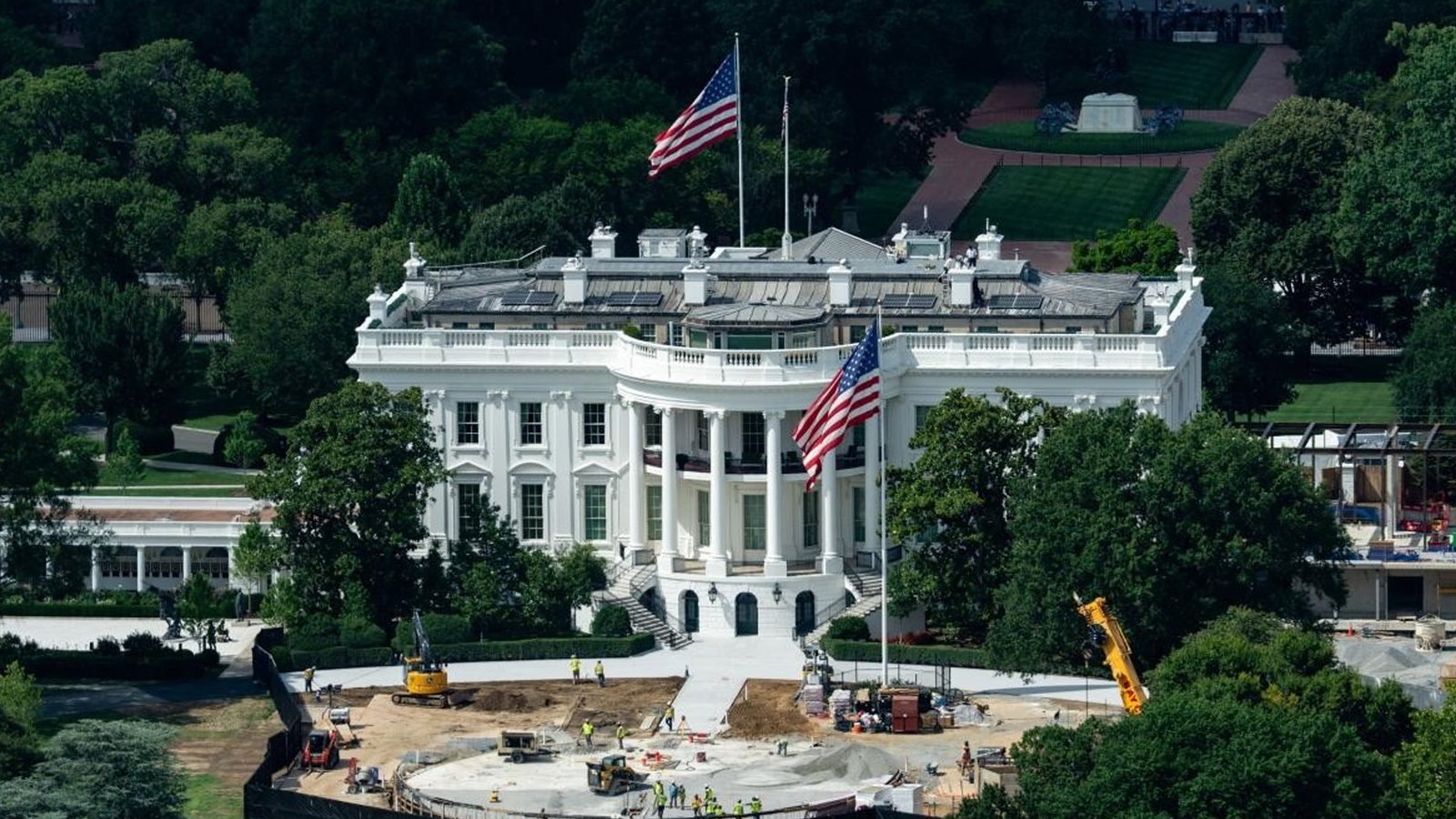
A US federal appeals court has stopped construction of President Donald Trump’s proposed $400 million ballroom at the White House, ruling that the administration cannot make such a major change to the presidential residence without approval from Congress.
The decision is a significant setback for Trump’s plan to add a large new event space to the White House complex. The administration has already demolished the historic East Wing to make way for the project and had moved ahead with construction despite an ongoing legal challenge.
The US Court of Appeals for the District of Columbia Circuit issued a divided 2-1 ruling on Friday, upholding a preliminary injunction that blocks above-ground construction. The court said major structural changes to the White House require congressional authorization.
The ruling does not immediately end the legal battle. The appeals court has put its decision on hold for two weeks, giving the Trump administration time to seek intervention from the US Supreme Court. Trump has already criticised the decision and said his administration would appeal.
The proposed White House ballroom is expected to cover about 90,000 square feet and cost around $400 million. The project was initially presented as a way to provide the White House with a larger venue for state dinners, official receptions and other major events.
Trump has argued that the new facility is also linked to national security. His administration has pointed to security concerns surrounding large presidential events and has said the project includes underground security infrastructure.
However, the court rejected the argument that national security concerns allow the president to bypass the legal process. The judges said the administration still has to follow the constitutional and statutory requirements governing major changes to the White House.
The ruling has raised a broader question about the limits of presidential authority. At the heart of the case is whether a president can significantly alter the historic White House complex without obtaining congressional approval.
Judges Patricia Millett and Bradley Garcia, who formed the majority, stressed that the White House is not simply an ordinary federal building that a president can substantially redesign at will. They concluded that Congress has a role in approving major changes to the building and its grounds.
The decision came after the National Trust for Historic Preservation challenged the ballroom project in court. The preservation group argued that the Trump administration had failed to follow required federal procedures before demolishing the East Wing and beginning work on the replacement structure.
The East Wing, a historic part of the White House complex, was demolished in 2025 as part of Trump’s plan. The decision to remove the structure attracted criticism from preservationists and other opponents, who argued that the administration was moving too quickly with a major alteration to an important national landmark.
The Trump administration has defended the demolition and the ballroom project, saying the existing White House facilities were inadequate for large official functions. Officials have also argued that modernising the complex would improve security and reduce the need to hold important presidential events at outside locations.
The issue gained additional political attention after a shooting at the White House Correspondents’ Dinner in April 2026. Trump and his allies subsequently pointed to the incident as evidence that major presidential events should be held in a more secure location.
The administration has also maintained that the ballroom is being funded through private donations, rather than through the normal congressional appropriations process. That funding arrangement has become another important part of the legal dispute.
The appeals court, however, focused on the broader question of congressional authority over the White House. Its ruling means that the administration cannot simply rely on private funding to avoid congressional involvement in a major structural project.
The case also highlights the tension between presidential power, historic preservation and congressional oversight. The White House is both the working residence of the US president and one of the country’s most important historic landmarks.
The court’s decision could therefore have implications beyond the ballroom itself. A final ruling from the Supreme Court could help establish how much authority a president has to make substantial physical changes to the White House and other federally protected properties.
Trump has responded angrily to the ruling, calling it wrong and signalling that the administration will continue the legal fight. His expected Supreme Court appeal could determine whether construction resumes or whether Congress must first approve the project.
For now, above-ground construction remains blocked. Some underground work connected to security infrastructure may continue under earlier court arrangements, but the main ballroom construction cannot proceed as planned while the legal dispute remains unresolved.
The White House ballroom controversy has thus moved beyond a dispute over architecture or construction. It has become a test of presidential authority, congressional oversight and the protection of historic landmarks.
As the Trump administration prepares for another court battle, the future of the $400 million White House ballroom will depend not only on the project’s design and security arguments, but also on how the US courts interpret the constitutional limits on presidential power.