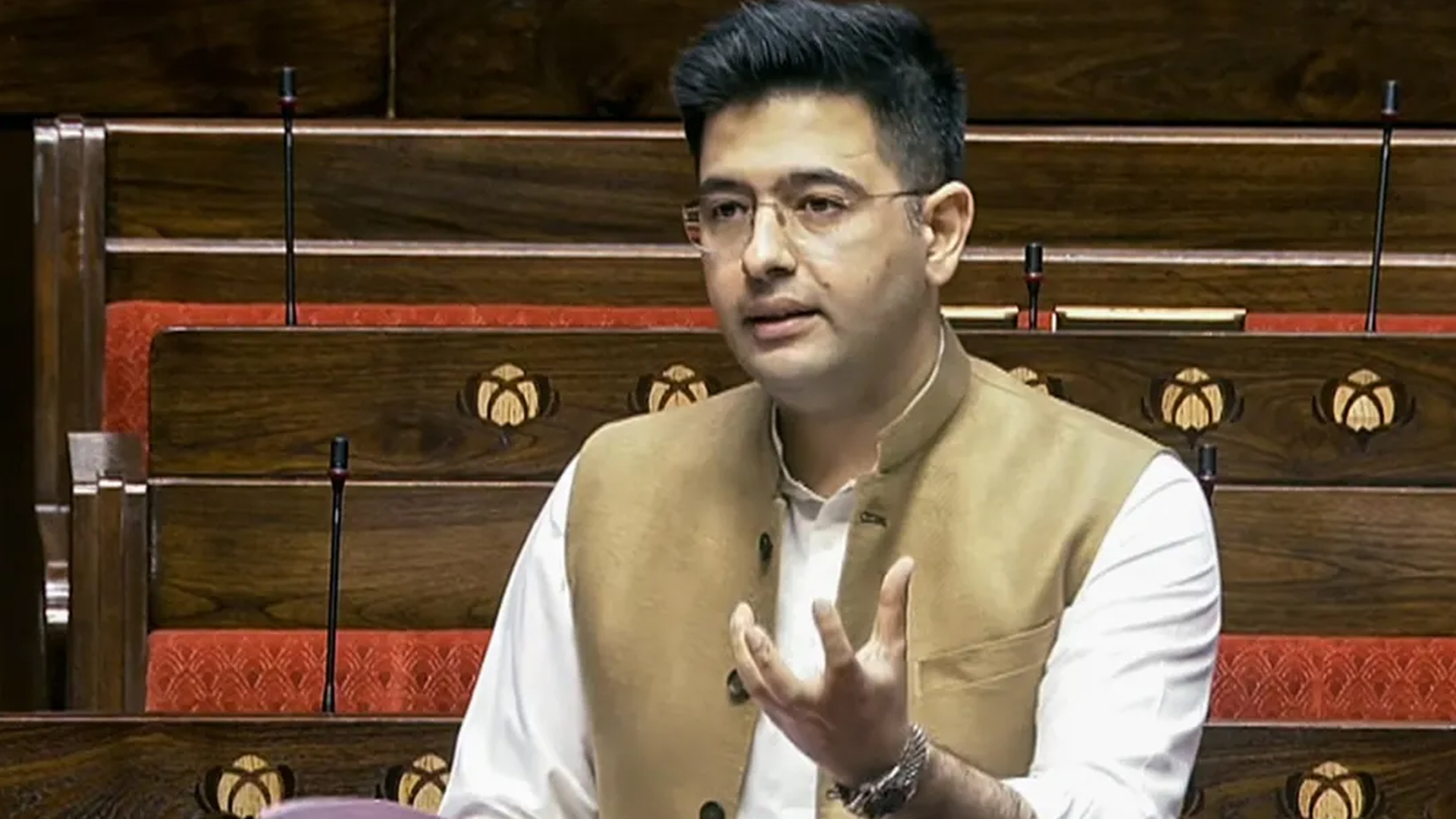
A fresh political controversy has erupted in Punjab after BJP Rajya Sabha MP Raghav Chadha found that his name had been marked as “shifted” in the state’s draft electoral rolls. Chadha has alleged that the development was not a routine mistake but an act of political vendetta. The Aam Aadmi Party (AAP), however, has rejected the allegation and said the electoral roll revision is being carried out by the Election Commission.
The issue surfaced after the draft voter list was released as part of the Special Intensive Revision (SIR) of electoral rolls. Chadha said his voter registration is in Mohali and questioned how his name could have been classified as “shifted” when he continues to be a Rajya Sabha member representing Punjab.
Reacting strongly to the development, Chadha accused the AAP government of targeting him after his decision to leave the party and join the BJP. He argued that the classification could not simply be dismissed as a clerical error and suggested that political considerations were behind the change.
The dispute is particularly significant because Chadha was elected to the Rajya Sabha from Punjab as an AAP nominee in 2022. His political relationship with the party later changed dramatically. He joined the BJP in April 2026, turning his earlier association with AAP into a new source of political friction.
Chadha has questioned how his name came to be listed as “permanently shifted” and has sought clarity over the process followed by officials. He has maintained that his voter registration remains connected to Punjab and that the entry should not have been removed from the draft electoral roll on the grounds that he had shifted elsewhere.
The BJP leader has also used the controversy to raise broader questions about the electoral roll revision process and the safeguards available to voters whose names are removed from draft lists.
The AAP has strongly pushed back against Chadha’s allegations. The party has said that the Election Commission of India (ECI) conducts the SIR exercise and that the Punjab government does not decide whose names are retained or removed from electoral rolls.
AAP leaders have also questioned Chadha’s own voter-registration status, pointing to his residence in Delhi and alleging that he had attempted to shift his voter registration there through a process that the party described as backdated. The party has argued that maintaining an accurate voter registration is the responsibility of the individual elector.
The exchange has therefore turned what might normally have been an administrative issue into a political confrontation between Chadha and his former party.
The controversy comes against the backdrop of a major voter-list revision in Punjab. Around 20.66 lakh names have been left out of the draft electoral rolls prepared during the SIR exercise. The Election Commission’s revision process is aimed at checking electoral records and identifying entries that may relate to voters who have died, permanently shifted, or otherwise do not qualify to remain registered at a particular address.
Because the current list is only a draft electoral roll, the deletion does not necessarily mean that a person has permanently lost voting rights. Eligible voters can raise objections and submit claims for inclusion or correction during the designated period.
This distinction is important in Chadha’s case as well. The final electoral roll has not yet been prepared, leaving room for his entry to be reviewed and corrected if the relevant authorities determine that he remains eligible to be registered in Punjab.
Chadha has indicated that he intends to pursue the matter through the appropriate electoral process. His argument is that the issue should be examined carefully rather than being treated as a simple administrative correction.
The row has also brought renewed attention to the importance of voter registration during an SIR exercise. Political parties across India have been closely watching the revision of electoral rolls, particularly because changes to voter lists can have consequences for future elections.
The process can be confusing because a name appearing in an earlier electoral roll does not automatically guarantee that it will remain in the draft list after verification. At the same time, being left out of a draft roll provides an opportunity to file a claim and seek correction before the final list is published.
In Chadha’s case, however, the political background has made the issue far more contentious.
The former AAP leader has portrayed the development as an attempt to target him after his move to the BJP. AAP, on the other hand, has denied having any role in removing his name and has shifted the focus to his own voter-registration status.
The Election Commission’s role is now central to the controversy. Since the SIR process is being conducted under the electoral authorities, the final determination on Chadha’s voter status will depend on the records, verification process and claims submitted during the revision exercise.
The dispute also highlights the political sensitivity surrounding voter ID, electoral rolls and voter registration. With elections in Punjab approaching in the broader political cycle, parties are expected to scrutinise changes to the voter list closely.
This issue is more than a missing name on a draft document for Chadha. He has presented it as evidence of political targeting by his former party. For AAP, it is an administrative matter that the party says has been wrongly turned into a political controversy.
The immediate focus will now be on whether Chadha’s name is restored during the claims and objections process. Until the final electoral roll is published, his status remains subject to the ongoing revision procedure.
What began as an entry marked “shifted” in a draft voter list has therefore developed into another political flashpoint in Punjab, bringing together questions of electoral procedure, voter rights and the increasingly bitter relationship between Raghav Chadha and his former party.