The Delhi government has tightened safety and operational rules for buses operating in the national capital following the alleged rape of a teenage girl inside a moving sleeper bus in the Delhi-NCR region. The new directions focus on making buses more visible, trackable and safer for passengers, particularly women.
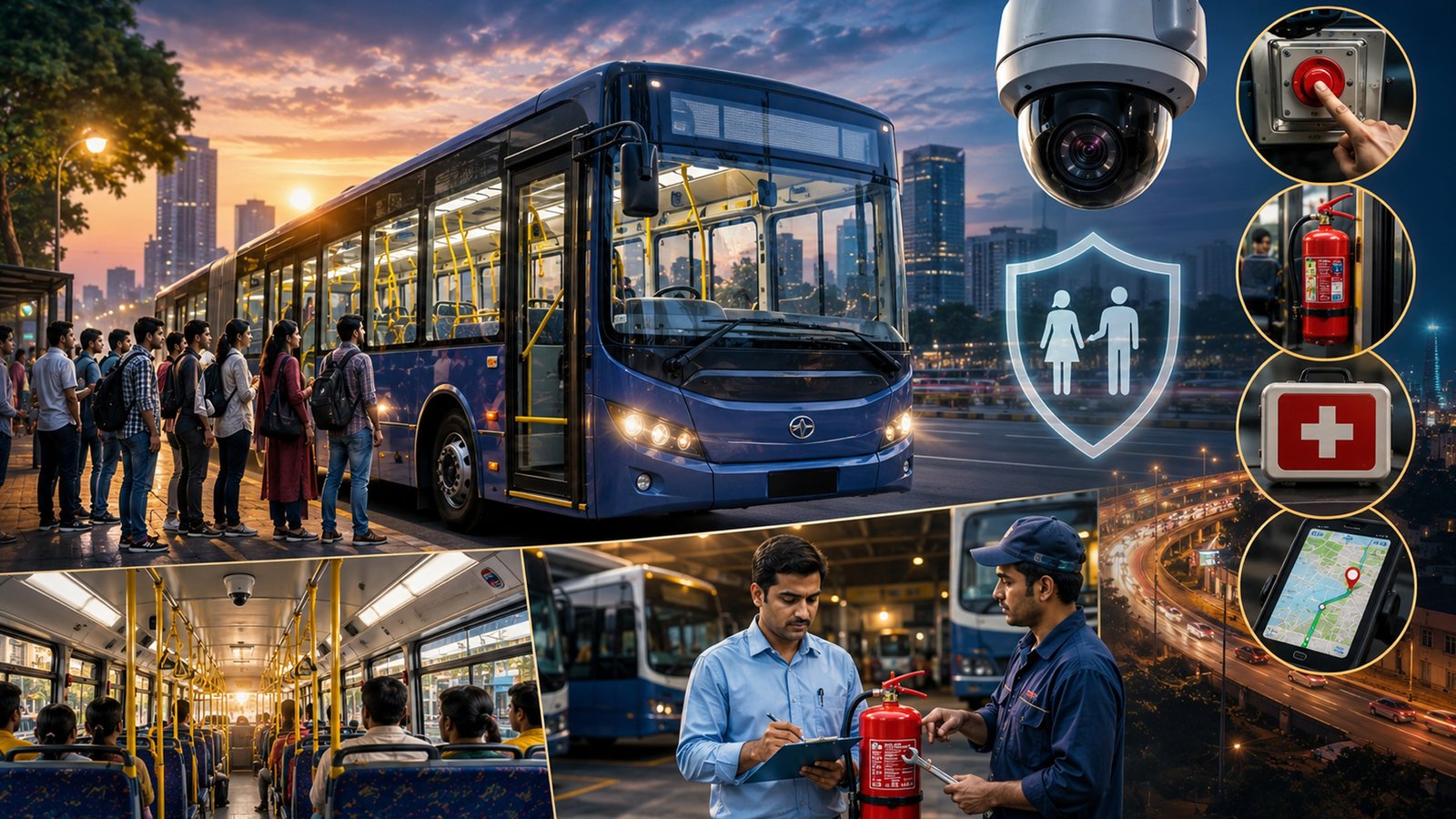
Under the revised bus safety rules, operators have been instructed to ensure that Vehicle Location Tracking Devices (VLTDs) and panic buttons installed in buses remain functional at all times. These systems are intended to help authorities monitor buses and provide quicker assistance during emergencies. Simply having the equipment installed will not be enough if it is not working when passengers need it.
The government has also prohibited curtains and films on bus windows that obstruct visibility. The move is aimed at ensuring that passengers and activities inside buses remain visible from outside. The restriction is particularly significant for sleeper and private buses, where enclosed seating arrangements can make monitoring more difficult.
Bus operators have also been told not to allow vehicles to stop at unsafe or unauthorised locations. Stopping in the middle of roads or at intersections has been specifically prohibited. The government wants buses to use designated and safer locations so that passengers are not exposed to unnecessary risks while boarding or getting off.
The new measures come after a Class 11 student from Uttar Pradesh was allegedly raped inside a sleeper bus travelling from Greater Noida towards Delhi. According to reports, the bus travelled nearly 47 km before reaching the Kashmere Gate area. Police have arrested the driver and conductor in connection with the case.
The incident has once again raised questions about the enforcement of public transport safety rules. It has also revived concerns that safety equipment and guidelines can become ineffective if operators fail to maintain them or authorities do not regularly check compliance.
The Delhi Transport Department has therefore placed greater emphasis on the responsibility of bus operators and their staff. Drivers must possess valid driving licences and wear the prescribed uniform while on duty. Operators have also been asked to verify drivers, conductors, attendants and other employees before deploying them on buses.
Staff training has also been made an important part of the new directions. Drivers, conductors and other crew members must be sensitised about preventing harassment and understand the consequences of misconduct against women passengers.
The rules specifically require bus staff to act immediately if a woman passenger faces indecent behaviour, molestation, eve-teasing or any other offence. Such incidents must be reported to the police without delay, and the bus is to be taken to the nearest police station, police post or PCR van where necessary.
The government has also reiterated that driving under the influence of alcohol or intoxicating substances will not be tolerated. Bus staff have been directed to behave courteously with passengers and follow prescribed safety standards.
Night-time bus parking has come under the new safety framework as well. Operators have been instructed to keep buses only at authorised, secure and adequately lit locations when vehicles are parked or remain idle. The measure is intended to reduce risks associated with buses being left in isolated or poorly monitored areas.
School buses have also been brought under the wider safety focus. The Transport Department has reiterated requirements concerning authorised attendants and the safe operation of school buses. Doors must remain securely closed while a bus is moving. Operators have also been directed to comply with pollution standards and ensure that vehicles carry valid Pollution Under Control certificates.
The latest order puts the spotlight on a basic but important principle of public transport: safety measures need to work in practice, not just exist on paper. Panic buttons, GPS-based tracking, CCTV cameras and other safety systems can only help passengers when they are functional and monitored.
The issue is especially important for women who rely on buses for daily travel. A passenger stepping onto a bus should be able to expect basic safeguards, including a visible vehicle, verified staff, working emergency systems and responsible driving.
The government’s decision also reflects the continuing concern over women’s safety in public transport in Delhi. The 2012 Nirbhaya case had already led to several measures aimed at improving safety on buses and other forms of public transportation. The latest incident has once again exposed concerns over gaps between prescribed rules and their implementation.
Transport Minister Pankaj Singh said passenger safety was “non-negotiable” and that every bus operating in Delhi must meet the required safety and operational standards.
The effectiveness of the new Delhi bus safety rules will ultimately depend on enforcement. Regular inspections, functioning panic buttons and tracking devices, proper verification of staff and swift action against violations will be crucial.
The latest measures are therefore more than a fresh set of instructions for bus operators. They are an attempt to make public transport more accountable and ensure that safety systems are visible, functional and backed by enforcement.
As Delhi continues to depend heavily on buses for everyday mobility, the challenge now is to ensure that these rules reach every operator and every route. For passengers, especially women and young commuters, safer public transport should not be an assurance made after an incident but a standard maintained every day.