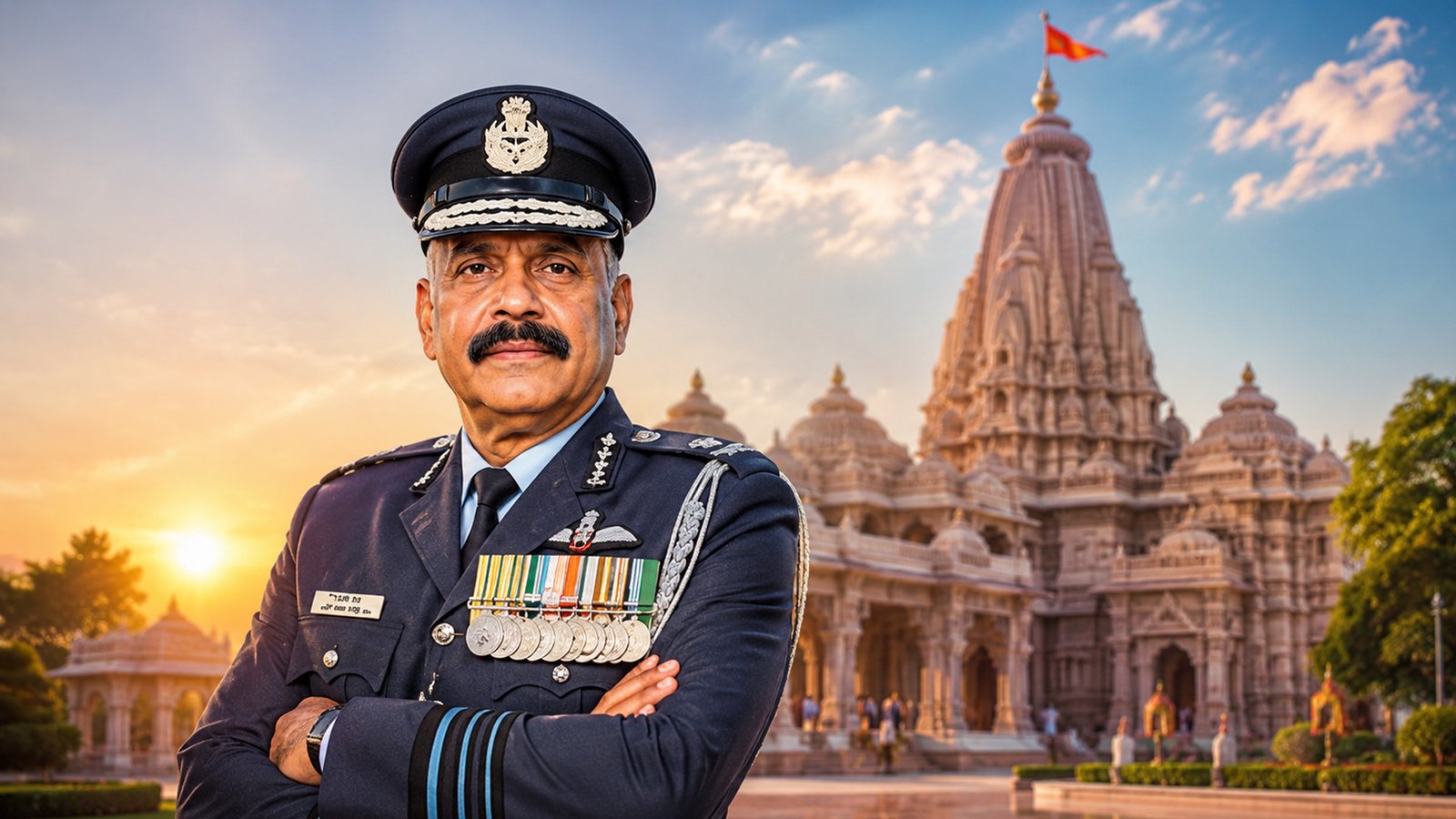
The Shri Ram Janmabhoomi Teerth Kshetra Trust has appointed retired Air Marshal Jeetendra Mishra as the first full-time Chief Executive Officer (CEO) of the Ram Temple in Ayodhya. The decision marks a major change in the way the temple administration will be managed, bringing a dedicated professional executive into an institution that has so far largely functioned through its trustees.
Mishra, who retired from the Indian Air Force on April 30, 2026, was chosen from a pool of 5,585 applicants. A three-member selection committee examined the applications, conducted online interviews with 108 shortlisted candidates and later held in-person interviews with 16 candidates. Three names were eventually placed before the Trust for consideration, with Mishra emerging as the final choice.
The appointment comes at a sensitive time for the Ram Temple Trust. The organisation has been facing scrutiny following allegations of irregularities involving temple donations. The controversy led to arrests and also triggered questions about financial oversight and internal administration. Against this backdrop, the decision to appoint a full-time CEO is being seen as an effort to strengthen systems, improve accountability and bring greater professional oversight to the temple’s growing operations.
Mishra’s responsibilities will extend beyond the routine functioning of the temple. As CEO, he is expected to oversee administration, operations, security-related coordination, logistics, compliance and financial management. With the Ram Mandir attracting large numbers of devotees, managing these areas has become an increasingly complex task.
The temple is no longer simply a place of worship under construction. Since the consecration of Ram Lalla in January 2024, Ayodhya has developed into a major pilgrimage destination, bringing with it the need for organised crowd management, visitor facilities, infrastructure planning, financial controls and coordination among multiple agencies.
That is where Mishra’s long career in the armed forces could prove useful.
A fighter pilot and experienced military commander, Mishra served in the Indian Air Force for nearly four decades. He held several important operational and command positions before becoming the head of the Western Air Command. He was in that position during Operation Sindoor and retired earlier this year. His military career has included both operational responsibilities and senior-level strategic planning.
Mishra is also a decorated officer. He has been awarded the Ati Vishisht Seva Medal and Vishisht Seva Medal for his service. His experience in managing large teams and working in situations that demand discipline, coordination and quick decision-making is now expected to be put to use in a very different setting.
For Mishra, however, the appointment appears to carry a personal meaning beyond the administrative responsibilities attached to it.
After being selected, he expressed gratitude and described the opportunity as another chance to serve the nation. He also spoke of seeking the blessings of Lord Ram as he takes on the new responsibility. His response reflected the unusual nature of the position: while the job requires corporate-style administration, it is also connected to a temple carrying enormous religious and emotional significance for millions of devotees.
The Trust has simultaneously made several other organisational changes. Govind Dev Giri, who was serving as treasurer, has been appointed general secretary. Mahesh Bhagchandka has been named the new treasurer. Three new trustees — senior advocate Madan Mohan Pandey, Delhi-based businessman Mahesh Bhagchandka and former principal Dr Nirmala Yadav — have also been inducted.
The changes suggest that the Trust is working towards a broader restructuring of its administrative framework. The creation of the CEO position is particularly important because it introduces a clear executive layer for managing the temple’s everyday affairs.
Until now, major responsibilities have rested largely with the Trust’s office-bearers. As the Ram Mandir project expanded and visitor numbers increased, however, the scale of the organisation also grew. A dedicated CEO can focus on implementation and administration while trustees continue to provide overall direction and oversight.
The financial side will be especially important. Donations remain a central part of the temple’s operations, making transparent accounting and strong internal controls essential for maintaining public confidence. The recent donation controversy has made this issue even more significant. The appointment process itself was launched after allegations of donation-related wrongdoing surfaced, adding urgency to the Trust’s decision to create a professional executive post.
Mishra’s appointment therefore represents more than the creation of a new post. It signals a shift towards professional management at one of India’s most prominent religious institutions.
The retired Air Marshal now moves from military command to temple administration — a very different responsibility, but one that will require many of the same qualities: discipline, planning, coordination and accountability.