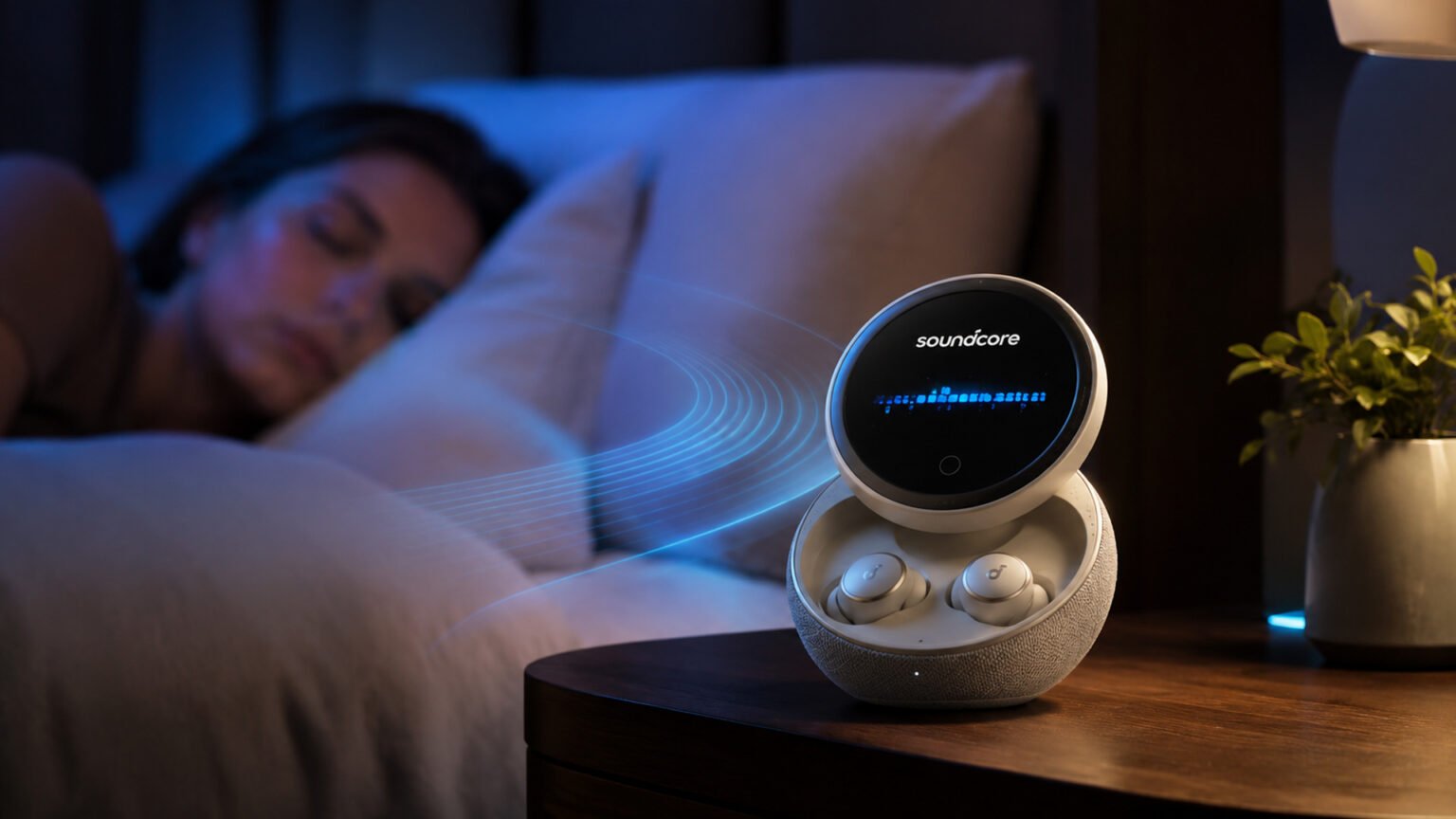
Anker is bringing sleep tracking to the bedside with a new device that does not need to be worn. The company has introduced SleepLab Pro, a smart speaker designed to monitor sleep, breathing and heart rate while a person rests.
Unveiled at IFA 2026 in Berlin, the device takes a different approach from popular sleep trackers. Instead of relying on sensors worn on the wrist, finger or inside the ear, SleepLab Pro sits on a bedside table and monitors the sleeper from a distance.
The device uses 60GHz millimetre-wave radar to detect subtle movements from the body. These movements can include those linked to breathing, allowing the system to collect information throughout the night. Anker says the technology can track heart rate, breathing rate and sleep stages without requiring physical contact.
For people who dislike sleeping with a smartwatch or other wearable, the concept could offer a simpler alternative. Users do not need to remember to put on a device before going to bed or deal with the discomfort that some wearables can cause during the night.
SleepLab Pro is designed to provide an overview of the user’s sleep and identify different stages during the night. The aim is not simply to tell users how long they slept, but to give them a better understanding of their overall sleep pattern.
The device also combines tracking with features aimed at making bedtime more relaxing. It works as a smart speaker and offers more than 180 sounds that can be used for relaxation or sleep. Users can create audio routines and use personalised programmes intended to encourage more consistent sleeping habits.
Anker has also included a night light and alarm, allowing the SleepLab Pro to serve as a regular bedside device even when its sleep-monitoring features are not being used.
A major selling point could be the absence of a mandatory subscription. Anker says the core sleep-tracking features will not be locked behind a recurring fee. This is notable at a time when many health and fitness products offer basic tracking for free but charge users for deeper analysis and additional insights.
The SleepLab Pro is part of Anker’s broader push into sleep technology. The company has also introduced Sleep Earbuds 4 and Sleep Earbuds 4 Pro, which use wearable sensors and are designed for people who prefer listening to audio while sleeping.
The new speaker offers a different proposition. Rather than placing technology directly on the body, it allows monitoring to happen passively from the bedside.
That could prove useful for people who want to track their sleep consistently. A wearable can only collect data when it is charged, worn correctly and comfortable enough to use. A bedside device removes several of those barriers and can remain in position every night.
The technology could also make sleep tracking less intrusive. Users can follow their usual bedtime routine without having to think about starting a tracking session. Once they go to sleep, the device works in the background.
At the same time, contactless monitoring raises privacy concerns. Sleep data can reveal personal information about an individual’s routines and physiological patterns. As devices capable of collecting health-related information become increasingly common in homes, consumers will need to consider how that data is handled and protected.
The SleepLab Pro is also not a replacement for professional medical testing. Consumer sleep trackers can help people identify patterns and make lifestyle changes, but their measurements should not be treated as a clinical diagnosis. People with ongoing sleep difficulties may require assessment through a healthcare professional or a formal sleep study.
Anker has not released complete pricing and availability information for all markets.
The launch nevertheless reflects a clear change in the sleep technology market. Tracking is moving beyond smartwatches and fitness bands, with companies exploring ways to monitor people without asking them to wear another device.
Users can sleep naturally while the technology does the work with SleepLab Pro . Instead of checking a watch in the morning or wearing a ring throughout the night, people can receive sleep insights from a device that quietly sits beside their bed.
Whether consumers are ready to bring radar-based monitoring into their bedrooms remains to be seen. But the product points towards a future in which health and wellness technology becomes increasingly invisible.
With SleepLab Pro, Anker is betting that better sleep tracking does not necessarily require more wearables. Sometimes, the smartest place to put the technology may simply be on the nightstand.