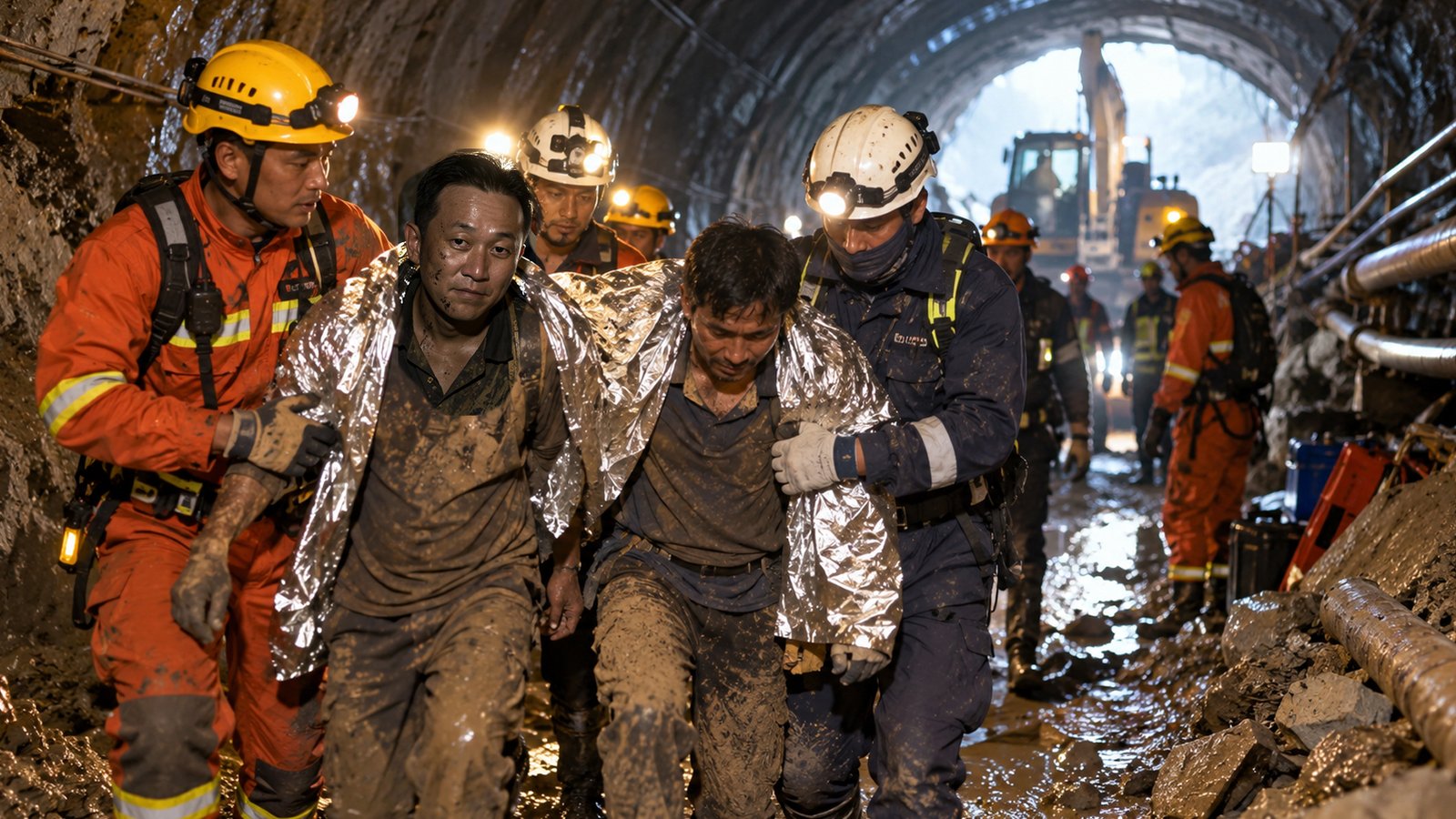
Two men trapped inside a hydropower tunnel in Nepal for nine days have been rescued alive, giving a fresh burst of hope to a country still searching for thousands of people after devastating flash floods and landslides.
The dramatic rescue at the Upper Trishuli 3A hydropower project in Rasuwa district came on Friday, September 4, after rescuers detected signs of life inside the blocked tunnel. Sanjay Sah and Kabir Maharjan were eventually brought out alive after spending more than a week cut off beneath tonnes of mud, rocks and debris.
The men were taken to an army hospital in Kathmandu for treatment. Their vital signs were reported to be stable.
Their survival has become one of the most extraordinary stories to emerge from the Nepal floods, which struck parts of the country on August 26. The disaster sent torrents of water, mud and debris through settlements near the Trishuli River and the Tibet border, destroying homes, roads, bridges and infrastructure.
The tunnel rescue was particularly difficult because several hydropower projects in the affected region were buried or blocked by the massive flow of debris. Hundreds of workers were believed to have been trapped across tunnels at several projects, making the search a race against time.
For the rescue teams, hearing voices from inside the Upper Trishuli 3A tunnel was a crucial breakthrough. After days of uncertainty, the sound confirmed that at least some of the missing workers were still alive. Specialists and rescue personnel then worked to identify their location and create a safe route to reach them.
The rescue has also renewed attention on other remarkable survival stories from the past week.
One of the most striking involved 97-year-old Guna Maya Bohara, who was found alive beneath the rubble of the care home where she had been staying. The building was destroyed when the floods and landslides swept through the area.
Bohara survived for days amid the devastation before rescuers reached her. A painstaking operation lasting several hours was needed to clear the debris and bring her to safety. Images of the elderly woman being lifted out of the rubble became a powerful symbol of hope as rescue teams continued searching for survivors. She was later taken to hospital for treatment.
Her survival was especially remarkable because the disaster had left large areas buried under mud and wreckage. Rescue workers were dealing not only with destroyed buildings but also unstable ground, blocked roads and difficult terrain, making access to affected communities extremely challenging.
There have been other stories of people surviving against the odds.
Two-year-old children were among those listed as survivors after the disaster, offering another reminder that the search operation was still producing unexpected breakthroughs. A young boy was also dramatically rescued by helicopter after being spotted seeking help from the roof of a flooded building. He reportedly waved a T-shirt to attract the attention of rescuers before being lifted to safety.
Another widely reported rescue involved a five-year-old girl who was found alive after spending around 60 hours trapped beneath flood debris. Her rescue earlier in the week had already raised hopes that more people could still be found alive in areas hit hardest by the Nepal flash floods.
Together, these rescues have given a human face to an otherwise devastating disaster. Families who had spent days without information about missing relatives have received unexpected news of survival, while rescue teams continue to work through dangerous and heavily damaged areas.
The scale of the disaster remains enormous. Thousands of people are still unaccounted for, while the death toll has crossed 1,000 according to recent reports. Tens of thousands have been displaced, and extensive damage has been reported to homes, roads, bridges and other infrastructure.
International teams and specialists have joined the search, with personnel and technical assistance coming from countries including India, China, South Korea and Australia. Engineers have also been helping rescue teams remotely, sharing technical advice as they try to locate people trapped inside tunnels and other difficult-to-reach areas.
The tragedy has also triggered a wider debate about climate change and disaster preparedness in the Himalayas. Nepal’s Foreign Minister Shisir Khanal recently clarified that Kathmandu had not formally sought compensation from India or any specific country, after earlier comments about climate-related losses sparked a debate. He said the issue was about the wider impact of climate change on vulnerable countries and the need for regional cooperation.
Rescuers are still searching. And after the latest tunnel breakthrough, families across flood-hit Nepal have one more reason to keep hoping that those still missing may yet be found alive.