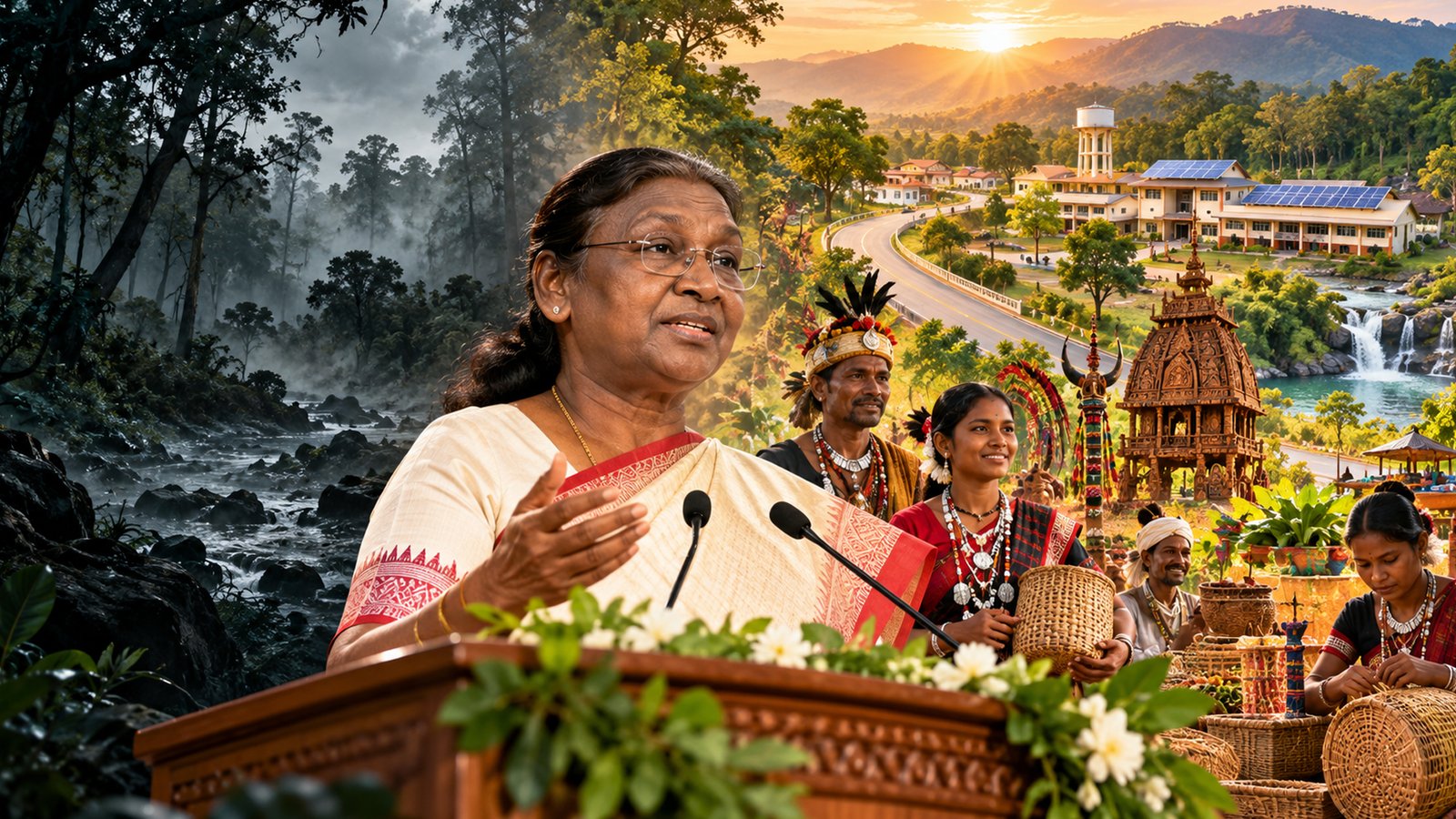
President Droupadi Murmu has highlighted Chhattisgarh’s progress towards peace and development, crediting the combined efforts of the Central and state governments for helping the region move beyond years of Naxal violence. Addressing the Bastar Dussehra Festival in Jagdalpur on October 23, she stressed the importance of tribal empowerment, entrepreneurship, environmental protection and inclusive growth.
The President expressed confidence that tribal communities, particularly young people, would contribute significantly to India’s ambition of becoming a developed nation by 2047. She also highlighted the importance of indigenous knowledge and the close relationship tribal communities maintain with forests, hills and other natural resources.
Her address brought attention to Bastar’s development priorities, including better economic opportunities, access to markets and the preservation of traditional culture. These priorities also highlight how technology and digital infrastructure could help local communities access new opportunities while protecting their cultural identity.
Murmu said Chhattisgarh had faced the effects of Naxalism for a long time but was now moving forward through coordinated efforts by the Central and state governments. She described the changing situation as an opportunity to expand development and improve prospects for residents.
Bastar, known for its rich tribal heritage, forests and natural resources, has experienced prolonged challenges associated with Maoist insurgency. The President’s remarks underscored the importance of ensuring that the region’s transition towards peace translates into tangible benefits for its people.
She welcomed efforts to provide financial assistance to tribal entrepreneurs and connect them with wider markets. Such initiatives, she said, could support equitable development and contribute to the national vision of Viksit Bharat 2047.
For small businesses, artisans and traditional producers in Bastar, reaching customers outside their immediate region can be challenging. Digital commerce platforms, online catalogues and electronic payment systems could help them showcase their products, receive orders and connect with buyers across India.
Digital financial services can also make transactions more convenient for eligible entrepreneurs. However, these are potential applications of technology rather than new schemes announced by the President during the event. Their success would depend on reliable internet connectivity, digital literacy, banking access and practical support for small businesses.
Training in online marketing, product photography and digital payments could help artisans present their work to a wider audience. Technology can support economic inclusion, but it needs to complement traditional craftsmanship, local skills and community-led enterprise.
The President also called for the protection of forests and hills, describing them as essential sources of food, water and other necessities. She said tribal communities’ close relationship with nature offered valuable lessons for society.
Her message comes amid growing concerns about environmental degradation and the sustainable management of natural resources. Technology can support conservation through satellite imagery, geographic information systems and forest-monitoring tools. These applications can help authorities track changes in land use and identify areas that require attention.
However, effective environmental protection also depends on local knowledge and community participation. Tribal communities have accumulated generations of experience in understanding local ecosystems, seasonal changes and sustainable resource use. Combining this knowledge with scientific tools could help improve conservation planning while respecting traditional practices.
During her visit, Murmu interacted with traditional tribal representatives, including Manjhis and Chalkis, at the Muria Darbar in Jagdalpur. She also offered prayers at the Maa Danteshwari Temple and visited the local Dussehra exhibition.
The Muria Darbar is an important part of Bastar Dussehra, bringing traditional community representatives together to discuss concerns and grievances. The President highlighted the gathering as an example of democratic values and community participation.
Her visit also drew attention to the importance of involving local communities in development decisions. Digital public services and online grievance platforms could potentially make information more accessible and help residents communicate with authorities. However, these services must account for people who lack smartphones, reliable connectivity or familiarity with digital systems. Local-language assistance and offline services remain essential to ensure that technology does not exclude vulnerable communities.
Bastar Dussehra provided the setting for the President’s message on peace, development and cultural preservation. Unlike conventional Dussehra celebrations centred on the victory of good over evil, the festival is closely connected with local traditions, community participation and devotion to Maa Danteshwari.
Murmu said the festival’s rituals strengthen relationships among different sections of society and reflect Chhattisgarh’s cultural identity. Preserving this heritage will remain important as the region embraces new development opportunities.
Digital archives, online exhibitions and educational resources could help document local art, languages and traditions for future generations. Such efforts would be most effective when communities have a meaningful role in deciding how their cultural knowledge is recorded and shared.
The President’s address connected peace, entrepreneurship, environmental conservation and inclusive development. Her message was that progress should not be measured solely through economic growth but also through improvements in people’s lives and respect for their traditions and natural surroundings.
As India works towards its 2047 development goals, Bastar faces the challenge of turning the changing security situation into lasting opportunities for tribal communities. Better access to markets, education, technology and essential services could support that transition, provided development remains inclusive and sensitive to the region’s cultural and environmental needs.