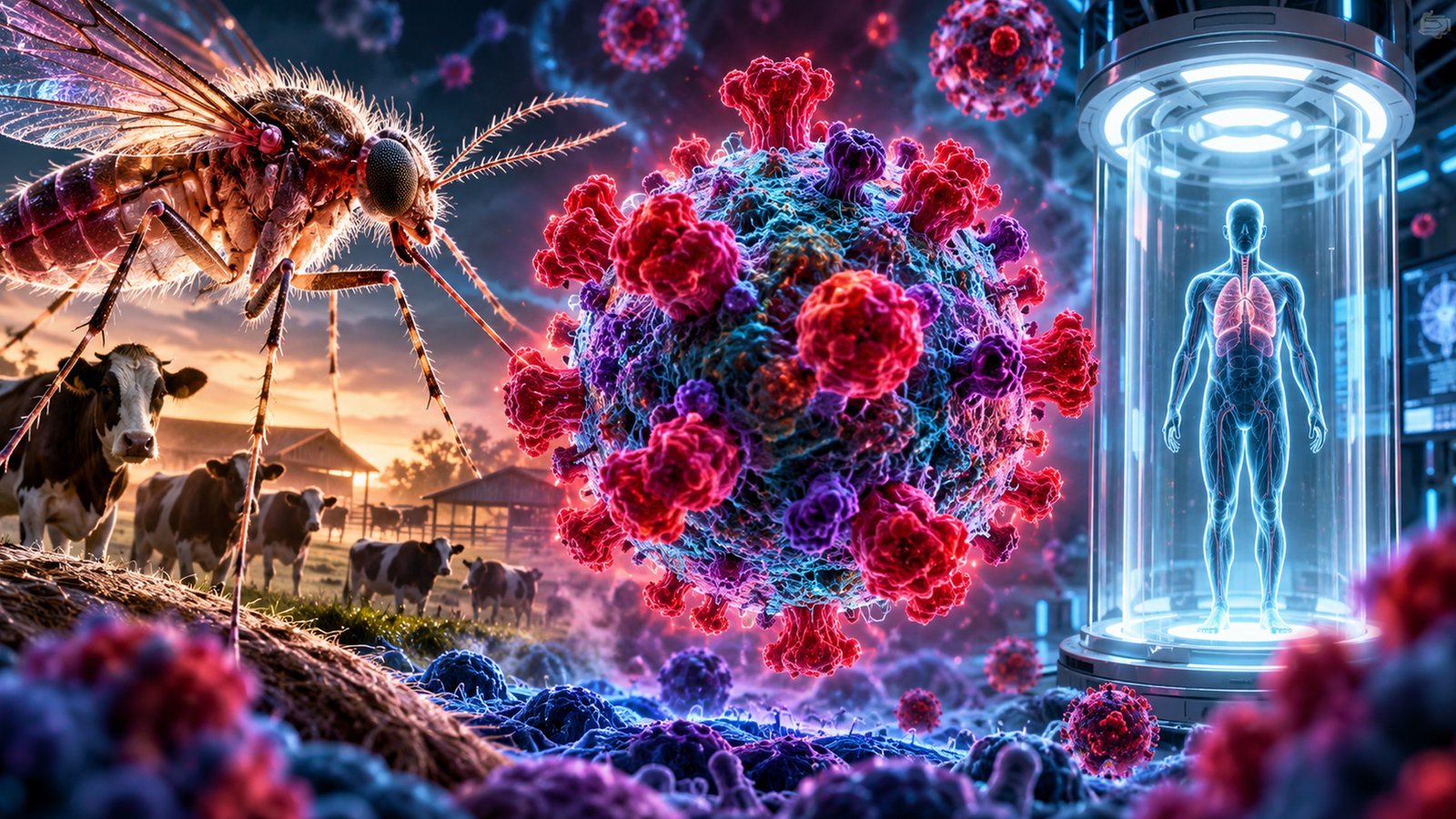
A virus previously associated with livestock has been detected in a human for the first time, after French authorities identified Shamonda virus in a patient receiving hospital treatment. The case has drawn attention from health experts because the pathogen was not previously known to cause documented human infections.
The patient, who was severely immunocompromised and being treated for a serious illness, died in early October. However, authorities have not established that Shamonda virus caused the death. Investigations are continuing to determine how the infection occurred and whether the virus contributed to the patient’s condition.
French authorities announced the discovery on October 22. The patient was treated in Lyon, where medical investigations into neurological complications led to the virus being identified. The case has been reported to international health authorities, while specialists examine its significance.
For now, officials have not identified a wider threat to the public. The European Centre for Disease Prevention and Control (ECDC) is monitoring the situation alongside French authorities and other European partners.
Shamonda virus belongs to the Orthobunyavirus group, a family of viruses that includes pathogens affecting animals and, in some cases, humans. It was first isolated from cattle in Nigeria in 1965 and has since been detected in parts of Africa and Japan.
The virus is primarily associated with livestock. In cattle, infections may be linked to fever, diarrhoea, reduced appetite and a fall in milk production. Reproductive problems have also been reported in animals affected by viruses within this group.
Shamonda virus was detected in European livestock in 2026, bringing it to the attention of veterinary authorities in the region. French authorities reported infections in cattle during the summer, with the virus identified in late July after animal illnesses had been observed from June.
The discovery in a human marks a new development in the understanding of the pathogen. However, experts caution that identifying a virus in one person does not establish that it can spread easily among humans or cause a wider outbreak.
Investigators suspect that the patient may have been infected through the bite of a *Culicoides* biting midge. These tiny insects feed on blood and can transmit certain viruses between animals.
The suspected exposure occurred in eastern France, where the virus had been circulating among animals. Authorities are examining the circumstances surrounding the case to establish how the patient came into contact with the pathogen.
The possible route of infection is important because it would suggest transmission from an insect vector rather than direct contact between people. However, the precise route has not been conclusively established.
When a pathogen crosses from animals into humans, the event is known as a spillover infection. Such events are closely monitored because they can reveal whether a disease previously associated with animals is capable of infecting people.
Still, a spillover event does not necessarily mean that a virus has acquired the ability to spread from person to person. Scientists need additional evidence to assess the virus’s behaviour and the possibility of further human cases.
The French patient experienced neurological complications, which authorities believe were very likely linked to the infection. But the patient’s weakened immune system and serious underlying illness make it difficult to determine the virus’s precise role in the outcome.
Because this is the first documented human case, there is little clinical evidence about how Shamonda virus affects people. Symptoms reported in infected cattle cannot automatically be used to predict the illness it may cause in humans.
There is also no established evidence of human-to-human transmission. French authorities have not identified a public health risk to the general population based on the information currently available.
The ECDC is following the investigation as experts assess whether additional surveillance or measures are needed. Laboratory testing and epidemiological studies will be important in determining whether the infection was an isolated event.
There is currently no established Shamonda-specific vaccine or antiviral treatment for humans. The absence of previously documented human cases means that doctors have limited clinical evidence to guide treatment.
Medical care would depend on the patient’s symptoms and complications, with treatment focused on supportive care where necessary. Researchers will need further information before drawing conclusions about the severity of the infection or the most effective treatment approach.
For people living in areas where the virus has been detected in animals, official public health guidance remains the most reliable source of advice. Farmers and veterinary professionals should report unusual livestock illnesses and follow recommendations to reduce exposure to biting midges.
The detection highlights the importance of tracking infections that circulate among animals, particularly those transmitted by insects. Changes in the distribution of animal diseases can create new questions for public health authorities, especially when a pathogen is detected in a new host.