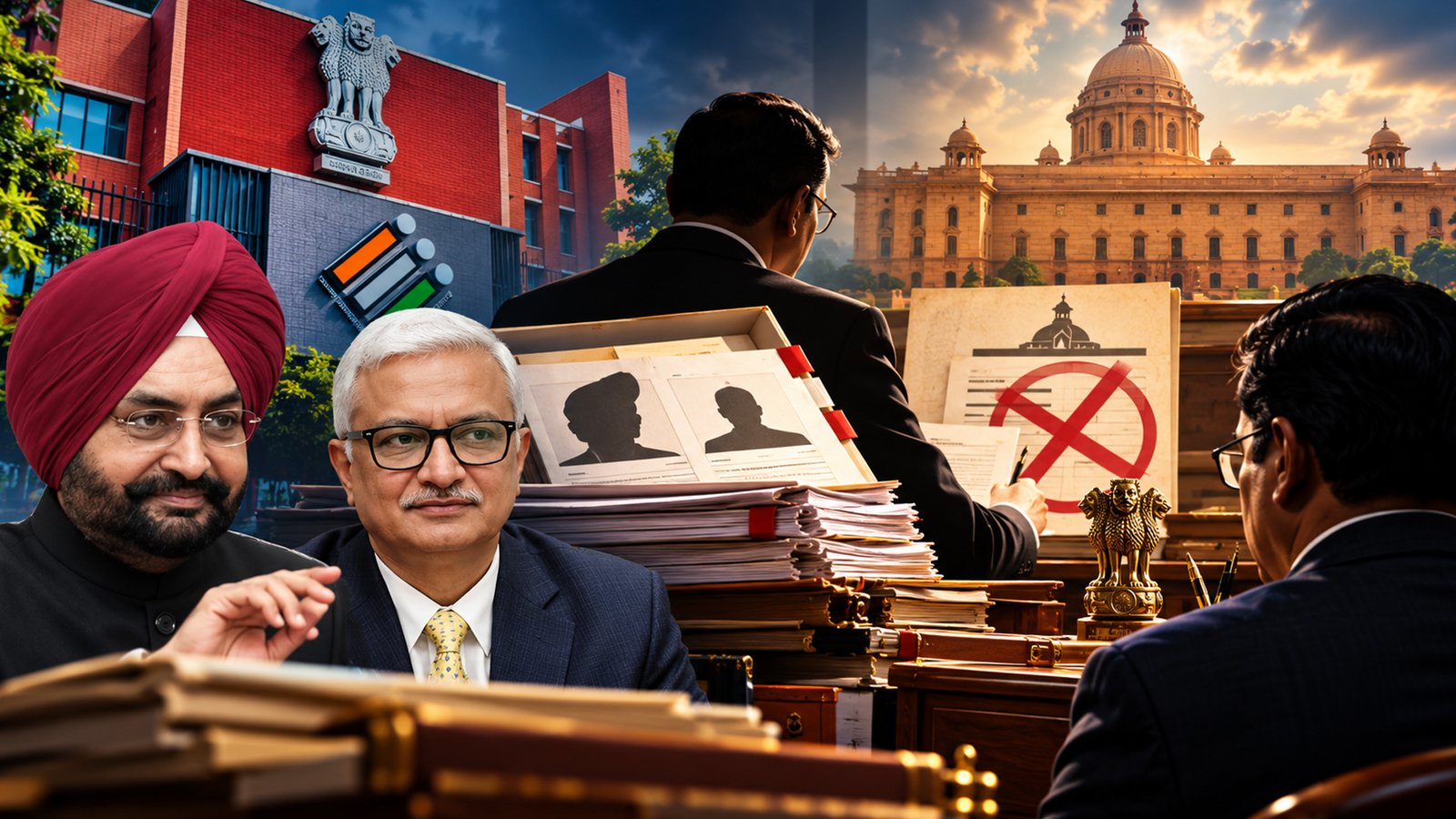
The Cabinet Secretariat decided against taking action on complaints filed by two Election Commissioners against a senior Election Commission of India (ECI) official, saying intervention could be viewed as interference in the functioning of a constitutional body. The decision came after Election Commissioners Sukhbir Singh Sandhu and Vivek Joshi separately approached Cabinet Secretary T V Somanathan, raising concerns about the conduct of senior deputy election commissioner Maneesh Garg.
The details emerged through documents released under the Right to Information (RTI) Act in response to an application by transparency activist Commodore Lokesh K Batra (retired). The file notings reveal how officials examined the complaints in August before deciding to acknowledge the letters and inform the offices concerned rather than initiate action.
The disclosure has brought renewed attention to the Election Commission’s internal administration, the process for handling complaints against senior officials and the importance of maintaining the poll body’s independence.
What did the two Election Commissioners allege?
Sandhu and Joshi wrote separate letters to Somanathan on July 29, 2026, objecting to a work-allocation order issued by Garg. He had been given additional charge of the Administration Division while Deputy Election Commissioner Bhanu Prakash Yeturu was on leave from July 27 to August 9.
According to the complaints, Garg issued an order revising the allocation of work among senior deputy election commissioners, deputy election commissioners and equivalent officers within hours of taking charge. The commissioners alleged that the changes were made without discussing or informing them or obtaining the Commission’s prior approval.
They also said the order had been issued despite repeated oral and written instructions against making such changes without prior discussion or approval.
Joshi raised an additional concern, stating that when he sought the relevant file from the Administration Division, it was not provided to him. The commissioners questioned the procedure followed in issuing the order and raised concerns about compliance with established rules.
Why did the Cabinet Secretariat not act?
The Cabinet Secretariat examined the letters on August 3 and 4. An initial file note proposed seeking the Chief Election Commissioner’s opinion on the matter.
However, the subsequent assessment took a different approach. Officials noted that the complaints had been submitted by the two commissioners in their individual capacities rather than as a formal communication from the Election Commission as a whole.
The August 4 note stated that the Election Commission was a constitutional body designed to function independently and without executive interference. It cautioned that taking action against an officer without an official communication from the Commission collectively could be considered inappropriate and might be construed as interference in its functioning.
The note also observed that the Election Commission’s business was governed by the applicable legal framework, under which decisions should be taken unanimously wherever possible or by majority when necessary.
Officials concluded that the appropriate course was to acknowledge both letters and send copies to the office of the Chief Election Commissioner for information. The Department of Personnel and Training (DoPT) and the Establishment Officer were also to be informed so that the matter could be placed on record for future decisions concerning the officer.
Cabinet Secretary acknowledges the letters
On August 5, Somanathan sent separate acknowledgements to Sandhu and Joshi, confirming receipt of their communications dated July 29. Copies were marked to the DoPT Secretary, the Establishment Officer and the office of Chief Election Commissioner Gyanesh Kumar.
The response did not initiate a formal investigation or disciplinary action against Garg. Instead, the Cabinet Secretariat recorded the complaints and forwarded the information to the relevant offices.
The documents therefore establish how the government processed the commissioners’ representations, but they do not amount to a finding that the allegations against the officer were proven.
What was the dispute about?
The controversy centres on administrative authority within the Election Commission, including how responsibilities are assigned among senior officials and how such decisions should be approved.
The commissioners argued that the work-allocation changes had been made without the required consultation. Their concerns also touched on the handling of administrative files and the authority of officers to redistribute responsibilities among colleagues of equivalent or higher seniority.
The Election Commission subsequently clarified on September 26 that the disputed work-redistribution orders had not been implemented after the two commissioners intervened. It also maintained that the dispute concerned the conduct of an officer deputed to the Commission rather than a policy decision involving the poll body’s information technology division.
Why the RTI disclosure matters
The RTI response provides an account of the internal decision-making process at the Cabinet Secretariat and the reasons officials gave for not acting directly on the complaints.
The Cabinet Secretariat’s position was that action without a formal communication from the Commission as a whole could risk executive interference. At the same time, the decision to place the matter on record leaves open the possibility that the complaints could be considered in future administrative decisions concerning the officer.
The central issues remain the procedures governing work allocation, accountability within the Election Commission and the safeguards required to preserve the autonomy of India’s election management body.