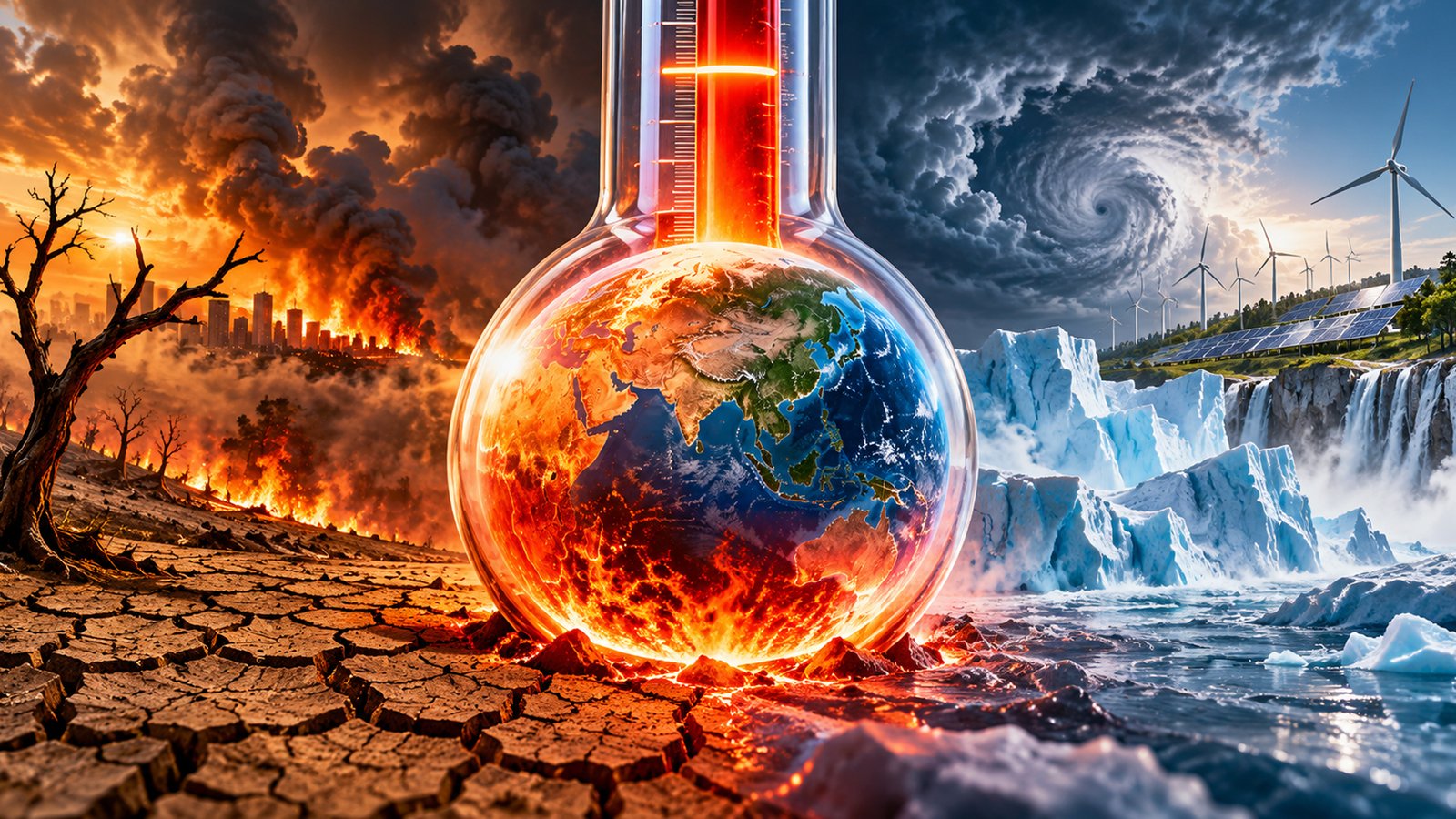
The world is making progress in expanding renewable energy and adopting climate policies, but these efforts are still not enough to prevent dangerous global warming. A new United Nations report warns that global temperatures could rise by 2.6 degrees Celsius above pre-industrial levels by the end of the century, even if countries fully deliver on their existing climate commitments.
The findings appear in the United Nations Environment Programme’s (UNEP) Emissions Gap Report 2026, released on October 21. The report highlights a widening gap between the emission reductions countries have promised and the cuts needed to limit the worst effects of climate change.
Under current government policies, the world is on track for approximately 2.8°C of warming by 2100. Even if all existing national climate pledges are implemented, the projected increase would be around 2.6°C. Both estimates are higher than those in last year’s assessment.
The projections place the world well beyond the Paris Agreement’s goal of keeping global warming well below 2°C while pursuing efforts to limit it to 1.5°C.
UN Secretary-General António Guterres warned that the consequences of climate inaction were already being felt through deadly floods, intense heatwaves, wildfires, economic losses and growing inequality. Vulnerable communities, which have contributed relatively little to global greenhouse gas emissions, often face the most severe consequences.
The 1.5°C target faces an overshoot
The report says the world can no longer avoid exceeding the 1.5°C threshold, a limit widely regarded as important for reducing climate risks. However, crossing the threshold does not mean efforts to achieve it should be abandoned.
UNEP outlines a pathway under which global temperatures could peak at around 1.7°C to 1.8°C above pre-industrial levels by the middle of the century before returning to 1.5°C or below by 2100. This scenario offers roughly a 50% chance of achieving that outcome, but it would require rapid emissions reductions and extensive carbon dioxide removal.
To follow this pathway, global greenhouse gas emissions would need to fall 18% by 2030, 45% by 2035 and 69% by 2040, compared with 2025 levels.
Existing national climate pledges are nowhere near this level of ambition. If fully implemented, they would reduce emissions by only 5% to 8% by 2030 and 11% to 15% by 2035, according to the report.
The gap means governments need to move beyond announcements and translate climate commitments into measurable reductions in pollution.
Fossil fuels remain a major challenge
Global greenhouse gas emissions remained close to record levels in 2025, broadly matching those recorded in 2024. Carbon dioxide emissions from burning coal, oil and gas also increased slightly, underscoring the difficulty of moving away from fossil fuels despite the expansion of clean energy.
Renewable energy has grown rapidly in recent years, while climate policies have helped reduce emissions in several countries. However, these gains have not been sufficient to offset the continuing impact of fossil fuel use and rising energy demand.
The report points to several priorities, including expanding renewable electricity, improving energy efficiency, reducing dependence on coal, oil and gas, and cutting methane emissions. Protecting forests and improving land management are also important because forests absorb carbon dioxide and help regulate the climate.
The United States’ withdrawal from the Paris Agreement and changes in historical emissions estimates have contributed to the deterioration in the latest projections. The findings underline how decisions by major economies can influence the world’s overall climate trajectory.
What the warning means for India
For India, the report adds urgency to efforts to expand renewable energy, improve energy efficiency and reduce emissions while meeting growing electricity and development needs.
The country faces a complex challenge: supporting economic growth and improving living standards while reducing dependence on fossil fuels. Heatwaves, erratic rainfall, floods and other extreme weather events also make climate adaptation essential for public health, agriculture, infrastructure and livelihoods.
A stronger global response would require developed and developing economies to work together, with finance and technology support playing an important role. Developing countries have argued that climate action must account for differences in historical emissions, resources and development needs.
The findings are also significant ahead of the COP31 climate summit in Türkiye next month, where governments will face renewed pressure to strengthen their climate plans and demonstrate progress.
The report does not suggest that the situation is beyond repair. Instead, it warns that every additional fraction of a degree increases the risks to people, economies and ecosystems. Faster emissions cuts could limit the temperature overshoot and reduce the duration the world remains above 1.5°C.