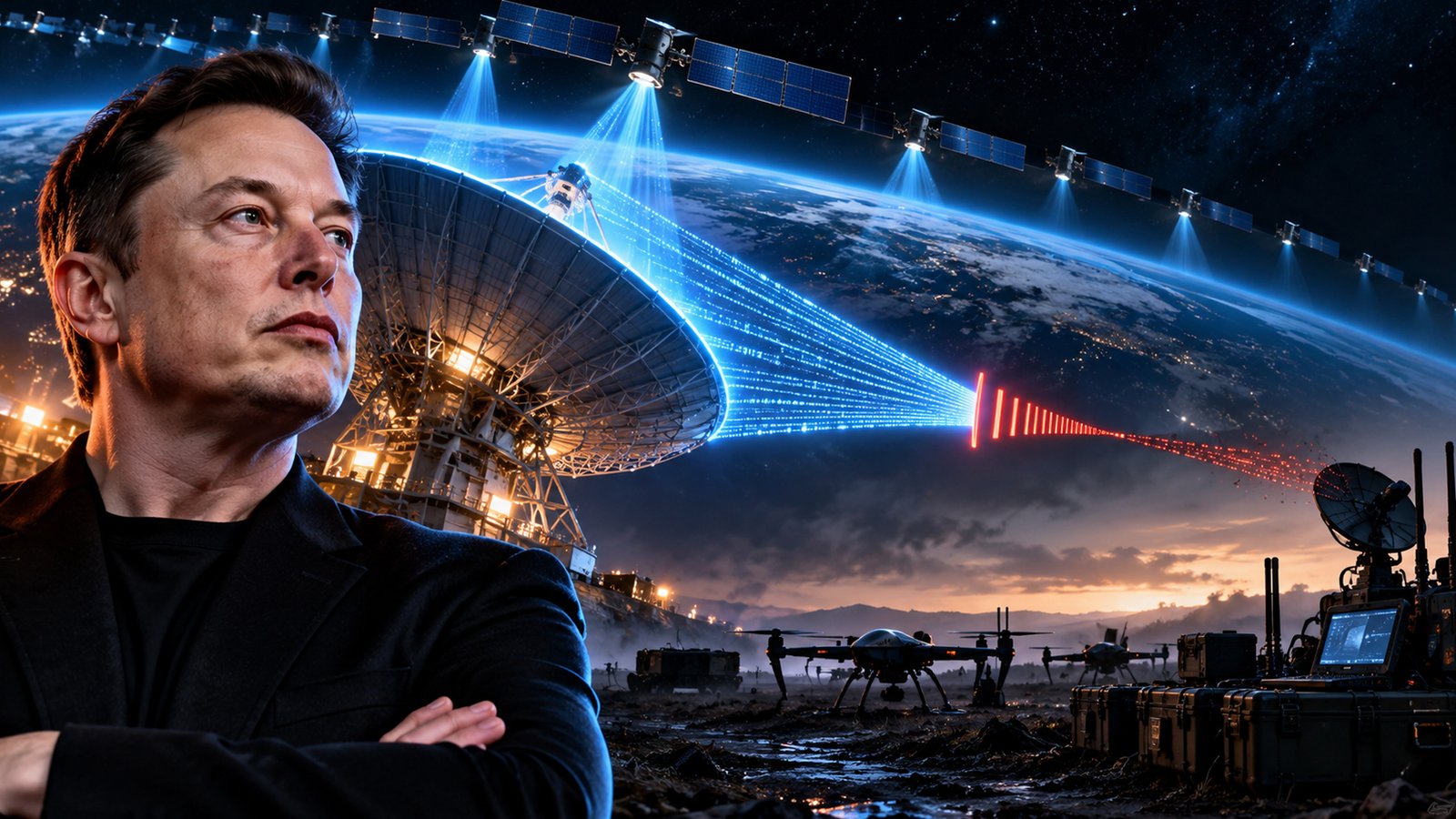
A reported decision by Elon Musk to slow down a military-grade satellite service used by Ukraine has brought an important question into focus- what happens when a country depends on technology controlled by a foreign company during a crisis?
Musk ordered restrictions on the military-grade version of SpaceX’s satellite network used by Ukrainian forces. The move reportedly disrupted drone operations and raised concerns about the reliability of communications systems that have become essential to Ukraine’s defence against Russia.
The development has implications beyond the battlefield. For India, which is assessing satellite internet services from foreign operators while relying on overseas suppliers for several critical technologies, the episode highlights the importance of maintaining control over essential infrastructure.
According to the report, the slowdown began on October 14, after tensions grew over Ukrainian attacks on Russian diesel refineries. US President Donald Trump had criticised the strikes, blaming them for contributing to higher energy prices. Musk had also expressed disapproval of Ukraine’s actions.
The restrictions reportedly affected the speed at which Ukrainian military equipment could remain connected to the satellite network. Some drones, including those used to attack targets and intercept incoming threats, were said to have become ineffective when their connections were disrupted.
The controversy centres partly on Starshield, SpaceX’s military-grade satellite service developed for the US government, which uses technology related to its commercial Starlink network. Ukrainian officials have reported problems with the service, while accounts of precisely how the restrictions were imposed and who authorised them have differed.
Musk previously said that limits on Starshield’s speed or usage were decided by the US military and ultimately the US president. However, the Wall Street Journal reported that Musk personally ordered the slowdown after discussions involving Trump and administration officials.
Trump has denied ordering the restrictions and said he wanted to establish who was responsible. US Secretary of State Marco Rubio said on October 21 that decisions concerning access to Starlink were a matter for SpaceX and Musk, rather than the White House. Defence Secretary Pete Hegseth also said the Pentagon had not issued a directive to restrict the service.
The conflicting statements have fuelled questions about accountability when a private company operates technology that has become strategically important to a country at war. Ukraine’s reliance on satellite connectivity has made the network a significant part of its military communications and drone operations.
India’s exposure to foreign technology is broader than satellite internet. Critical systems across cloud computing, defence manufacturing, navigation and communications rely, to varying degrees, on technology, equipment or services controlled by overseas companies.
The Starlink episode is relevant as India considers the entry of satellite broadband providers. Starlink, Eutelsat OneWeb’s Indian operation and Jio Satellite Communications have been part of the country’s satellite communications landscape, but commercial launch depends on meeting the required regulatory and security conditions.
The government is also discussing a possible hardware-based security layer through which traffic from foreign satellite providers could be monitored and controlled. The proposal, reported by The Economic Times, aims to strengthen national security and ensure that satellite operators comply with Indian requirements. It remains under consideration.
Such safeguards matter because satellite networks can provide connectivity in remote areas, during disasters and where conventional networks are unavailable. But if a foreign operator retains control over access, routing or service availability, users may face disruption during a political dispute or security emergency.
India’s wider technology exposure can be seen in cloud computing. Businesses and public institutions use services from global providers such as Amazon Web Services, Microsoft Azure and Google Cloud. The government also operates MeghRaj, its cloud initiative, through the National Informatics Centre, while working with private providers.
Domestic infrastructure can reduce dependence, but it does not automatically eliminate it if management tools, software updates or essential components remain under foreign control.
Navigation is another concern. India developed its own regional navigation system, NavIC, but the availability and reliability of its satellite constellation remain important challenges. The country also depends on foreign-made components and equipment in parts of its defence sector. Delays in the supply of US-made engines for the Tejas fighter programme, for instance, have affected production schedules.
These examples show that technological sovereignty is not simply about owning a company or hosting data within national borders. It also involves the ability to keep systems operating, maintain access to essential services and develop alternatives when an overseas supplier faces political pressure, technical failure or commercial disputes.
The Starlink controversy does not mean that India should reject foreign technology. Satellite broadband and global cloud services can expand connectivity, improve efficiency and support economic growth. The challenge is to ensure that such benefits do not create critical vulnerabilities.