A controversy over the removal of photographs from artist Raihan Vadra’s exhibition in New Delhi has triggered a wider debate on artistic freedom, censorship and freedom of expression. Kerala has offered to host the entire exhibition without exclusions, while Congress leader Shashi Tharoor has criticised the move, calling it a “disgrace at so many levels”.
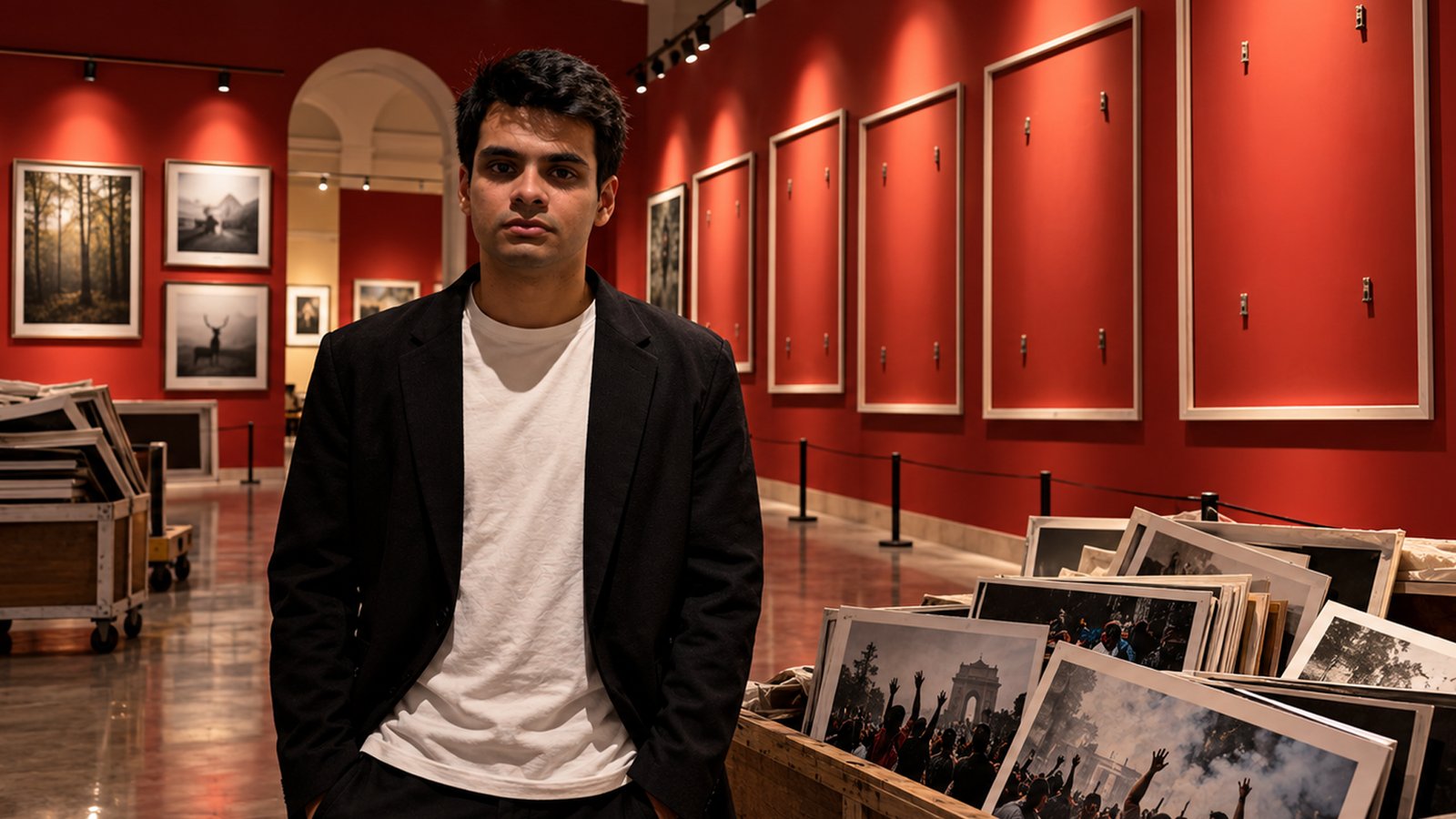
Raihan, the son of Congress MP Priyanka Gandhi Vadra and businessman Robert Vadra, alleged that 74 of the 105 photographs planned for his exhibition, No Idea Is Final, were ordered to be removed shortly before the show opened at Bikaner House. Many of the photographs documented recent protests in the national capital.
The exhibition opened with a significantly reduced collection after the venue’s management objected to certain photographs. The controversy has since drawn reactions from political leaders, renewed questions about the role of public cultural institutions and concerns over the limits placed on artists documenting contemporary events.
Kerala offers to host entire exhibition
Kerala Chief Minister V D Satheesan offered to host Raihan’s complete photography exhibition in the state, saying the collection would be welcomed without exclusions or exceptions.
The offer came as the dispute at Bikaner House intensified, with supporters of the photographer questioning why the images were removed at the last minute. Satheesan’s intervention has positioned Kerala as a potential alternative venue for displaying the complete collection.
The offer also brought the controversy into the political arena, with the BJP questioning whether the invitation amounted to preferential treatment for someone from a prominent political family.
Kerala BJP president Rajeev Chandrasekhar questioned Satheesan’s decision, arguing that the government should also consider the rights of ordinary young people who face police action during protests in the state. He said he had no objection to hosting the exhibition but questioned whether the same support would be extended to others.
What happened at Bikaner House?
Raihan’s exhibition, No Idea Is Final, features a mix of wildlife photography, street photography and images documenting recent youth-led protests in Delhi.
According to Raihan, the venue’s management objected to a substantial section of the collection shortly before the scheduled opening. He said he had shared the exhibition layout in advance and had already removed photographs containing overt political slogans.
However, he was subsequently asked to remove or replace 74 photographs from the planned display of 105 images. He said the team was given very little time to comply and was warned that the exhibition could be cancelled if the photographs remained.
Raihan initially replaced some of the removed images with blank frames, but the venue reportedly objected to those as well. The dispute left sections of the exhibition space largely empty, drawing further attention to the decision.
The photographer maintained that the images were intended to document protests and public events rather than promote a political message. He described the experience as distressing, saying the collection represented years of work.
Bikaner House cites exhibition policy
The Bikaner House Management Society defended its decision, stating that certain photographs were found to be inconsistent with its established policy and that their removal had therefore been requested.
The management said photographs that complied with its rules continued to be displayed. The venue’s policy restricts political content, alongside other categories of material.
However, the dispute has raised questions about how such restrictions are interpreted and when objections should be communicated to artists. Raihan argued that the concerns should have been raised earlier, particularly because the exhibition layout had been shared with the management before the opening.
The disagreement centres on two competing positions: the venue’s authority to enforce its exhibition rules and the artist’s argument that photographs documenting public protests should not be excluded simply because of their political context.
Priyanka Gandhi and Shashi Tharoor react
Priyanka Gandhi Vadra strongly criticised the removal of her son’s photographs, arguing that the decision threatened artistic expression and could discourage other young artists from documenting events around them.
She said the move raised concerns about the state of democracy and warned that restrictions on one artist could set a precedent for others.
Tharoor also condemned the decision, describing it as a “disgrace at so many levels”. His reaction added to criticism from Congress leaders, who have framed the episode as an issue of freedom of expression rather than simply a disagreement over exhibition rules.
The controversy has also prompted broader discussion about the responsibilities of public cultural institutions. Critics argue that photographs documenting protests can serve as historical records of public life, while institutions maintain the right to apply their stated policies to exhibitions.
Raihan plans to display the photographs again
Raihan has indicated that he intends to find another venue for the photographs that were removed. He has also spoken about displaying the images at a future exhibition in Bengaluru.
The offer from Kerala could provide another opportunity to present the complete collection, although the final arrangements remain to be confirmed.
The episode has become more than a dispute over photographs at a single exhibition. It has raised questions about how public spaces should balance institutional rules with artistic freedom, particularly when artworks document politically sensitive events.
As reactions continue, the central issue remains whether artists can record and display contemporary public events without facing last-minute restrictions. The outcome could influence future discussions about censorship, cultural policy and the space available for independent artistic expression in India.