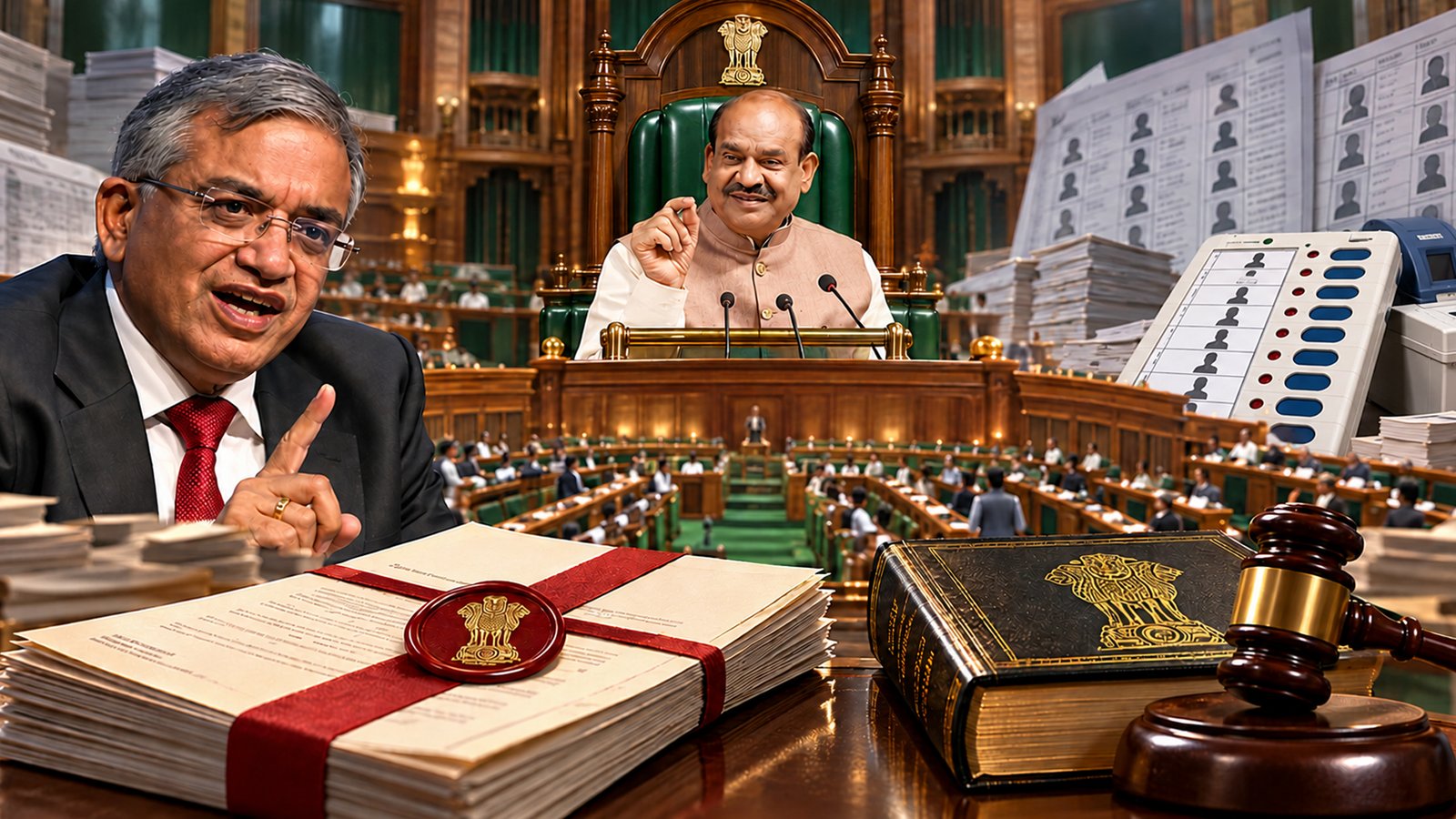
Lok Sabha Speaker Om Birla has said that any fresh motion seeking the removal of Chief Election Commissioner (CEC) Gyanesh Kumar will be examined according to established parliamentary rules and procedures. His statement comes amid growing Opposition protests over alleged irregularities in the Special Intensive Revision (SIR) of electoral rolls and renewed demands for the poll chief’s removal.
Speaking to reporters in New Delhi on Thursday, October 22, Birla said the process would be followed if the Opposition formally moved a fresh motion. He drew a comparison with the procedure for removing a Supreme Court judge, stressing that the Chief Election Commissioner’s removal is also governed by a prescribed legal framework.
The remarks do not mean that a fresh motion has been accepted or that proceedings against Kumar have begun. Any further action will depend on whether a formal notice is submitted and how it is assessed under the applicable rules.
The Opposition has already made two attempts to seek Kumar’s removal. Notices submitted during the first attempt were rejected by both the Lok Sabha and the Rajya Sabha. Notices from the second attempt remain pending in the Upper House, according to reports.
The latest remarks from Birla come as Opposition parties continue to challenge the Election Commission of India’s handling of the electoral-roll revision exercise. They have alleged that the process has been conducted in an arbitrary manner and have demanded accountability from the commission’s leadership.
Opposition representatives have also met President Droupadi Murmu, seeking Kumar’s removal and calling for the repeal of the 2023 law governing the appointment, service conditions and tenure of the Chief Election Commissioner and other Election Commissioners.
The controversy has increased political tensions around the Election Commission, an institution responsible for overseeing elections and safeguarding the electoral process. The Opposition’s allegations remain claims made by political parties and should not be treated as established findings of wrongdoing.
The Special Intensive Revision is an exercise to review and update electoral rolls. Such revisions are intended to improve the accuracy of voter lists, including by identifying eligible voters and addressing entries that may be outdated or ineligible.
However, the ongoing exercise has drawn criticism from Opposition parties, which have raised concerns about its implementation and the potential impact on voters. Their objections have developed into a wider dispute over the Election Commission’s decisions and the exercise of its powers.
The Opposition has accused Kumar of the unilateral and arbitrary exercise of collective powers during the revision process. It has also questioned the legal protections available to the CEC and other Election Commissioners under the 2023 legislation.
The Election Commission’s role in preparing and maintaining electoral rolls is central to the conduct of elections. The controversy has therefore raised broader questions about transparency, institutional accountability and the relationship between the poll panel and political parties.
Birla’s statement keeps the immediate focus on parliamentary procedure rather than the merits of the allegations. Whether a fresh motion is submitted, and whether it proceeds beyond the initial stage, will determine the next steps.
The Chief Election Commissioner cannot be removed through an ordinary administrative decision. Under the constitutional framework, the CEC can be removed only through a process similar to that applicable to a Supreme Court judge, on grounds of proved misbehaviour or incapacity.
The process requires parliamentary action and the prescribed majorities in both Houses. A removal motion must satisfy the applicable requirements before it can proceed, and the process includes a formal examination of the grounds cited.
This is why the term “impeachment” is commonly used in political discussion, although the constitutional process is technically one of removal from office. The Speaker’s role is to consider a motion brought before the House in accordance with the rules, not to decide the matter solely on the basis of public or political demands.
The 2023 law governing the CEC and Election Commissioners also provides that an election commissioner may resign by submitting a written resignation to the President. Resignation, however, is distinct from removal through Parliament.
Birla has indicated that any fresh notice will be considered when it is formally presented. His statement leaves open whether the Opposition will submit another motion and whether it will meet the requirements needed to move forward.
The pending notices in the Rajya Sabha and continuing protests over the SIR exercise are likely to keep the issue in the political spotlight. Opposition parties are pressing for action, while the parliamentary process sets the framework within which a removal motion must be considered.
The immediate development is therefore procedural rather than a decision on Kumar’s position. Any change in the CEC’s status would require the relevant constitutional steps to be completed. Until then, the dispute over electoral-roll revision and the Opposition’s demand for accountability are likely to remain key points of contention.