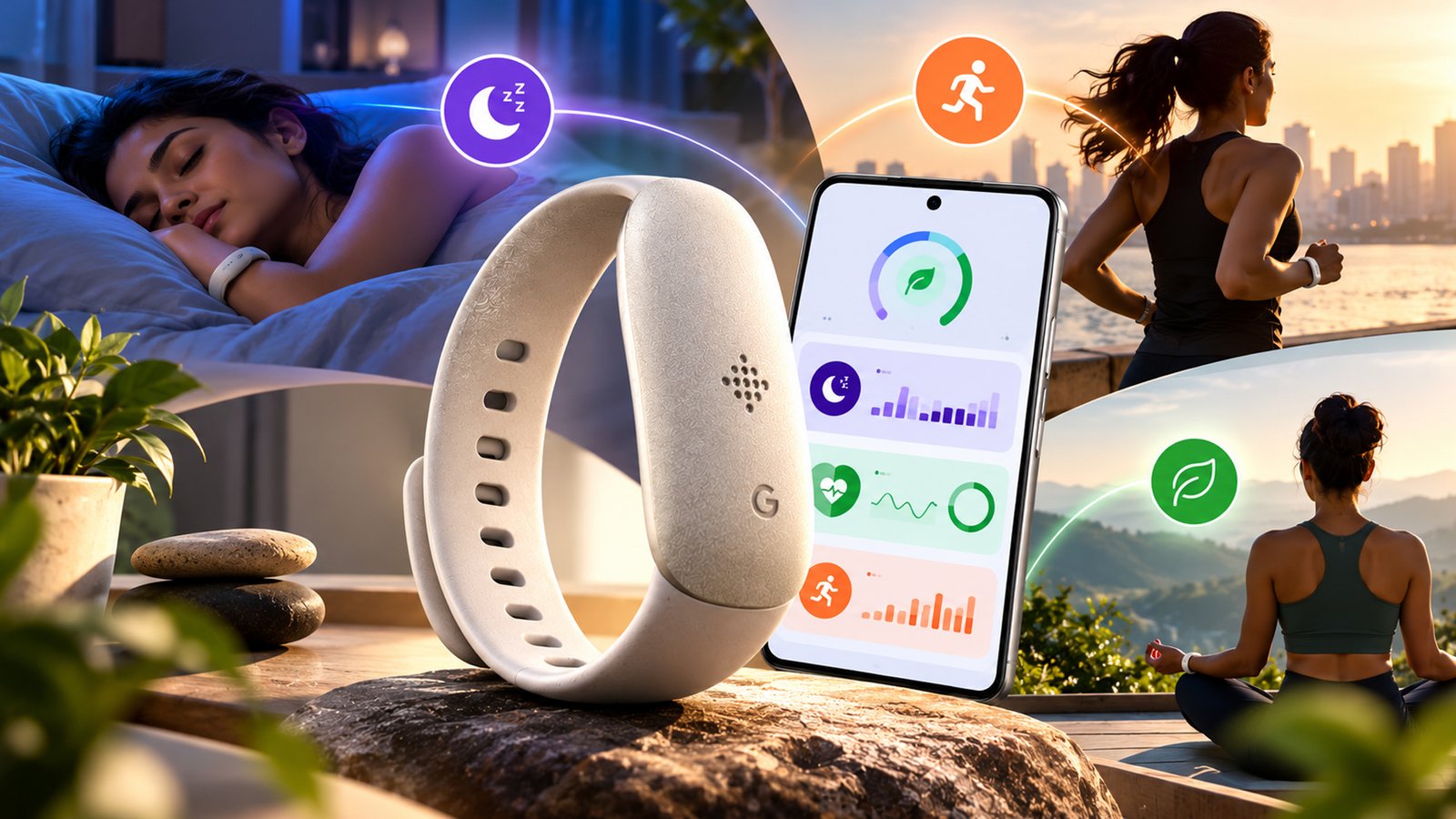
Google is bringing simplicity back to wearable technology with the Fitbit Air, a screenless fitness tracker designed for people who want to monitor their health without constant notifications. Priced at ₹13,999 in India, the device focuses on sleep tracking, heart health, physical activity and recovery rather than the apps and alerts associated with conventional smartwatches.
Available in India since October 2, 2026, the Fitbit Air represents a growing shift towards minimalist wearables. Instead of displaying information on the wrist, it collects health and fitness data and presents it through Google’s Health app on a connected smartphone.
The idea is straightforward: users can understand their daily activity and wellness patterns without feeling the need to check their devices repeatedly.
Lightweight design without a screen
The Fitbit Air features a compact sensor unit fitted into a lightweight band intended for all-day and overnight use. It has no display, notifications, apps or contactless payment features. Users must open the smartphone app to view their measurements and activity summaries.
The absence of a screen may appeal to people who find smartwatches distracting, particularly during work, exercise and sleep. The tracker is designed to remain on the wrist throughout the day, making continuous monitoring easier.
Google offers the Fitbit Air in four colours: Obsidian, Berry, Lavender and Fog. Different band styles are also available, including options designed for everyday wear and more demanding workouts.
However, comfort can depend on wrist size and sleeping habits. While the lightweight design suits many users, the fit and feel of the sensor module may not work equally well for everyone. The long-term durability of fabric bands, especially with regular exposure to sweat, is another consideration.
Health tracking and fitness features
Health monitoring is the Fitbit Air’s main selling point. The device supports continuous heart-rate monitoring, resting heart rate, heart-rate variability, blood oxygen measurement and sleep tracking. It also offers heart-rhythm monitoring with alerts for possible atrial fibrillation, commonly known as AFib.
These measurements can help users identify patterns over time. For instance, changes in resting heart rate or sleep duration may encourage someone to examine their exercise routine, recovery or sleeping habits. However, wearable readings are not a substitute for medical assessment or diagnosis.
Sleep tracking records sleep duration and stages, helping users understand their nightly rest. The information becomes more useful when collected consistently over several days rather than interpreted from a single night’s results.
For fitness enthusiasts, the Fitbit Air tracks steps, calories and workouts. Cardio load offers an indication of how demanding recent exercise has been, while other fitness measurements help users follow changes in performance and recovery.
The device does have limitations. It lacks built-in GPS, meaning people who want detailed outdoor route tracking must rely on a connected smartphone. Athletes seeking highly detailed training metrics may also prefer specialist sports watches with dedicated displays and advanced workout controls.
Battery life and charging
Battery performance is another important feature. Google claims the Fitbit Air can last up to seven days on a single charge, although actual battery life depends on usage and settings.
The company also says five minutes of charging can provide up to a day’s use. This quick-charging capability can be particularly useful for people who wear the tracker overnight to record sleep data.
Longer battery life reduces the need to remove the device frequently, helping users maintain a more consistent record of their activity and rest. The actual experience may vary depending on how frequently health-monitoring features are used.
Google Health Coach and subscription costs
The Fitbit Air connects to Google’s Health app, which organises health measurements and fitness trends. Its AI-powered Health Coach, based on Google’s Gemini technology, is designed to provide personalised recommendations using information about activity, sleep and recovery.
For example, the coach may suggest adjusting a workout after a poor night’s sleep or recommend changes to daily routines based on a user’s stated goals. Such guidance aims to make health data easier to understand and act upon.
However, the advanced coaching experience requires Google Health Premium. Buyers receive a three-month Premium trial with the Fitbit Air, after which continued access to paid features requires a subscription.
The distinction is important: core tracking features are available without a mandatory paid membership, but users seeking AI coaching and additional personalised insights may face recurring costs. Google’s optional Premium plan is priced at ₹499 per month or ₹4,999 annually.
Google has also said health and wellness information from its Health app will not be used to serve advertisements. Users have controls to manage and delete their health data, although it remains important to review app permissions and understand how information is handled.
Fitbit Air pricing and benefits
At ₹13,999, the Fitbit Air is aimed at people who prioritise health monitoring over smartwatch convenience. Its screenless design, sleep tracking, heart-rate measurements and claimed week-long battery life make it an option for users who want a less distracting wearable.
However, the lack of a screen, built-in GPS, notifications and contactless payments means it cannot replace a conventional smartwatch for everyone. Buyers should also consider whether they need the paid coaching features before committing to the device.
The Fitbit Air’s appeal lies in its focused approach. Rather than trying to do everything, it concentrates on collecting health data and helping users review it through a smartphone. For those who value simplicity and continuous monitoring, it offers a different way to approach everyday fitness technology.