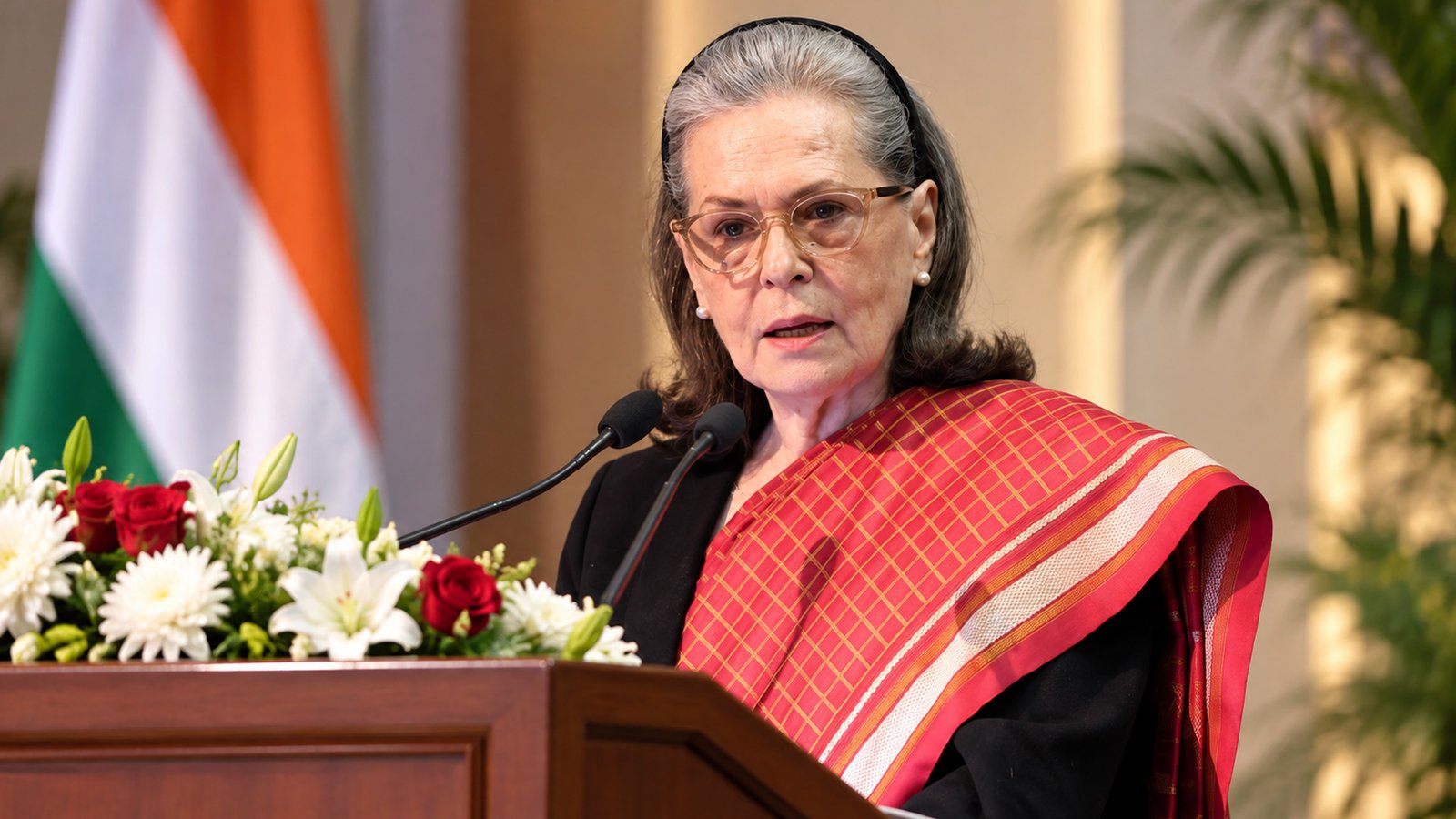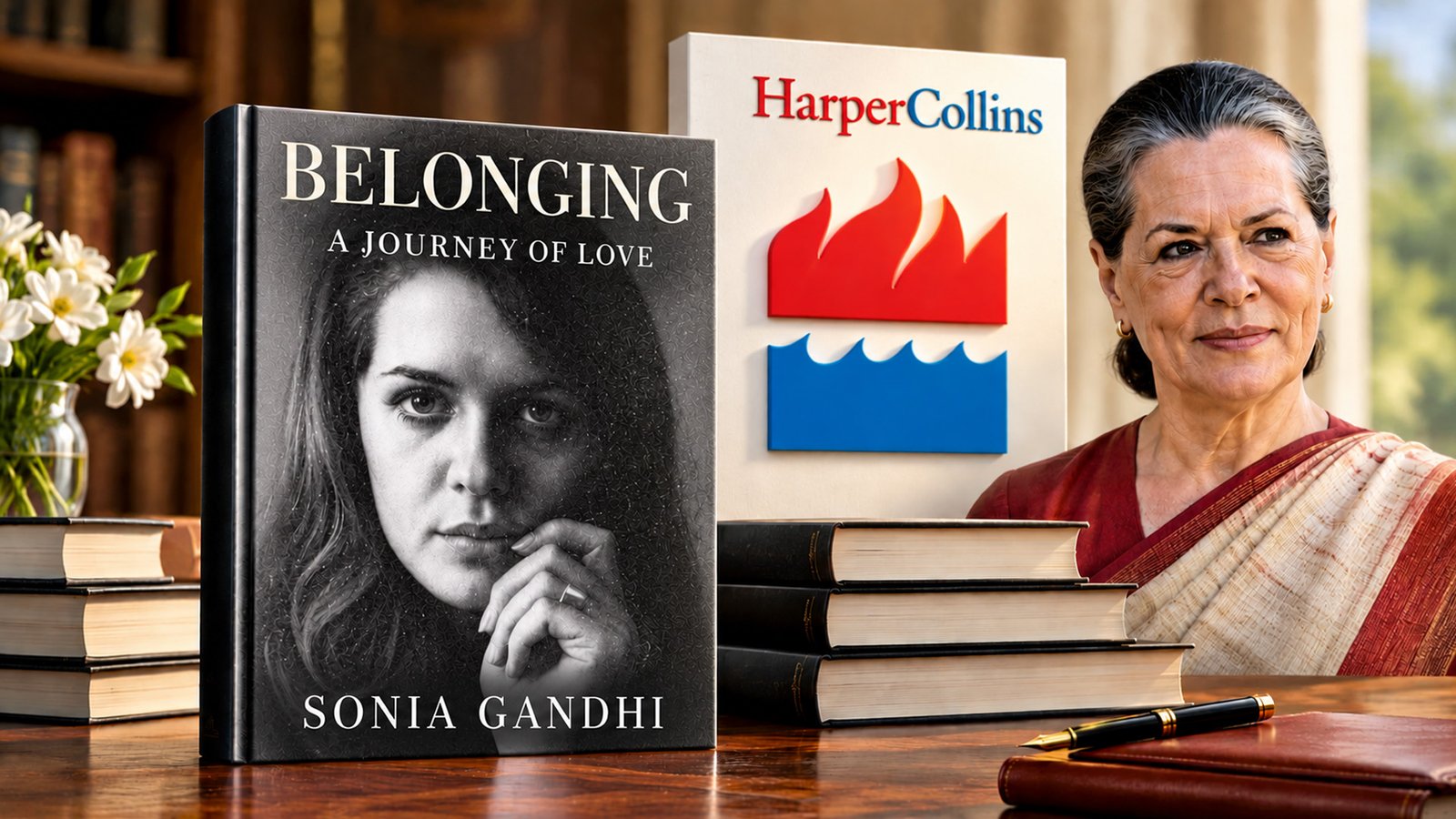
Sonia Gandhi’s much-awaited memoir has found a new home in India. HarperCollins India will publish Belonging: A Journey of Love on November 10, ending weeks of uncertainty after Penguin Random House India stepped away from the project.
The announcement on September 4 brings the book back on track for its planned November release. The memoir is expected to be one of the most closely watched political books of the year, given Sonia Gandhi’s long association with the Congress, the Nehru-Gandhi family and some of the most important political events in modern India.
The book was originally expected to be published in India by Penguin Random House India. However, that arrangement broke down after discussions between the publisher and Sonia Gandhi’s representatives over the manuscript failed to reach an agreement.
The exact issue has not been publicly disclosed. Penguin Random House India has said the matter involved its normal editorial process, including fact-checking and recommendations to the author. The publisher has also rejected suggestions that outside pressure influenced its decision.
According to reports, however, the disagreement involved passages dealing with Prime Minister Narendra Modi, the Rashtriya Swayamsevak Sangh, communal tensions and the condition of minorities. Some reports have also referred to sections concerning India-China tensions. These claims have not been independently confirmed in full because the manuscript remains under embargo.
Penguin Random House India said it remained willing to publish the book but that the discussions eventually reached an impasse on a particular issue. Sonia Gandhi’s team then decided not to proceed with the Indian edition through the publisher.
The development quickly became a political controversy. Congress leaders questioned the circumstances surrounding the decision and raised concerns about freedom of expression. Some alleged that political pressure was behind the editorial dispute.
The BJP, meanwhile, rejected the suggestion of government involvement. BJP leader Ram Madhav said the government had no role in the publishing matter and questioned why it was being turned into a political issue. There has been no established evidence of direct government intervention, while Penguin has explicitly denied external pressure.
With HarperCollins now taking over the Indian publication, the immediate uncertainty has ended.
What remains unclear is whether the Indian edition will contain exactly the same material as the international edition. HarperCollins has not publicly confirmed whether any changes will be made to the manuscript. The publisher has indicated that the book is under embargo, meaning readers are likely to discover its detailed contents only when it is released.
The international edition will continue to be published by Alfred A. Knopf, a division of Penguin Random House, on November 10. The book had earlier been announced with an initial print run of 100,000 copies.
The memoir traces her journey from childhood in post-war Italy to her years in Cambridge, where she met Rajiv Gandhi. It follows her move to India, marriage into the Nehru-Gandhi family and her relationship with Indira Gandhi.
It also deals with the personal tragedies that shaped her life. The deaths of Sanjay Gandhi, Indira Gandhi and Rajiv Gandhi form important chapters in the story of a woman whose private life was repeatedly pulled into the centre of India’s public life.
Her entry into politics was not immediate. Sonia Gandhi was known for maintaining a relatively private life before eventually taking on a larger political role after Rajiv Gandhi’s assassination. She later became Congress president and remained one of the party’s most influential figures for years.
That personal transformation is likely to be one of the central themes of Belonging. HarperCollins has described the book as an account that brings together Sonia Gandhi’s personal experiences with the political and social changes she witnessed in India over several decades.
The title itself points towards that personal side of the story. Sonia Gandhi arrived in India as a young woman from Italy and gradually built a life in a country that would eventually become the centre of her family, public identity and political career.
Her memoir therefore arrives at an interesting moment. The Gandhi family continues to occupy a central place in Indian politics, with Rahul Gandhi now a leading Congress figure, while Sonia Gandhi remains an important voice within the party.
That makes Belonging more than a conventional political memoir. It is also an opportunity for Sonia Gandhi to tell her own story after decades in which much of her life has been narrated by politicians, journalists, biographers and political opponents.
The book’s publication is now firmly scheduled for November 10 in India. Until then, the debate around its editorial journey is likely to continue.
But the biggest question will ultimately be answered by the book itself: what does Sonia Gandhi choose to reveal when she finally gets to tell her story in her own words?
After a publishing dispute that briefly put its Indian release in doubt, Belonging is once again headed for Indian bookshelves — this time under the HarperCollins imprint.