Giorgia Meloni’s government has achieved something that has long been difficult in Italy, that is, staying in power.
Meloni’s administration completed 1,413 consecutive days in office on September 4, overtaking the previous postwar record of 1,412 days held by Silvio Berlusconi’s second government, which lasted from 2001 to 2005. The milestone makes Meloni’s coalition the longest-serving uninterrupted government in the history of the Italian Republic.
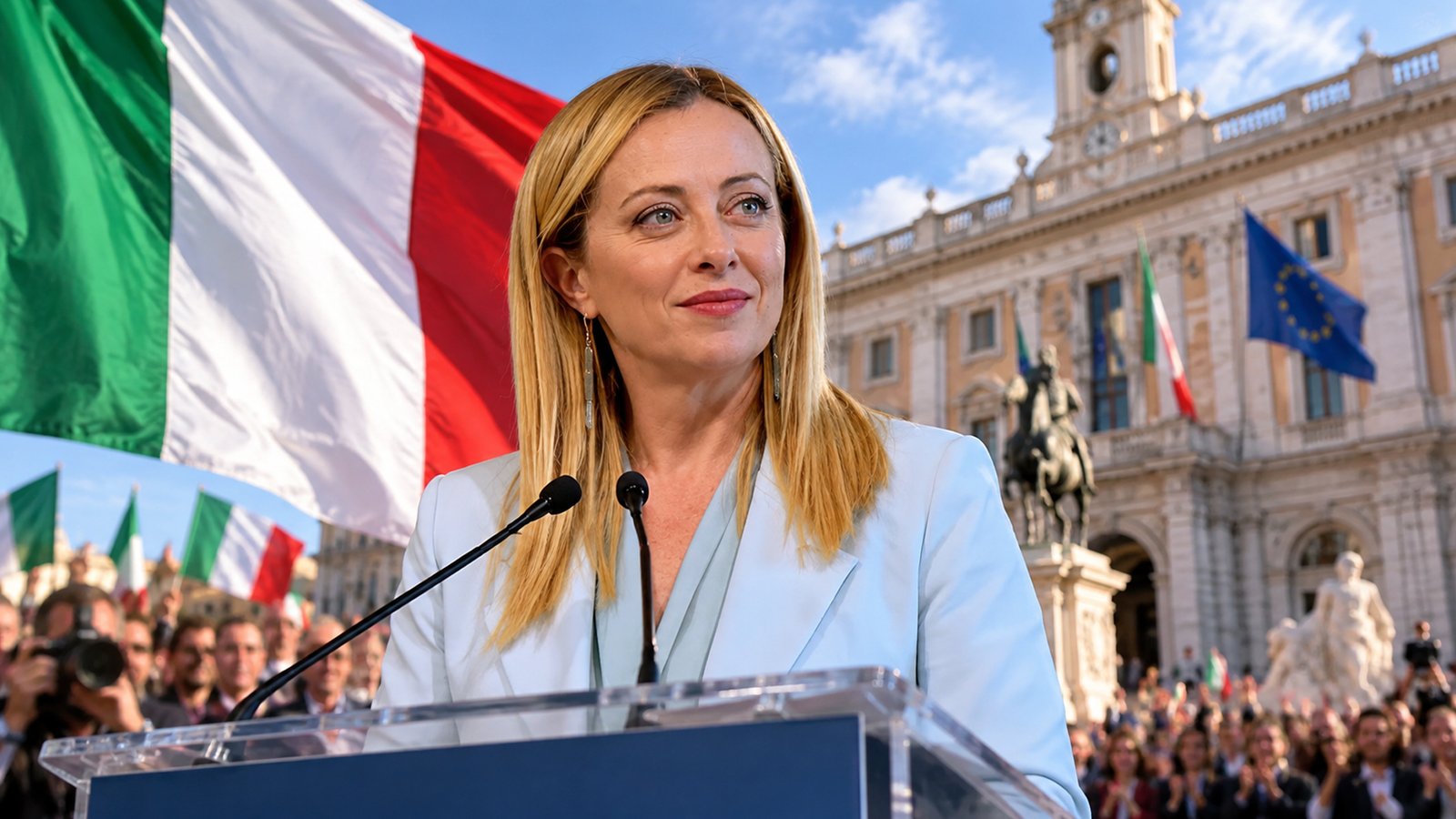
Meloni marked the occasion with a rally in Bari, in southern Italy, where supporters gathered to celebrate the achievement. The event was organised under the message that a more stable government could make Italy stronger, while protesters demonstrated against her administration nearby.
For Meloni, the record is evidence that Italy’s political landscape has changed.
Italy has traditionally been associated with frequent government changes. Since the end of World War II, the country has had a long succession of administrations, many of which struggled to complete a full parliamentary term. Meloni’s coalition, by contrast, has remained intact since she became prime minister in October 2022.
Her government was formed after the 2022 general election, when her Brothers of Italy party emerged as the leading force in a centre-right coalition. Meloni also made history as Italy’s first woman prime minister.
Nearly four years later, political stability has become one of the main arguments used by Meloni and her supporters to defend the government’s record.
At the Bari rally, Meloni presented stability as an achievement in itself, arguing that continuity has allowed her administration to pursue policies without being repeatedly disrupted by political crises.
She has also pointed to Italy’s improving financial position. Her government has sought to maintain fiscal discipline, while financial markets have shown greater confidence in Italy’s public finances. Lower borrowing costs and better control of the budget deficit have strengthened Meloni’s argument that her government has brought greater credibility to economic management.
Employment is another area highlighted by the government. Meloni’s administration says more than one million additional people have found work since it took office. The government has also pointed to tax reductions and measures intended to support businesses and households.
Her supporters say these developments show that Italy has benefited from a government that has stayed focused on its agenda rather than being consumed by coalition instability.
Meloni has also strengthened her position internationally.
Although her political roots are firmly on the right, she has maintained Italy’s support for Ukraine and cultivated close relations with European and Atlantic partners. Her approach has helped her establish a reputation as a pragmatic conservative leader within the European Union.
Migration has remained another major issue during her premiership. Meloni campaigned on reducing irregular migration and has pursued tougher policies, including a controversial agreement involving migrant processing centres in Albania. Supporters see the policy as an attempt to control migration, while critics have questioned its cost, effectiveness and humanitarian implications.
But the government’s longevity has not removed the economic problems facing Italy.
The country continues to deal with weak productivity, low wages, high public debt and slow economic growth. Critics argue that while Meloni has succeeded in keeping public finances under closer control, deeper structural problems have not been addressed with the same urgency.
Healthcare, education and public administration remain areas where reform has been limited. Opposition leaders have accused the government of using political stability as a measure of success while failing to deliver significant improvements in public services and household incomes.
Former Prime Minister Giuseppe Conte has been among Meloni’s strongest critics, accusing the government of lacking momentum on key domestic issues. The opposition is expected to focus heavily on wages, public services and economic stagnation as the next election approaches.
Meloni’s reform agenda has also faced setbacks. A referendum on judicial reform was rejected earlier this year, weakening one of the government’s key institutional reform efforts.
The next major test will be the 2027 general election.
Meloni and her coalition are likely to make political stability a central part of their campaign. Their argument will be straightforward: after decades of short-lived governments, Italy finally has an administration capable of completing a long-term programme.
The opposition is expected to offer a different reading. For them, the number of days in office is less important than what has been achieved during those days.
There is also growing competition on the political right. New movements and figures have sought to challenge Meloni by arguing that her government has become too moderate on issues such as immigration and national identity.
The political debate, therefore, is moving beyond whether Meloni can remain in office. It is increasingly about whether she can turn her unusually long tenure into lasting change.
Her government has already made history. On September 4, it surpassed Berlusconi’s postwar record and gave Italy its longest uninterrupted administration since the birth of the republic.
Prime Minister Narendra Modi also congratulated Meloni on the milestone, highlighting the close relationship between the two leaders and the growing India-Italy strategic partnership.
This record offers her a powerful political advantage as the 2027 election draws closer. It allows her to argue that Italy has found something it has often lacked: continuity.
But longevity alone will not determine her legacy.
Italian voters will ultimately judge whether nearly four years of stability have delivered stronger incomes, better public services, higher productivity and sustainable economic growth.
Meloni has won the first battle — staying in power.
The next one will be proving that the time in power was worth it.