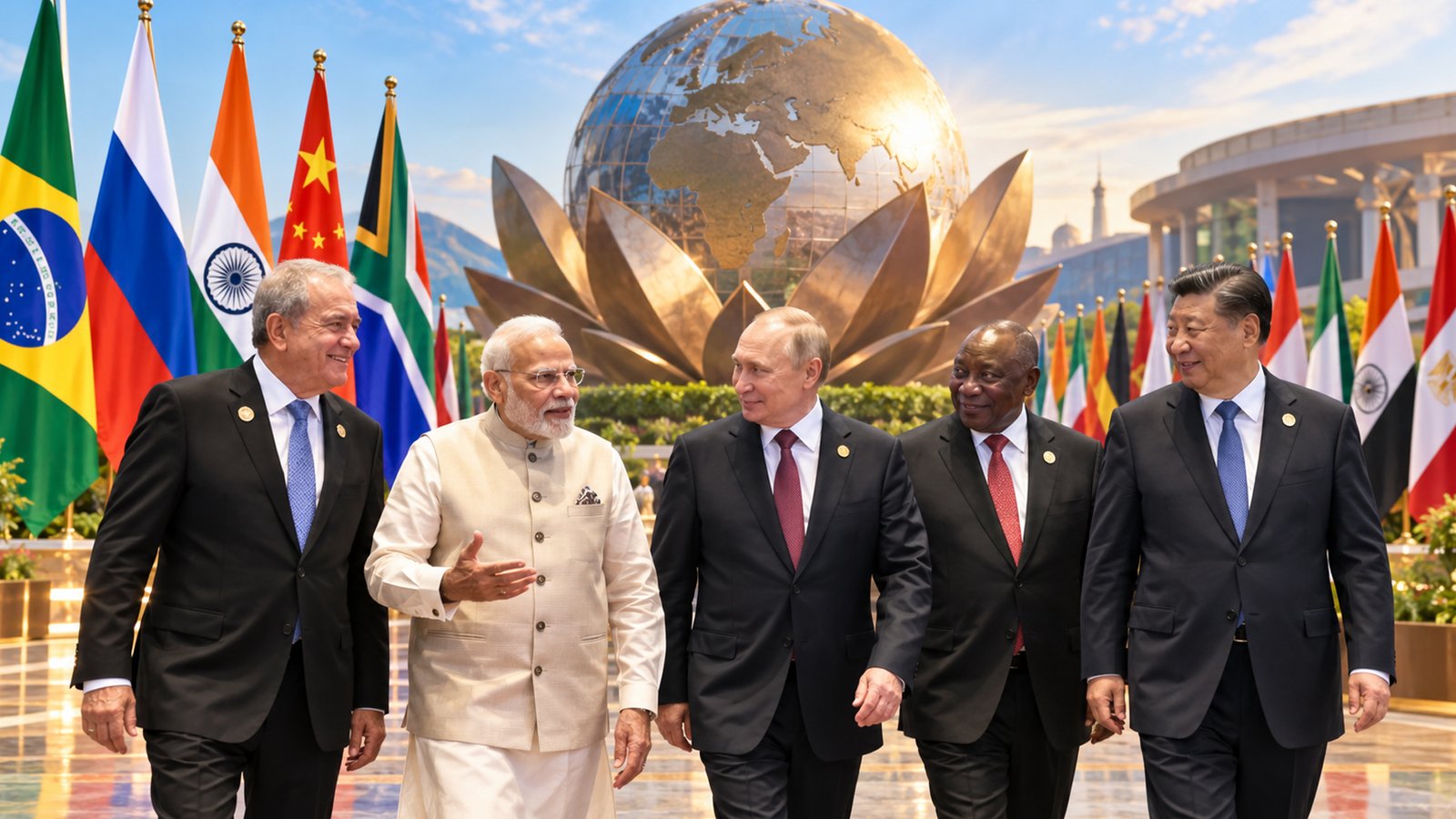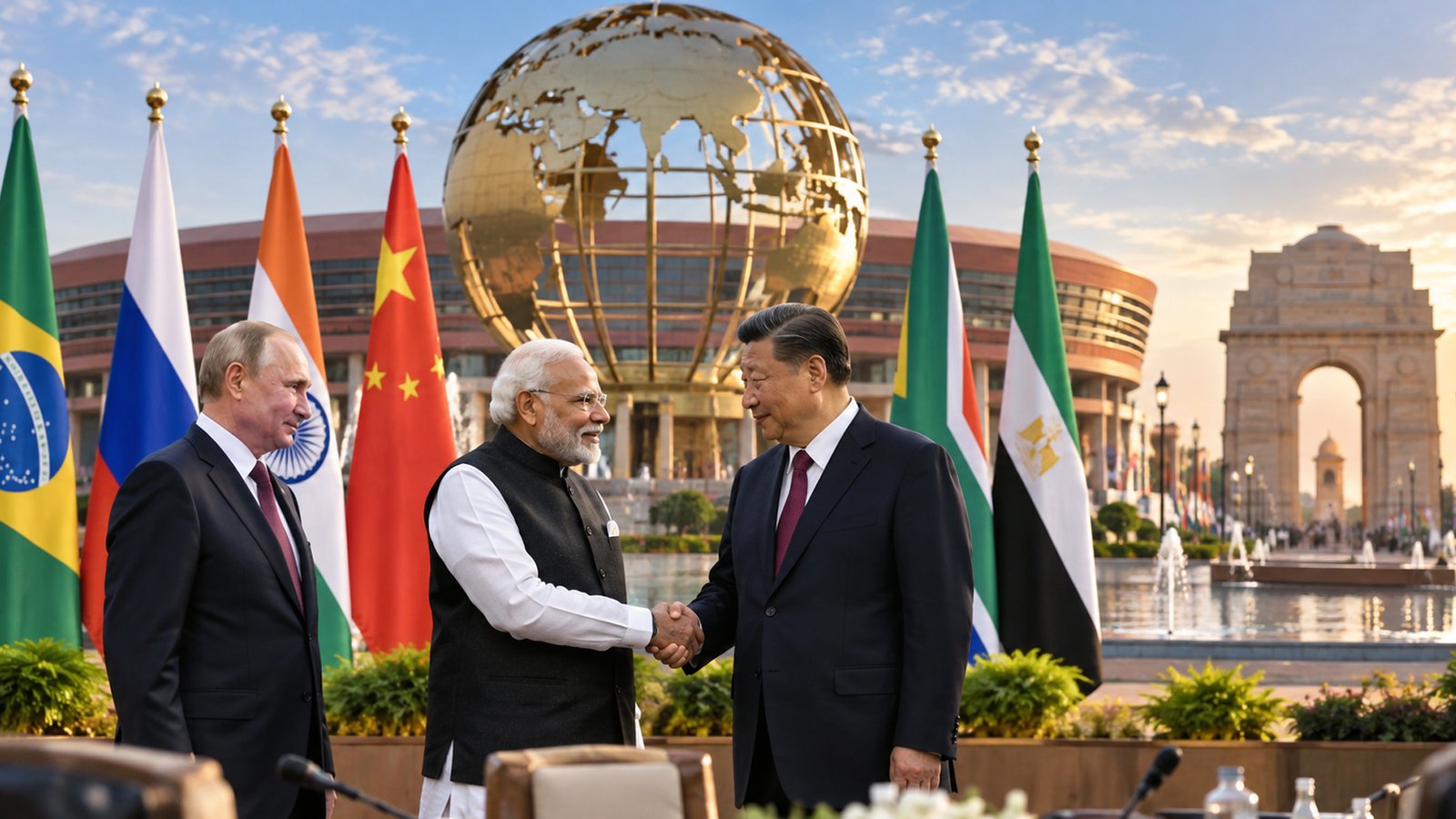
India and China are preparing for a closely watched meeting between Prime Minister Narendra Modi and Chinese President Xi Jinping on the sidelines of the 18th BRICS Summit in New Delhi. The talks come at a time when both countries are trying to stabilise ties after years of tension along the border.
Beijing has said it wants to approach relations with India from a strategic and long-term perspective and strengthen communication and cooperation. Chinese Foreign Ministry spokesperson Mao Ning said the two countries should properly handle their differences and work towards improving bilateral relations.
The expected Modi-Xi meeting is significant because India-China relations have remained sensitive since the 2020 military standoff in eastern Ladakh. Both sides have taken steps towards easing tensions, including disengagement in some areas, but several issues remain unresolved.
Xi’s visit to India for the BRICS Summit 2026 is also important because it marks his first visit to the country in several years. The meeting with Modi is expected to focus on the broader direction of bilateral relations, economic engagement and ways to manage differences while keeping communication channels open.
Trade is likely to remain an important part of the conversation. India and China have deep economic links, but New Delhi has repeatedly raised concerns over the trade imbalance and market access. Issues involving investment, supply chains and restrictions on business activity have also affected the relationship.
The two countries have nevertheless been working to bring some stability to ties. Recent diplomatic and military-level discussions have focused on maintaining peace along the Line of Actual Control and improving communication between the two sides.
China’s latest comments suggest that Beijing is keen to prevent differences from becoming a larger obstacle to bilateral engagement. The emphasis on dialogue also comes as BRICS itself expands its role as a platform for major emerging economies.
India is hosting the BRICS Summit 2026 as the grouping faces a changing global economic and geopolitical environment. The bloc now has 11 members and represents roughly half of the world’s population. Prime Minister Modi said BRICS countries account for around 40% of global GDP and 25% of international trade.
Speaking at the BRICS Business Forum, PM Modi said the global economy was going through “deep shifts” and argued that BRICS nations could become important engines of future growth. He called for stronger business-to-business links, more resilient supply chains, greater investment and cooperation in infrastructure and strategic technologies.
Russia has also used the BRICS platform to push for greater economic cooperation among member countries. Russian President Vladimir Putin, who met Modi in New Delhi ahead of the summit, criticised Western sanctions and trade restrictions against Moscow.
Putin said Russia has faced more than 30,000 sanctions, which he described as twice the number imposed on all other countries combined. He argued that the restrictions had encouraged Russia to deepen economic ties with countries outside the West.
Putin also highlighted the growing economic weight of BRICS. He said the grouping’s members produced more than 40% of global GDP, while taking a swipe at the G7 and questioning its continued claim to represent the world’s leading economies.
The Russian president’s remarks came shortly after his bilateral meeting with Modi. The two leaders reviewed cooperation in politics, trade, defence, energy, space, skills and people-to-people ties, according to the Indian government. They also discussed India’s role in BRICS under its 2026 chairship.
India and Russia are also looking to expand their economic relationship. Modi and Putin have discussed increasing bilateral trade and strengthening cooperation across sectors despite the wider geopolitical uncertainty. Energy remains a particularly important part of the relationship, with Russia continuing to be a major supplier to India.
The Modi-Putin talks also touched on conflicts affecting global trade and security. India has consistently maintained that dialogue and diplomacy are the preferred route to resolving conflicts, including the war in Ukraine and tensions in West Asia.
The BRICS meeting therefore brings together several complicated relationships at the same time. India is trying to maintain its strategic partnership with Russia, manage competition and cooperation with China, and protect its economic interests as global trade becomes increasingly fragmented.
Modi’s message at the business forum reflected that balancing approach. India, he said, was responding to rising trade barriers by building bridges through stronger trade partnerships, supply-chain cooperation and new opportunities for businesses. Digital infrastructure, including India’s UPI system, was also highlighted as an area where India could contribute to wider BRICS cooperation.
The Modi-Xi meeting could now become one of the most closely watched moments of the summit. Any progress on restoring confidence between India and China could have implications beyond their bilateral relationship, particularly for trade, regional stability and supply chains.
At the same time, expectations are likely to remain measured. Differences over the border, trade and strategic issues have not disappeared, and both countries are expected to continue managing them while looking for areas of cooperation.
The broader BRICS agenda will also test whether the expanded grouping can find common ground despite differences among its members. India’s approach has been to use the forum for practical economic cooperation rather than turn it into an exclusively anti-Western platform.
The summit comes at a time when global power equations are shifting rapidly. The Modi-Xi talks, Modi-Putin engagement and the wider BRICS discussions together underline India’s effort to maintain strategic autonomy while expanding its role in a changing world order.
The immediate focus, however, will remain on the India-China conversation. Beijing’s call to “properly handle differences” sets a cautious but potentially significant tone ahead of the Modi-Xi meeting, with both sides facing pressure to keep tensions under control while protecting their respective national interests.