India is preparing for a major change in the way motorists pay highway tolls, with the government targeting barrier-free toll collection across the country by March 2027. The move is aimed at reducing queues, cutting travel time and making highway journeys more seamless.
Union Road Transport and Highways Minister Nitin Gadkari announced the target on September 11, saying India is working towards a Multi-Lane Free Flow (MLFF) tolling system. Under the proposed model, vehicles will be able to pass through toll points without stopping at traditional booths.
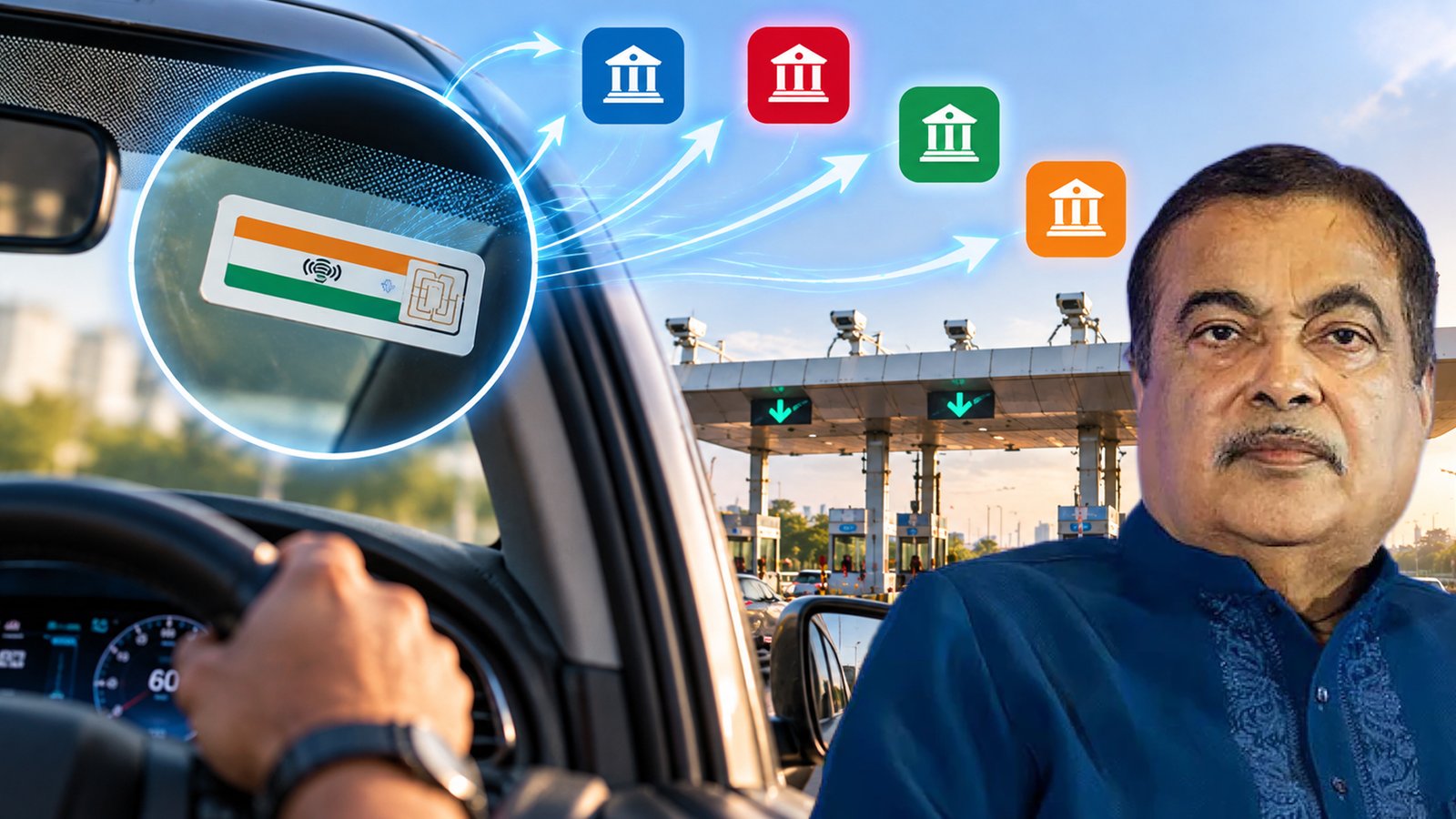
The new system is expected to combine existing FASTag technology with Automatic Number Plate Recognition (ANPR) and other digital tools. Vehicles will be identified electronically as they pass through designated tolling points, while the applicable toll will be collected digitally.
The shift is being positioned as the next stage in India’s digital toll collection system. FASTag has already made electronic payments standard on national highways, but motorists still need to slow down or stop at toll plazas. MLFF is designed to remove that physical barrier.
Gadkari said the government aims to bring 60-70% of toll plazas under the MLFF system by December this year, with nationwide implementation targeted for February-March 2027. India currently has around 1,200 toll plazas operated by the National Highways Authority of India (NHAI) and concessionaires.
The barrier-free tolling system could make a noticeable difference during busy travel periods. Long queues at toll plazas are common during weekends, festivals and holiday seasons, when large numbers of vehicles use national highways at the same time.
FASTag adoption has already reached a high level across the country. Gadkari said penetration is around 98%, with nearly 13 crore FASTags issued so far. Toll collections through FASTag have also reached around ₹82,500 crore, highlighting the scale of India’s digital toll network.
The government expects the next phase to deliver economic and environmental benefits as well. Eliminating long waits at toll plazas could reduce fuel consumption and save commuters considerable time.
According to figures shared by Gadkari, reduced waiting at toll plazas could save around 71 crore hours and 56 crore litres of fuel every year. The estimated value of the time saved has been put at nearly ₹68,500 crore annually, while fuel savings could be worth around ₹5,250 crore.
Operating costs at toll plazas could also decline. Gadkari said toll-plaza operations and maintenance currently account for around 12-15% of costs. A shift to barrier-free tolling could bring that figure down to about 2-4%, potentially resulting in annual savings of ₹6,000-7,000 crore.
Alongside the MLFF plan, the government has introduced another facility aimed at making FASTag more convenient for vehicle owners.
The new service, called OneTag, allows FASTag users to change the bank or issuer associated with their existing tag without replacing the physical sticker attached to the vehicle.
Previously, a motorist wanting to switch from one FASTag-issuing bank to another generally had to close the existing tag and obtain a new one. The process could mean removing the old FASTag and attaching a replacement.
OneTag is intended to simplify that process. Users can retain their existing FASTag while switching the bank providing the service. The facility has been compared with mobile number portability, which allows consumers to change their service provider without changing their number.
The initiative has been developed by Indian Highways Management Company Limited (IHMCL), a company promoted by NHAI, in association with the National Payments Corporation of India (NPCI).
The facility gives FASTag users greater flexibility when choosing their issuing bank. It could also reduce the inconvenience associated with obtaining a replacement tag whenever a customer wants to change service providers.
OneTag and MLFF address different aspects of India’s digital tolling system. OneTag focuses on giving users greater control over their FASTag account, while MLFF is aimed at changing how motorists physically pass through toll points.
The government also expects wider use of digital tolling to improve collection efficiency and reduce revenue leakages. Automated vehicle identification and electronic payments can make toll transactions easier to track while reducing dependence on manual processes.
The biggest change for motorists, however, could be the disappearance of the traditional toll-plaza queue. If the March 2027 target is achieved, vehicles could eventually pass through designated tolling points without stopping while the applicable toll is collected automatically.
The transition will require extensive deployment of MLFF infrastructure, ANPR cameras and supporting digital payment systems across India’s highway network. Reliable technology, accurate vehicle identification and smooth integration with FASTag will be critical to making the system work effectively.
India’s tolling network has already moved from cash payments to FASTag. The government is now preparing for the next phase — a highway system where vehicles can keep moving while toll payments happen automatically.
The planned changes could mean shorter queues, lower fuel wastage and faster journeys for millions of highway users, while also making India’s toll collection network more digital and efficient.