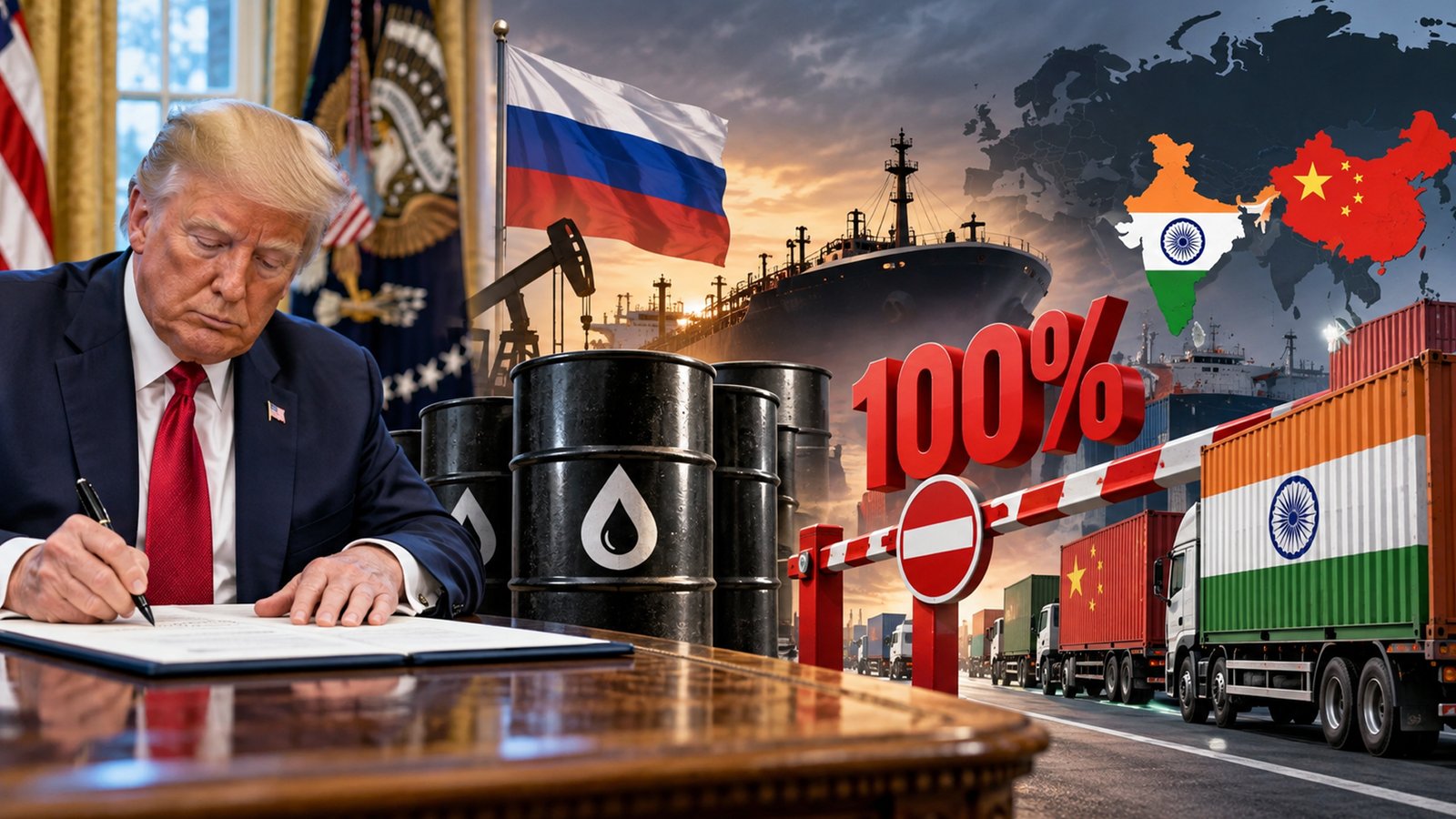
US President Donald Trump has signed into law a sweeping sanctions package targeting Russia and Iran, giving Washington new powers to impose tariffs of up to 100% on countries that continue buying Russian oil and gas.
The Lindsey O. Graham Sanctioning Russia and Iran Act of 2026 was signed by Trump on Friday, September 18, after clearing both chambers of the US Congress. The law expands sanctions against Russia’s leadership, financial institutions, energy sector and defence networks, while also targeting vessels linked to the country’s so-called shadow fleet.
India has emerged as one of the countries most closely watching the new law because it remains a major buyer of Russian crude. China is another major purchaser. The legislation gives Trump the authority to impose additional tariffs on goods from the five largest buyers of Russian petroleum or natural gas, subject to conditions set out in the law.
The 100% tariff, however, is not automatic. Trump’s signing of the legislation does not mean Indian goods will immediately face a 100% US duty. The law creates the legal framework for such action and gives the US administration discretion over whether to impose tariffs, which countries to target and what rate to apply, up to the 100% ceiling.
The legislation is aimed at putting greater economic pressure on Moscow by targeting revenues linked to Russia’s energy exports. Russian oil sales have remained an important source of revenue for the country despite years of Western sanctions following its invasion of Ukraine.
A key part of the new law focuses on Russia’s energy trade and the network of vessels known as the shadow fleet. These tankers have been used to transport Russian oil while helping traders and shipping companies work around existing restrictions. The legislation also allows action against people and companies involved in sanctions evasion.
The law also targets Russian officials, banks, oligarchs and entities connected to the country’s defence and energy sectors. Its provisions extend beyond Russia, with the tariff mechanism designed to put pressure on countries whose purchases continue to support Russian energy revenues.
India’s position has been that its Russian oil purchases are driven by energy security and market conditions. The Ministry of External Affairs has said India remains committed to securing energy for its 1.4 billion people through diversified sourcing and evolving market dynamics.
New Delhi has also been closely monitoring the legislation’s possible impact on India-US relations and international energy markets. Indian officials have conveyed their concerns to Washington, particularly over the possible consequences for trade and energy security.
The impact on Indian exporters could be significant if Washington eventually uses the new authority to impose a high tariff. The measure would apply to goods entering the US from a targeted country, rather than directly placing a tariff on Russian oil purchased by that country.
That distinction is important for India. A 100% tariff would make Indian products entering the US substantially more expensive, potentially affecting exporters and their competitiveness in the American market. The actual impact would depend on the tariff rate chosen, the products covered and how the US administration implements the law.
Trump also retains waiver powers under the legislation. The law allows the president to waive certain sanctions or tariff measures under specified conditions, including when he determines that doing so is in the US national interest.
The legislation passed the US Senate by an 86-11 vote in August and cleared the House by 262-159 on September 16. It was named after the late Republican Senator Lindsey Graham, who had been a leading supporter of tougher measures against Russia.
The new law also extends existing US sanctions authority against Iran for another five years. Its broader provisions cover Iran’s energy and weapons sectors alongside the measures aimed at Russia.
The move comes at a sensitive time for India-US trade ties. New Delhi and Washington have been negotiating trade issues while also dealing with disagreements over tariffs and India’s continued purchases of Russian crude.
Trump’s decision now shifts attention to how his administration uses the powers granted by Congress. The law provides a new mechanism to pressure major buyers of Russian energy, but it does not itself determine whether India will face the maximum tariff.
The next stage will depend on decisions by the Trump administration on qualifying countries, tariff rates and possible exemptions. For India, the immediate concern is therefore not an automatic 100% tariff, but the uncertainty created by the new US sanctions framework and its potential impact on Russian oil imports, India-US trade and energy security.