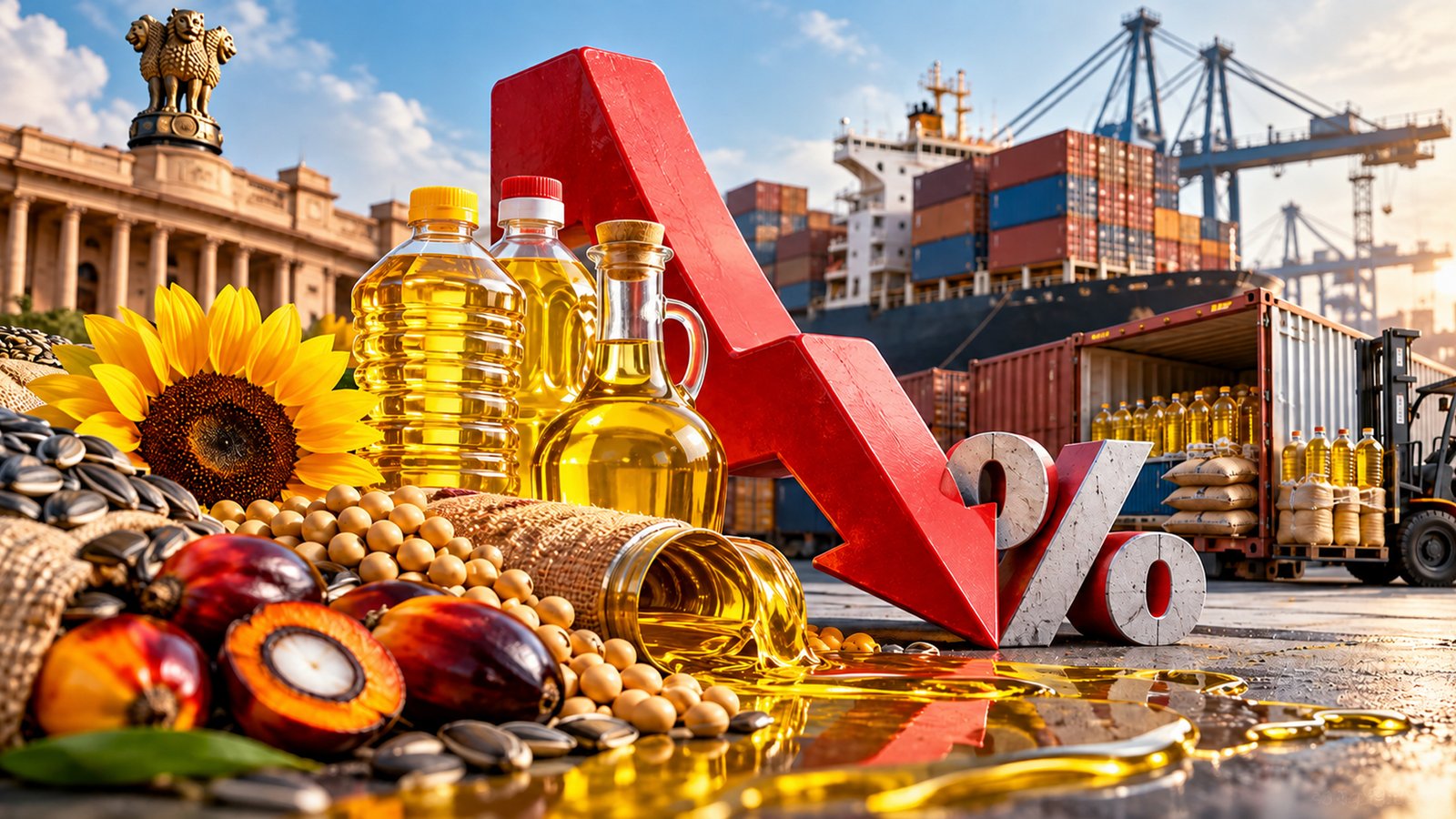
The Centre has reduced import duties on key edible oils, including palm, soybean and sunflower oil, in a move aimed at containing cooking oil prices ahead of the festive season.
The revised basic customs duty (BCD) structure took effect from September 24 and covers both crude and refined varieties. The government’s decision comes as global edible oil prices have risen sharply and Indian consumers have faced higher retail prices over the past year.
Under the new structure, the BCD on crude sunflower oil has been reduced from 10% to zero. The duty on crude palm oil and crude soybean oil has been cut by half, from 10% to 5%.
The government has also lowered duties on refined edible oils. The BCD on refined palm oil and refined soybean oil has been reduced from 32.5% to 27.5%, while the duty on refined sunflower oil has been cut from 32.5% to 22.5%.
The move is particularly significant for households as India heads into the peak festive consumption period. Demand for cooking oil typically rises during festivals as households prepare sweets, snacks and traditional meals. Hotels, restaurants, caterers and sweet manufacturers also increase purchases during this period.
Industry representatives said the lower duties should reduce the landed cost of imported edible oils and could provide some relief to consumers. The sharper cut in sunflower oil duty could be particularly relevant in southern states, where sunflower oil has a strong consumer base.
The government’s decision also comes after edible oil prices came under pressure from a combination of international commodity prices, a weaker rupee and higher import costs. Reuters had reported earlier this month that domestic vegetable oil prices had risen by nearly 20% over the previous year, prompting the government to consider tariff cuts to contain food inflation.
India is the world’s largest importer of vegetable oils, making domestic cooking oil prices closely linked to international markets. Changes in global palm, soybean and sunflower oil prices can quickly influence the cost of imports and, eventually, retail prices in India.
The latest duty reduction therefore gives edible oil companies some room to manage costs at a time when demand is expected to strengthen. Companies had been facing pressure to raise retail prices because of higher import costs. A recent industry assessment had indicated that edible oil prices could have risen by 7-8% without measures to offset higher input costs.
The duty cuts may help prevent some of that increase from reaching consumers. However, the final impact on retail prices will not depend on customs duties alone.
Global edible oil prices, shipping and freight costs, currency movements and inventories held by importers and refiners will continue to influence the prices paid by consumers. Industry bodies have also cautioned that the benefit of lower import duties may take time to work through the supply chain.
The policy also retains a significant duty gap between crude and refined edible oils. This structure is important for domestic refiners because it makes importing crude oil relatively more attractive than bringing in finished refined products.
That could support domestic refining activity while allowing consumers to benefit from lower international prices. At the same time, the government has to balance cheaper imports with the interests of domestic oilseed growers and the longer-term objective of reducing India’s dependence on imported edible oils.
The issue is important because India imports a large share of the edible oil it consumes. Any sustained increase in global prices therefore has a direct impact on the country’s food import bill and household budgets.
The latest announcement follows a reduction in edible oil import duties in 2025, when duties on crude varieties were brought down from 20% to 10%. The latest cuts take the tariff structure further in an effort to manage prices during a period of elevated festive demand.
The move could also help moderate food inflation if the lower import costs are passed through to retail markets. Cooking oil is a regular household expense, and even modest changes in prices can affect monthly food budgets, particularly for lower- and middle-income families.
For the edible oil industry, the timing offers some relief after months of cost pressure. Importers and refiners can now bring in key crude oils at lower tariff rates, while consumers could see softer prices as existing stocks are replenished at the new cost.
The impact, however, is unlikely to be uniform across all oils or markets. Prices will continue to vary depending on the type of oil, import costs, local demand and inventory levels.
The immediate focus will now shift to retail price transmission. If companies pass on a meaningful part of the duty benefit, consumers could see some relief in cooking oil prices during the coming festive weeks.
The Centre’s latest decision is therefore aimed at addressing two concerns at once: limiting the impact of rising edible oil costs on households and keeping food inflation under control during a period when demand is traditionally strong.