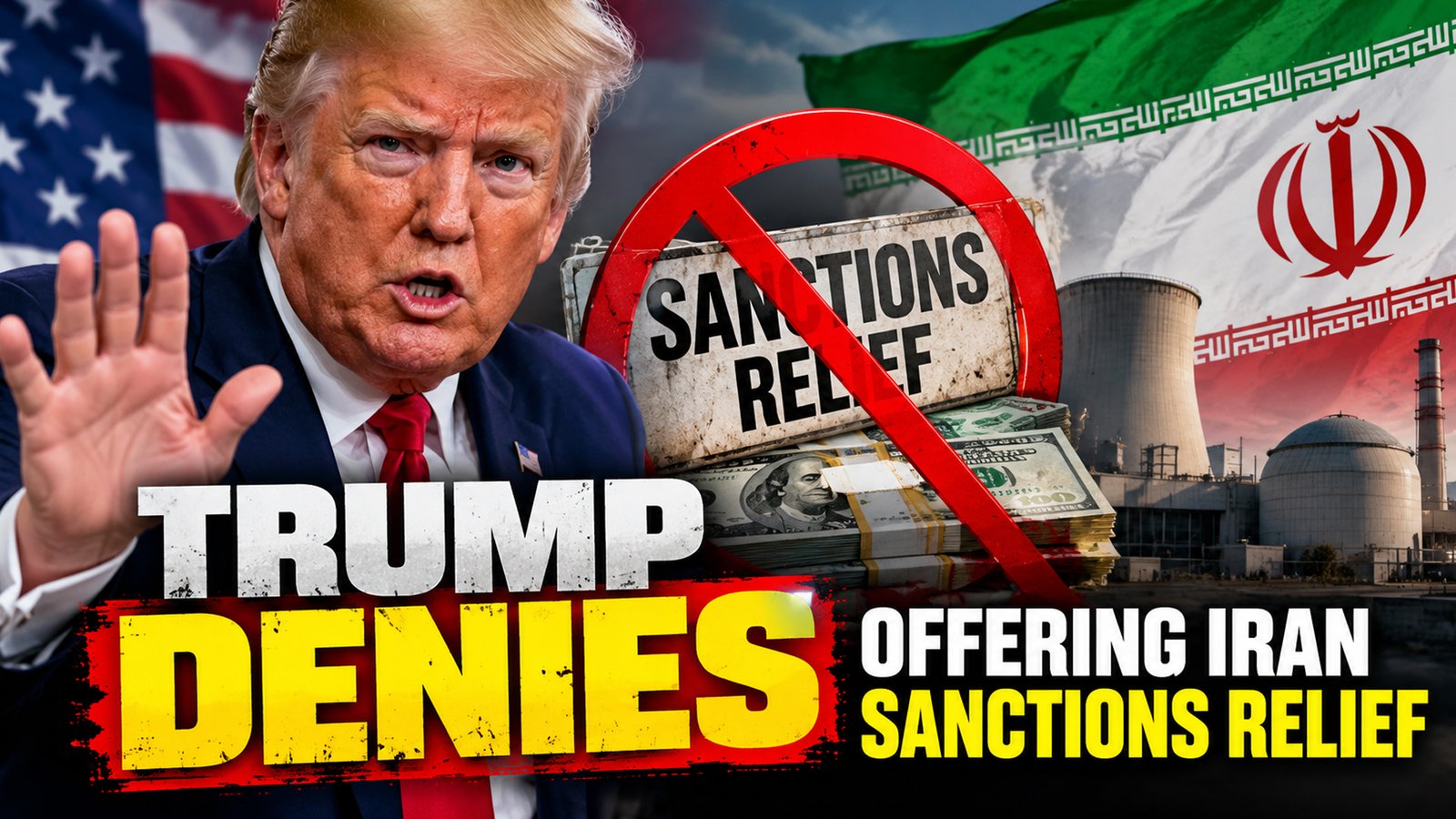
US President Donald Trump has denied reports that Washington offered Iran sanctions relief and access to frozen Iranian funds in exchange for concessions on its nuclear programme, adding fresh uncertainty to efforts to end the conflict between the two countries.
Trump rejected the reports on Monday, saying he had offered Tehran “nothing”. His comments came after Axios reported, citing unnamed US officials, that the administration was prepared to ease sanctions and release frozen Iranian funds if Iran took concrete steps on its nuclear programme.
Trump also criticised the report and rejected the suggestion that the United States was preparing such an offer. CNN separately reported, citing an unidentified US official, that sanctions relief and the release of frozen funds could be part of a final agreement if Tehran showed measurable progress on the nuclear issue.
The conflicting accounts come as US and Iranian officials continue separate discussions through mediators in an attempt to find a diplomatic route out of the seven-month war. Qatari mediators have been involved in carrying messages between the two sides, while Iranian Foreign Minister Abbas Araghchi has been holding discussions in New York.
The talks are expected to focus on a revised version of Iran’s seven-day proposal for ending hostilities and restoring shipping through the Strait of Hormuz, according to officials familiar with the negotiations.
The Strait of Hormuz has become a central issue in the standoff. The waterway is one of the world’s most important routes for oil shipments, and disruptions have affected global energy markets. Iran has linked the reopening of the strait to conditions including an end to the US blockade and relief from sanctions.
Under Iran’s proposal, hostilities would end and restrictions affecting Iranian oil exports and frozen assets would be addressed. Tehran would then reopen the Strait of Hormuz, while Washington and Tehran would return to negotiations over Iran’s nuclear programme. Trump rejected the proposal on Saturday but later indicated that US negotiators could hold further talks during the week.
Iranian officials have also pushed back against suggestions that Tehran has agreed to major nuclear concessions. Iranian President Masoud Pezeshkian has said his country is willing to pursue diplomacy but has rejected negotiations conducted under what Tehran considers military pressure.
Pezeshkian has maintained that Iran does not seek nuclear weapons and has said Tehran is prepared to discuss limits on its nuclear programme. He has also argued that trust must be rebuilt before any lasting agreement can be reached.
The disagreement over sanctions relief highlights one of the biggest obstacles facing the negotiations. Washington has insisted that any settlement must address Iran’s nuclear activities, while Tehran has focused heavily on sanctions, frozen assets, the US blockade and the reopening of the Strait of Hormuz.
US officials cited by Axios said Iran had shown some flexibility on nuclear issues, but that important differences remained over the timing of commitments and which side would act first. The report also said Washington wanted assurances that Tehran would implement any commitments reached in a new agreement.
The latest diplomatic effort follows two earlier ceasefire agreements between the United States and Iran that were reached through mediation but later collapsed. The current war began in late February after US and Israeli attacks on Iran, followed by Iranian strikes against Israel and US-linked targets in the region. The conflict has since widened, with fighting and attacks affecting several parts of the Middle East.
The economic consequences have also become a major concern. The conflict and restrictions around the Strait of Hormuz have disrupted energy flows and pushed oil prices higher. Brent crude rose more than 1% early Tuesday amid renewed concerns about supply disruptions, according to Reuters.
Trump has continued to maintain that the United States will achieve its objectives in the conflict, while also indicating that diplomacy remains possible. Tehran, meanwhile, says it is waiting for a definitive US response to its latest proposal through mediators.
The immediate focus is now on whether Washington and Tehran can narrow their differences over Iran’s nuclear programme, sanctions relief and the Strait of Hormuz. The conflicting reports over what the United States is prepared to offer show that, despite renewed diplomatic contacts, the two sides remain far apart on the terms of any potential agreement.