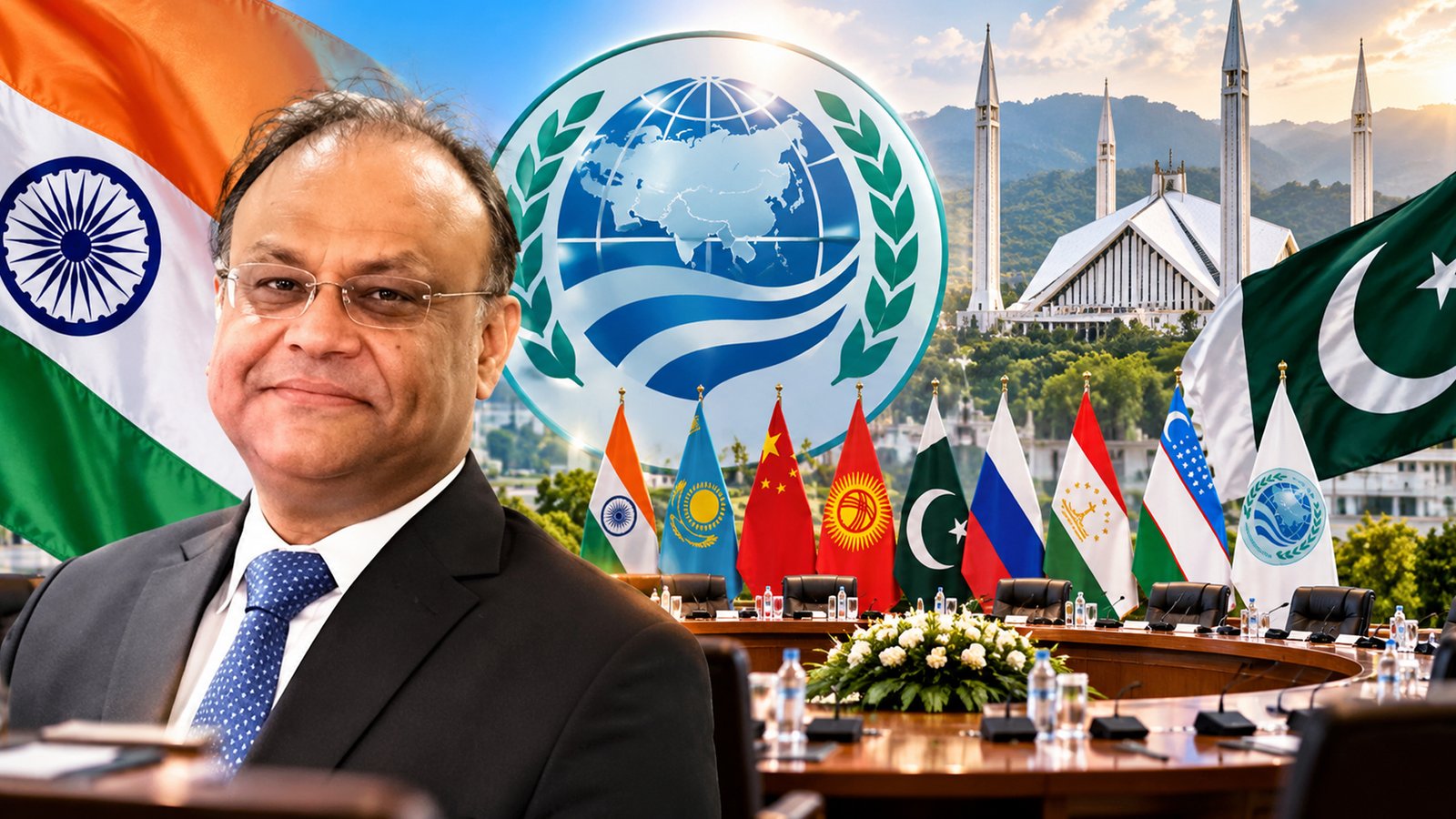
India has sent a delegation to Islamabad for a three-day meeting of national coordinators of the Shanghai Cooperation Organisation (SCO), keeping its engagement with the regional grouping on track despite strained relations with Pakistan.
The meeting, which began on September 28 and will continue until September 30, is being held as part of preparations for the SCO’s next major events, including the Council of Heads of State summit scheduled to be hosted by Pakistan in August 2027.
India’s delegation is led by Alok Dimri, the country’s SCO National Coordinator and Additional Secretary in the Ministry of External Affairs. Pakistan’s National Coordinator, Mohammad Faisal, is chairing the discussions in Islamabad.
The meeting is the first major SCO engagement hosted by Pakistan since it took over the organisation’s chairmanship from Kyrgyzstan on September 1. Islamabad will oversee the grouping’s activities during the 2026-27 term and has adopted the theme “Turning Vision into Action: Connectivity, Innovation and Shared Prosperity.”
Pakistan’s Foreign Office said the national coordinators would discuss a wide range of issues related to SCO cooperation. The agenda includes finalising activities under Pakistan’s chairmanship, preparing for upcoming ministerial and senior-level meetings, and coordinating other events planned during the year.
The national coordinators play an important role in keeping the organisation’s regular work moving. They coordinate between member states and prepare the groundwork for meetings of the SCO Council of Heads of State, Council of Heads of Government and foreign ministers.
For India, the Islamabad visit is significant because it comes against the backdrop of continuing tensions with Pakistan. Bilateral relations remain strained, with no sustained political dialogue between the two countries. Yet New Delhi has continued to participate in multilateral forums where both countries are members.
India and Pakistan became full members of the SCO in 2017. Since then, India has maintained its participation in SCO meetings, even when relations with Pakistan have deteriorated.
The two countries have also continued to attend SCO-related meetings hosted by each other. In July this year, an Indian delegation travelled to Islamabad for a meeting of the heads of SCO border services.
In October 2024, External Affairs Minister S. Jaishankar visited Islamabad for the SCO Council of Heads of Government meeting. That was the first visit by an Indian foreign minister to Pakistan in nearly nine years.
The current meeting, however, is taking place after another period of heightened tensions between the two neighbours. India’s participation is therefore being closely watched, although the meeting itself is focused on SCO business rather than bilateral India-Pakistan talks.
Counterterrorism is expected to remain an important issue for India within the SCO framework. New Delhi has consistently pushed for stronger international action against terrorism, extremism and separatism. India has also supported SCO connectivity and economic initiatives while maintaining that such projects should respect the sovereignty and territorial integrity of member states.
Pakistan’s chairmanship will focus on four broad areas — connectivity, innovation, economic cooperation and people-to-people contacts. Islamabad has said it wants to turn the organisation’s shared objectives into practical initiatives that benefit its member states.
The SCO currently has 10 full members — India, Pakistan, China, Russia, Iran, Kazakhstan, Kyrgyzstan, Tajikistan, Uzbekistan and Belarus. The grouping focuses on regional security, economic cooperation, connectivity and combating terrorism, separatism and extremism.
The immediate task in Islamabad is to prepare the calendar for Pakistan’s year-long chairmanship. Discussions will help set the schedule for ministerial meetings, working groups and other SCO programmes leading up to the leaders’ summit.
That summit is scheduled for August 2027 in Islamabad, making the current coordinators’ meeting an important early step in Pakistan’s preparations. Pakistan has indicated that invitations will be extended to leaders of all SCO member states, including Prime Minister Narendra Modi.
Whether Modi will travel to Pakistan for the summit remains undecided. India’s Ministry of External Affairs has said that the decision on participation will be taken at the appropriate time and at the appropriate level.
India’s presence in Islamabad nevertheless shows that its SCO engagement continues separately from its bilateral relationship with Pakistan. New Delhi has previously maintained this distinction, participating in multilateral forums while keeping its concerns over cross-border terrorism and security firmly on the agenda.
The three-day meeting is therefore less about a thaw in India-Pakistan ties and more about keeping the SCO’s institutional work moving. With Pakistan now holding the chair, India is participating in the organisation’s proceedings while preparing for a series of meetings that will culminate in next year’s leaders’ summit.