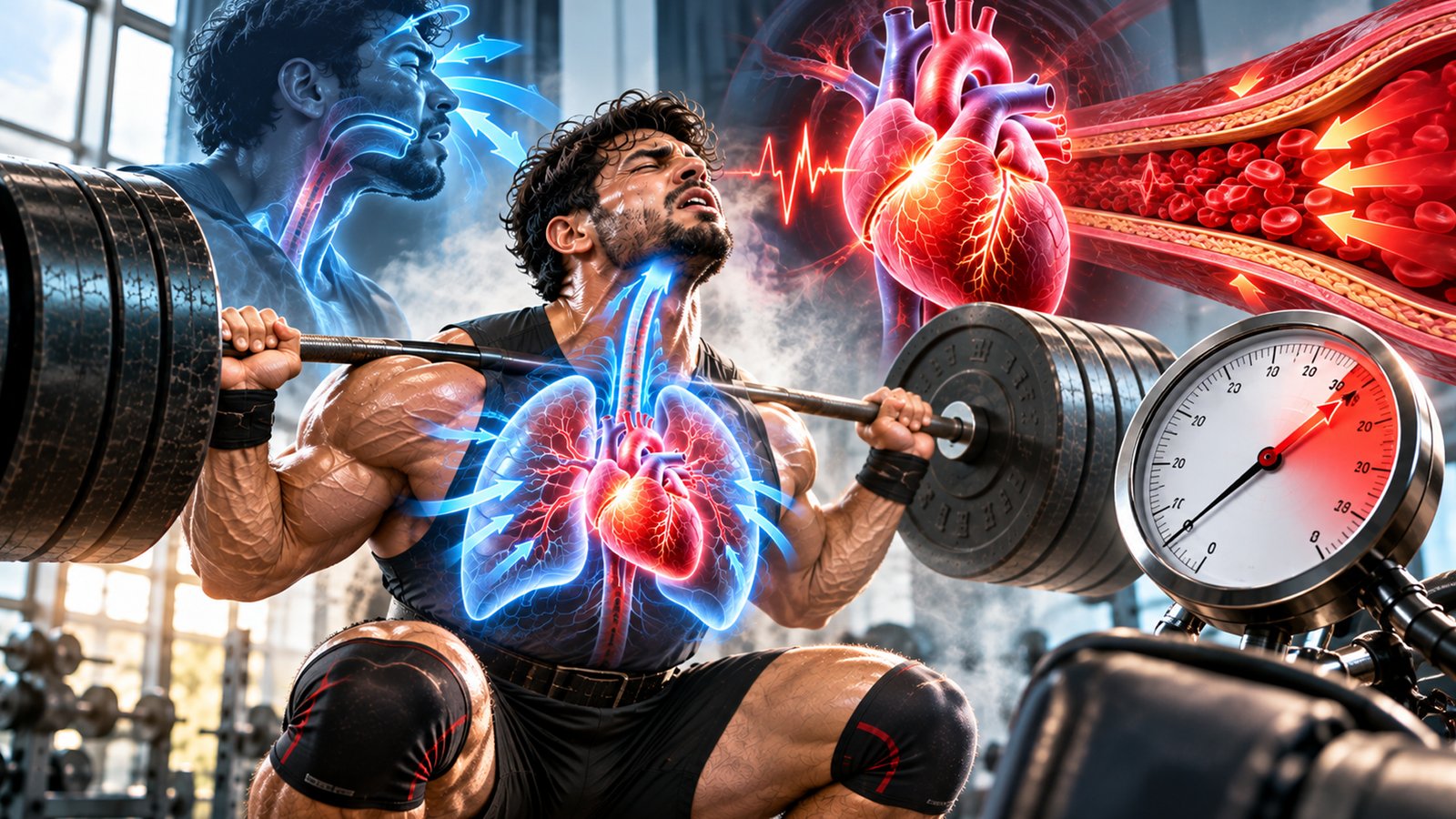
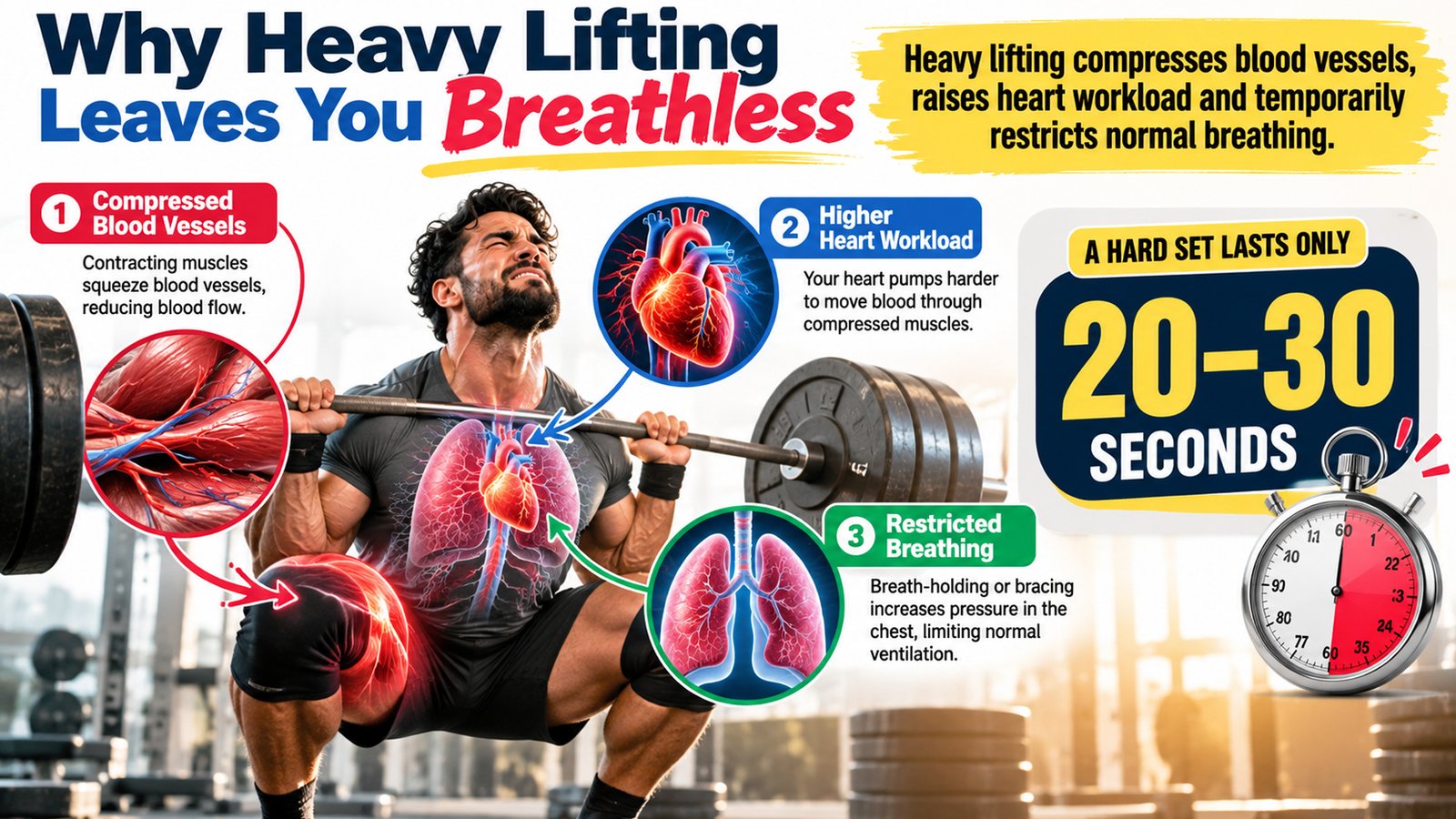
Rack a heavy squat or finish a hard set of deadlifts and an odd thing happens: you may be breathing as if you have just sprinted, even though the set lasted only 20 or 30 seconds. The sensation can be dramatic – chest heaving, heart pounding, perhaps a brief head rush – and it is tempting to blame the lungs alone.
But heavy lifting is a whole-body pressure experiment. Contracting muscle compresses blood vessels, the nervous system drives the heart harder, carbon dioxide production rises, and many lifters partly or completely interrupt their breathing during the hardest part of a repetition. The breathlessness after a heavy set is therefore not simply a sign of poor fitness. It is the visible end result of several cardiovascular and respiratory systems changing at once.
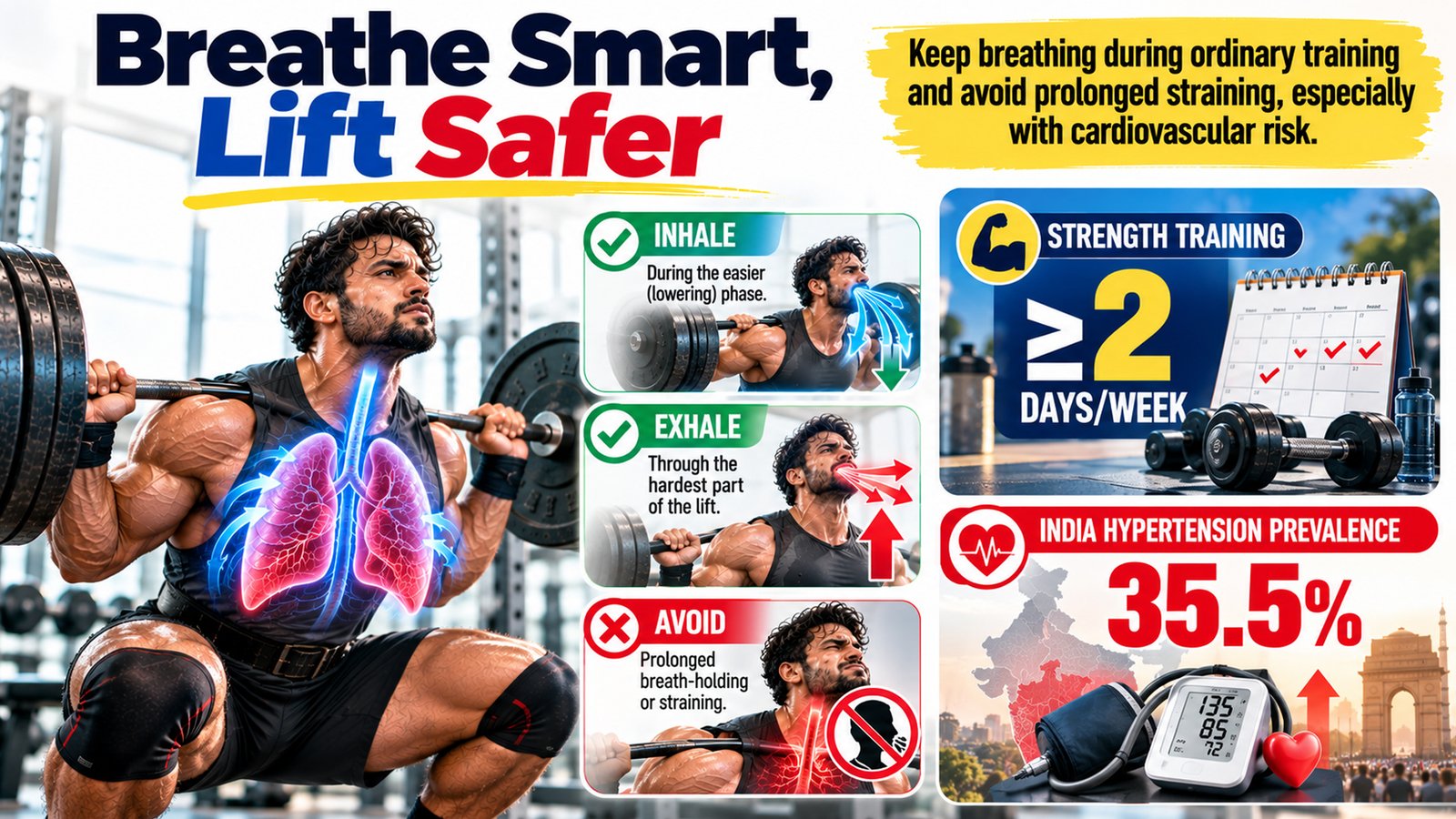
That matters because strength training is excellent medicine when used appropriately. The World Health Organization recommends muscle-strengthening activity involving all major muscle groups on at least two days each week. In India, however, the national ICMR-INDIAB study found a weighted hypertension prevalence of 35.5 per cent among adults aged 20 years and older. For someone who enjoys heavy training, knowing how lifting changes blood pressure is not academic trivia.
A set of squats is not a miniature jog
During steady cycling or running, working muscles repeatedly contract and relax. Blood vessels in those muscles dilate, cardiac output rises and oxygen delivery increases relatively smoothly. Heavy resistance exercise is different. A forceful contraction can physically squeeze small vessels inside the muscle, briefly impeding flow and increasing the resistance against which the heart has to pump. Large-muscle lifts and repetitions taken close to failure can amplify this response.
A 2025 review of resistance-exercise haemodynamics describes the acute rise in arterial pressure as the product of several forces: muscular compression of blood vessels, increased vascular resistance and, when breath-holding occurs, a large rise in pressure inside the chest. The blood pressure signal is also highly pulsatile – it can rise and fall within the same repetition – so a cuff measurement taken after the set may miss the highest moment entirely.
The blood-pressure numbers can be startling
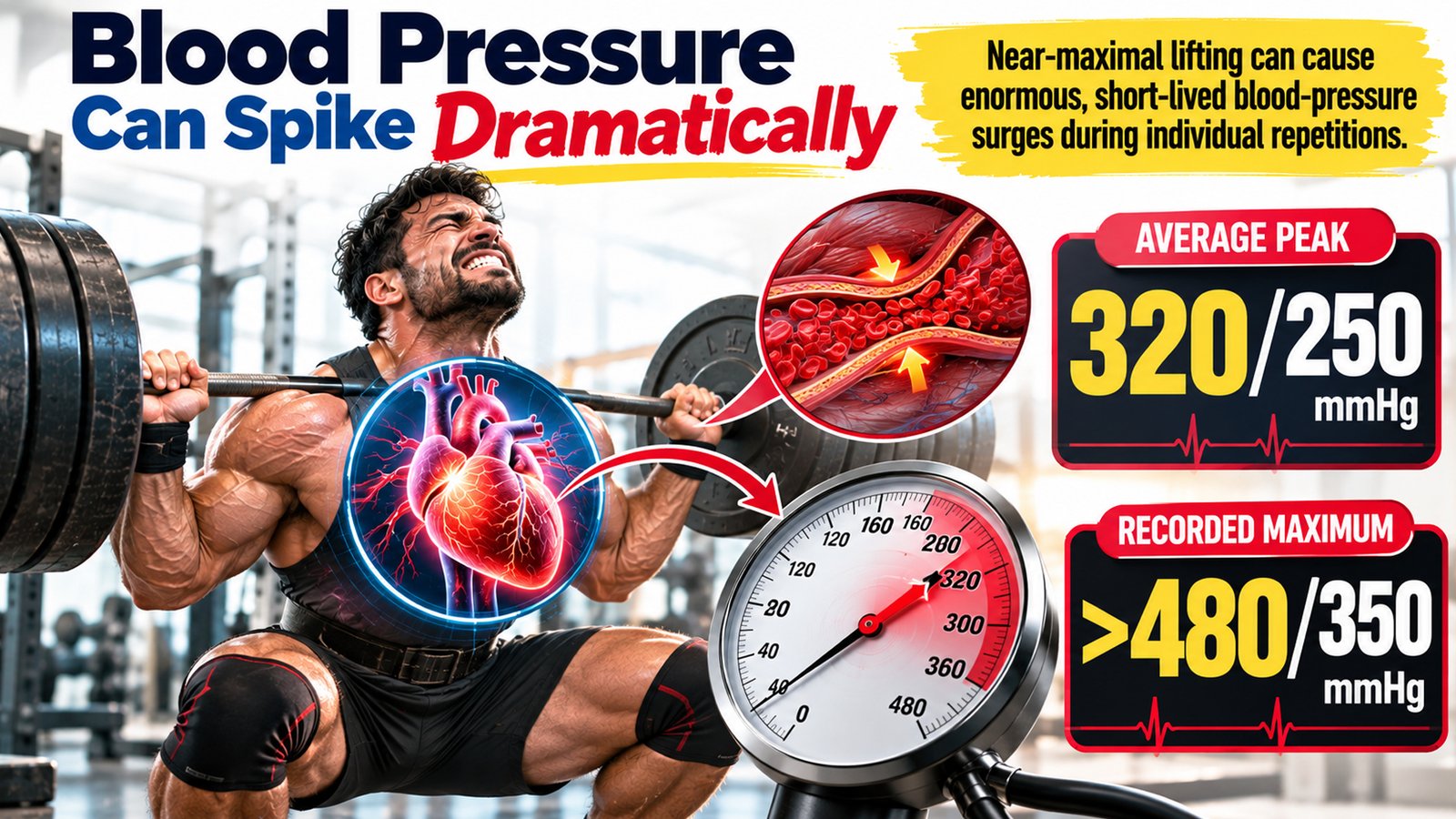
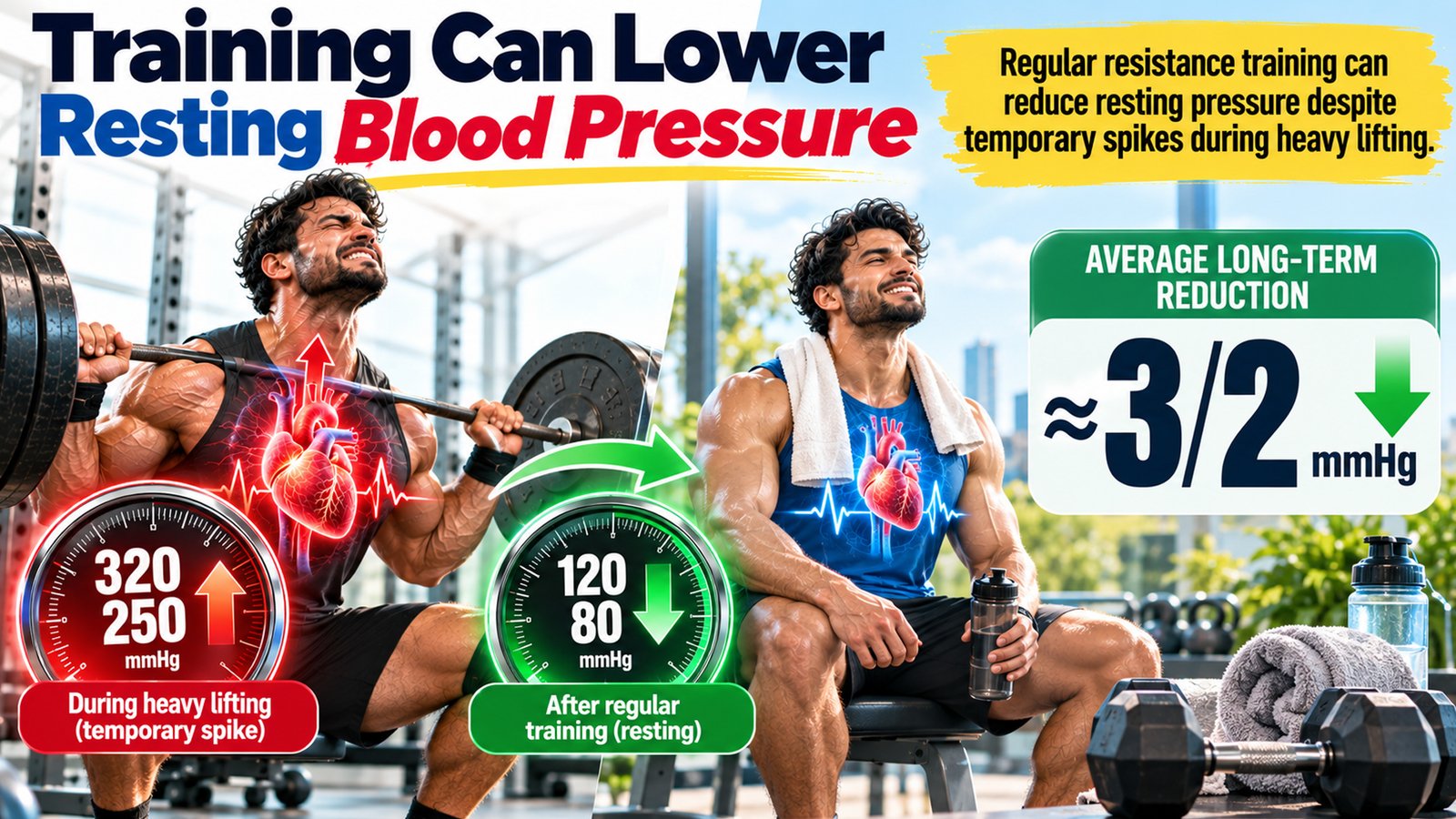
The most famous demonstration came from a small but remarkable 1985 experiment. Researchers placed an arterial catheter into the arm of five experienced bodybuilders and measured pressure directly while they lifted to failure. During the double-leg press, the group mean peak reached 320/250 mmHg, and in one participant pressure exceeded 480/350 mmHg.
Those figures need context. They came from a tiny study of trained men performing very heavy efforts under invasive laboratory monitoring; they are not a typical blood-pressure reading for every gym session, nor do they resemble resting hypertension. What the study proved is narrower but important: momentary arterial pressure during maximal or near-maximal resistance exercise can be extraordinarily higher than the number measured quietly in a clinic.
The breath-hold has a name
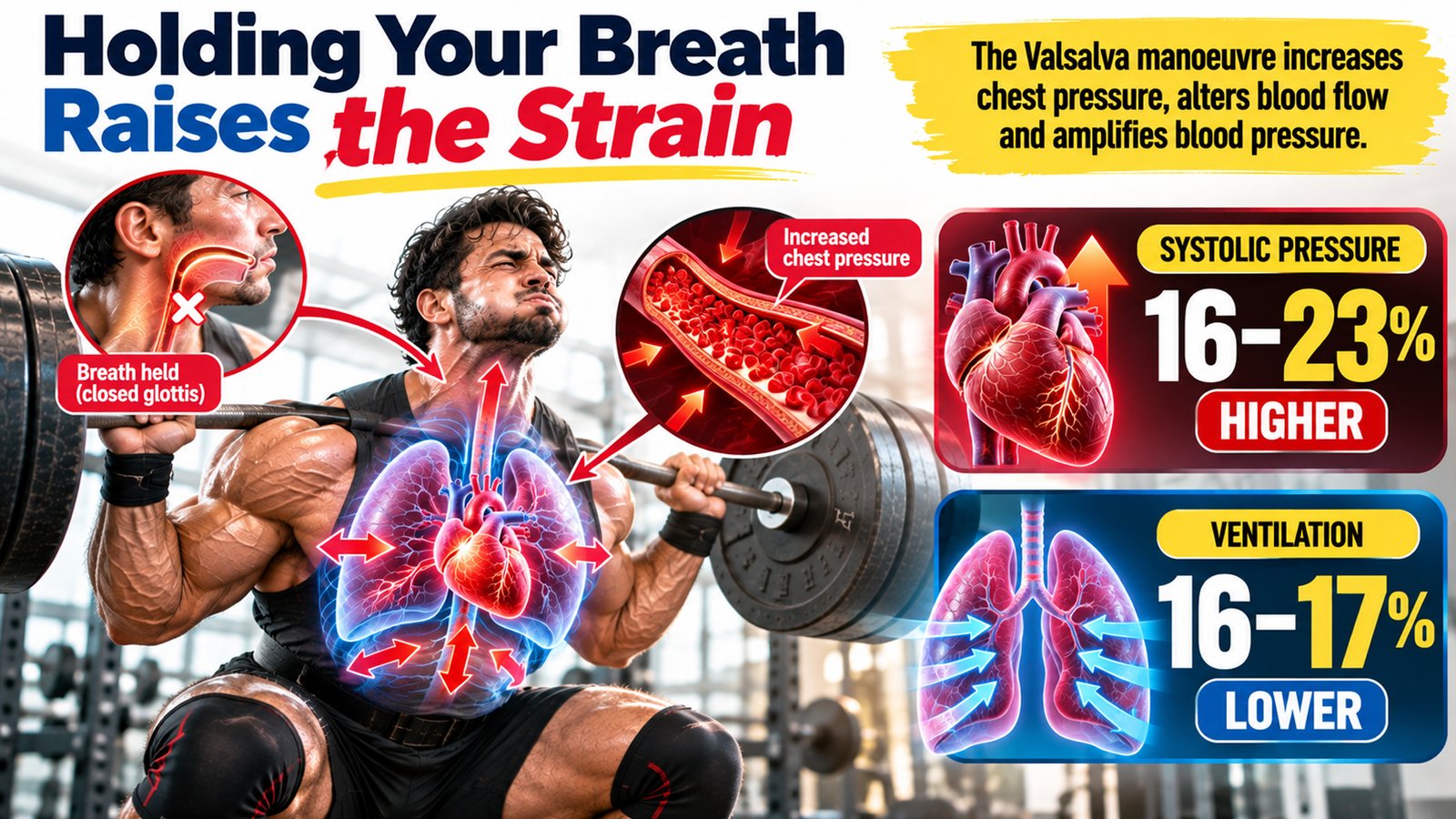
When a person braces hard, closes the glottis and tries to exhale without allowing air to escape, the manoeuvre is called the Valsalva manoeuvre. Pressure rises inside the chest and abdomen. Mechanically, that can make the torso more rigid; a systematic review of high-intensity lifting found particularly high intra-abdominal and intrathoracic pressures during exercises such as squats, deadlifts and leg presses.
Cardiovascularly, however, the Valsalva manoeuvre changes the rules. At the start of the strain, high chest pressure can transiently push arterial pressure upwards. As the strain continues, venous return – the flow of blood back to the heart – is impeded, so the amount pumped with each beat can fall. Reflexes then alter heart rate and blood-vessel tone to defend blood pressure. When the breath is released, venous return rapidly recovers and pressure can rebound. That sequence is one reason some people feel briefly light-headed after a hard rep.
Fresh evidence makes the effect easier to picture. In a 2026 randomised crossover study of 17 healthy young women performing squats, breath-holding produced systolic pressures roughly 16-23 per cent higher than controlled breathing, while minute ventilation during the effort was about 16-17 per cent lower. Ventilation then overshot during recovery. The study involved modest loads and a small, specific population, so its percentages should not be applied to every lifter, but the pattern is physiologically revealing.
Why the gasping often comes after the rep
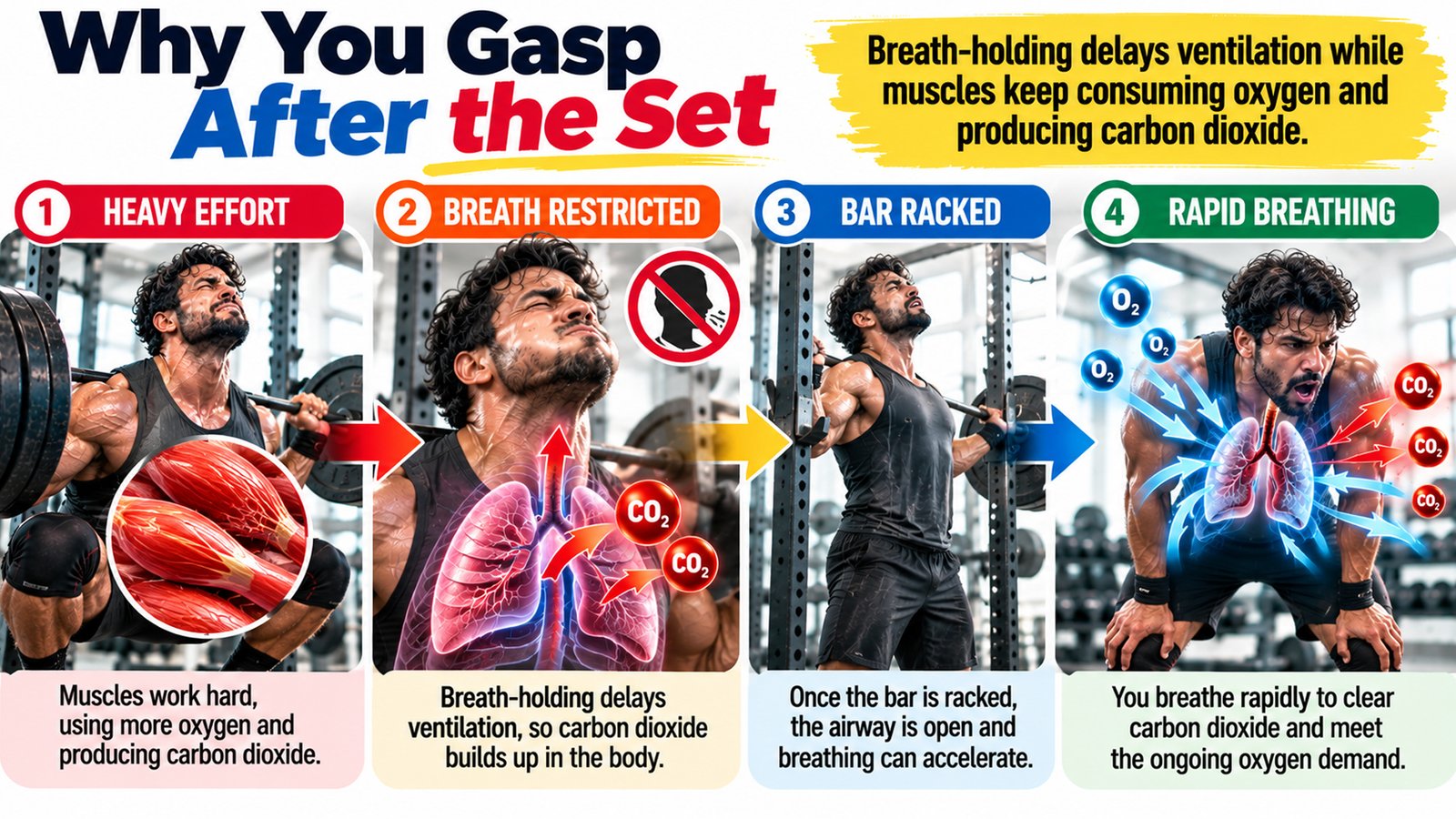
A heavy set can create the strange combination of high effort and temporarily restricted ventilation. The muscles are still consuming oxygen and producing carbon dioxide and acidic metabolites, while the brain has already increased the drive to breathe. If you are bracing or breath-holding, that drive cannot be expressed as normal ventilation until the repetition ends.
Once the bar is racked, the airway is open and breathing can accelerate. Carbon dioxide is blown off, oxygen demand remains elevated for a time, and the respiratory muscles themselves are working harder. Breathlessness is a perception generated by this increased neural respiratory drive and the effort of breathing; it is not a direct meter of blood oxygen. The physiology of breathlessness is therefore more complicated than simply being “out of air”.
What the heart is doing
Heart rate usually rises as the set becomes harder, helping to maintain cardiac output – the amount of blood pumped each minute. But during a forceful Valsalva manoeuvre, stroke volume, meaning the amount pumped with each beat, can change rapidly because high chest pressure alters filling of the heart. At the same time, contracting muscle increases the resistance to blood flow. The result is a cardiovascular load that can be intense even when the exercise lasts only seconds.
This is why the cardiovascular strain of resistance exercise cannot be judged from heart rate alone. A heavy squat may produce a lower heart rate than an all-out run while generating a much larger transient blood-pressure surge. The body is solving a different problem: moving blood through compressed muscle while maintaining circulation despite large swings in chest and abdominal pressure.
 A pressure spike now does not mean higher pressure forever
The acute surge during a lift should not be confused with the long-term effect of sensible training. The 2025 AHA/ACC hypertension guideline recommends structured exercise programmes that include resistance training for adults with or without hypertension. Across the evidence it reviewed, dynamic resistance training lowered resting blood pressure by about 3/2 mmHg on average, with larger reductions often seen in people who already had hypertension.
A separate 2025 meta-analysis of ambulatory blood pressure also found modest reductions after longer-term resistance training, particularly in people with chronic disease. In other words, blood pressure can spike during the act of lifting while regular training helps lower the pressure measured during the other 23-plus hours of the day. Acute physiology and chronic adaptation are not contradictions.
So how should you breathe?
For most people training for health, fitness or muscle rather than a maximal powerlifting attempt, the practical rule is simple: keep the breath moving. A common pattern is to inhale during the easier or lowering phase and exhale through the hardest part of the lift. The exact timing matters less than avoiding a prolonged, closed-glottis strain. In an invasive study of heavy leg pressing, slow exhalation markedly reduced the pressor response compared with a Valsalva manoeuvre.
That advice needs nuance. With very heavy loads, especially above roughly 80 per cent of maximal effort or when a set is pushed to failure, a brief Valsalva manoeuvre often occurs spontaneously and can help trunk stiffness. Competitive strength athletes may deliberately use it as a performance technique. That is different from recommending breath-holding to a novice, someone lifting for general health, or a person with cardiovascular risk.
The American Heart Association notes that people with controlled hypertension can generally perform low- to moderate-intensity resistance training with proper breathing, while its resistance-training safety guidance lists uncontrolled hypertension above 180/110 mmHg as a contraindication until it is assessed and controlled. For people with known aortic disease, expert ACC/AHA guidance specifically advises avoiding intense isometric exertion and exercises requiring the Valsalva manoeuvre because of the abrupt pressure load.
When breathlessness is not just “a hard set”
Normal exertional breathlessness should be proportional to the effort and settle as you recover. Stop the session and seek medical assessment if lifting produces new or excessive breathlessness, chest pain or pressure, fainting or near-fainting, sustained palpitations, or symptoms that are clearly out of proportion to the load. The AHA scientific statement specifically treats dizziness, excessive dyspnoea, chest pain or pressure and palpitations as adverse symptoms that warrant medical evaluation.
For a healthy lifter, though, becoming winded after a demanding set is usually an understandable consequence of the job the body has just performed. Heavy lifting turns the torso into a pressure vessel, briefly compresses circulation, accelerates metabolism and may postpone normal breathing until the effort is over. The lungs, heart and blood vessels are all responding to the same challenge from different angles.
The useful lesson is not to fear strength training. It is to respect its physiology. Build loads gradually, use controlled technique, breathe deliberately during ordinary training and reserve maximal straining strategies for situations in which they are genuinely needed and appropriate. The best strength programme is not merely one that moves the heaviest weight; it is one your entire cardiopulmonary system can support safely.
This article provides general health information and is not a substitute for individual medical assessment.
(The author is an interventional pulmonologist and respiratory medicine consultant in Bengaluru.)