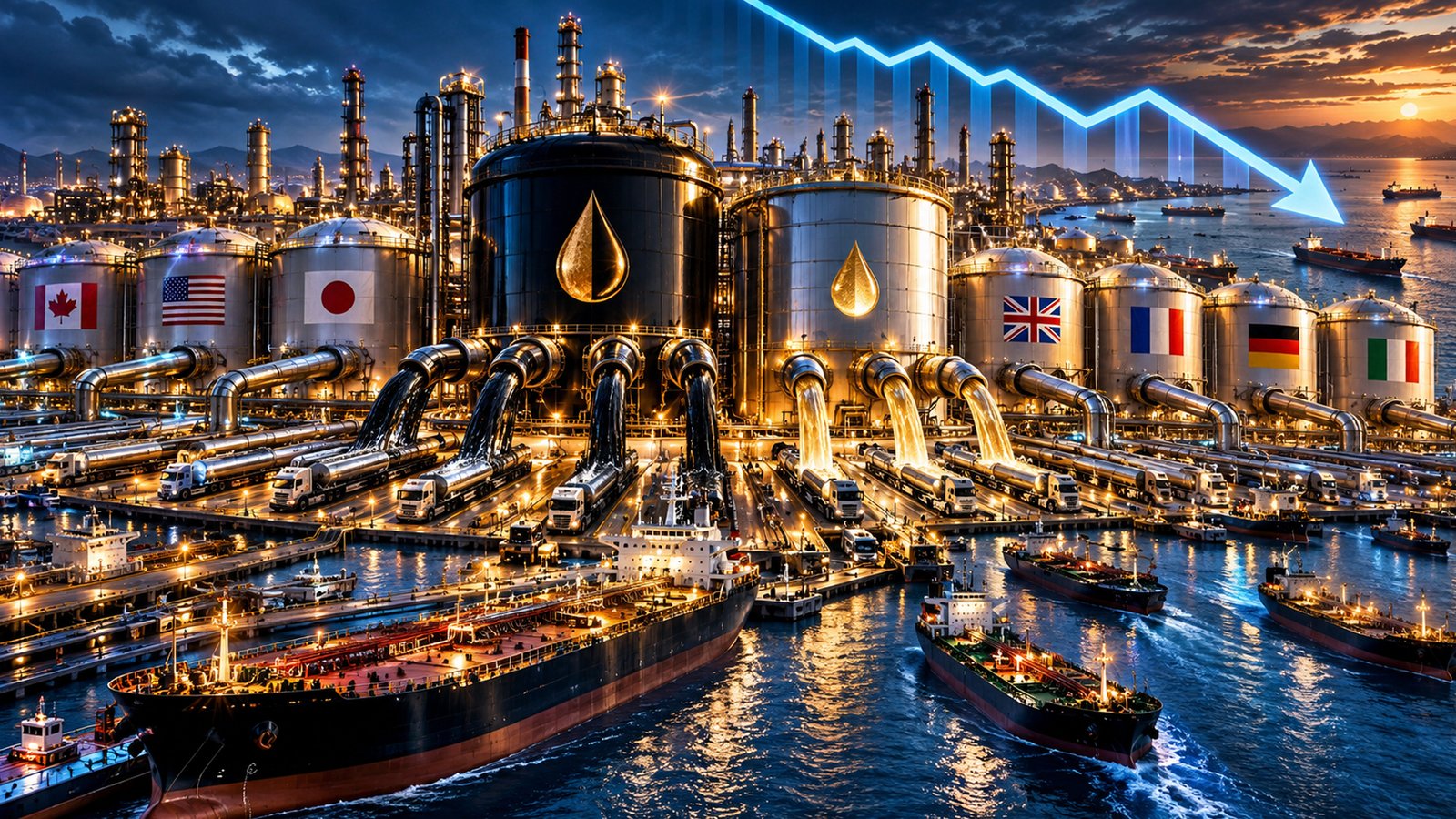
The Group of Seven (G7) nations have agreed to release up to 100 million barrels of oil and fuel from strategic reserves over the next four months, in a coordinated effort to ease pressure on global energy markets and contain soaring fuel prices.
The decision was announced after a virtual meeting of G7 leaders on October 2, as crude oil and diesel prices have climbed sharply amid disruptions to energy supplies and continuing geopolitical tensions. The release will be coordinated through the International Energy Agency (IEA), with a substantial portion of the diesel stocks expected to reach the market within the first 20 days.
The G7 includes the United States, Canada, France, Germany, Italy, Japan and the United Kingdom. French President Emmanuel Macron, whose country currently holds the G7 presidency, chaired the meeting.
The precise split between crude oil and refined products has not been disclosed. However, the G7 statement makes clear that diesel will receive priority during the initial phase. The group said the release would begin immediately and continue over four months, while the IEA will monitor its implementation and assess whether additional action is needed.
The move comes at a time when diesel markets have been under particular pressure. Diesel is crucial for trucks, farming equipment, shipping and several industrial activities, making higher prices a direct concern for businesses as well as consumers.
In the United States, average diesel prices stood at $6.37 a gallon on October 2, according to figures cited in recent reports. The price had reached a record $6.52 on September 22. European markets have also faced sharp increases, with UK diesel prices reaching around £2 a litre and European diesel prices remaining significantly above levels seen before the latest Middle East supply disruptions.
The G7 agreement also addresses another concern that had emerged during the recent fuel-price surge: restrictions on energy exports.
The leaders reaffirmed that G7 countries would refrain from imposing export restrictions on energy and energy products. They also called on other producers to avoid export bans that could further tighten global supplies and increase market volatility.
The issue had become particularly sensitive after US President Donald Trump pushed European countries to release diesel from their reserves. Trump had also raised the possibility of restricting US diesel exports as American fuel prices climbed.
European officials had opposed the prospect of an export ban, warning that restricting fuel flows could worsen shortages and put additional pressure on European markets. The G7 agreement therefore combines emergency stock releases with a commitment to keep energy trade flowing between member countries.
The energy supply squeeze has been linked to disruptions connected with the conflict involving Iran, as well as damage to refining infrastructure and restrictions affecting Russian and Chinese fuel exports. Concerns over shipping through the Strait of Hormuz have added another layer of uncertainty for oil traders and energy companies.
At the same time, there are signs that some oil flows are improving. Data cited by The National showed that around 16.5 million barrels per day left the Middle East in September, while shipments through the Strait of Hormuz and alternative routes have increased in recent days.
The latest G7 action builds on a much larger emergency oil-release commitment made earlier this year. IEA member countries agreed in March to coordinate the release of 400 million barrels from strategic reserves, described as the agency’s largest such release. The G7’s latest 100-million-barrel commitment takes into account quantities already released under that broader programme.
Beyond releasing stocks, the G7 has agreed to coordinate refinery maintenance schedules to prevent several facilities from shutting down at the same time. Members will also explore ways to temporarily increase refinery utilisation where possible, particularly to boost diesel production.
For businesses, the immediate focus will be on whether the additional supply can translate into lower wholesale fuel costs. Cheaper diesel could reduce operating expenses for transport companies, manufacturers, farmers and other fuel-intensive industries. It could also ease some of the pressure on inflation if lower energy costs feed through to logistics and consumer prices.
However, the effect will depend on how quickly the reserves reach markets and how global supply conditions evolve. Oil prices remain sensitive to geopolitical developments, shipping disruptions, refinery capacity and production decisions by major exporters.
Markets reacted to the announcement with lower oil prices. Brent crude traded around $100.80 a barrel after falling 1.48%, while West Texas Intermediate declined 2.66% to about $90.40, according to market data reported after the G7 decision.
The IEA is expected to provide a follow-up assessment within 20 days. That review will examine the impact of the reserve release and recommend further measures, including the replenishment of strategic stocks.
For the global economy, the G7’s latest move represents an attempt to put additional barrels into the market at a time when energy costs have become a growing concern for governments, companies and households. The key question now is how quickly the additional supply can reach consumers and whether it can bring sustained relief to fuel markets.