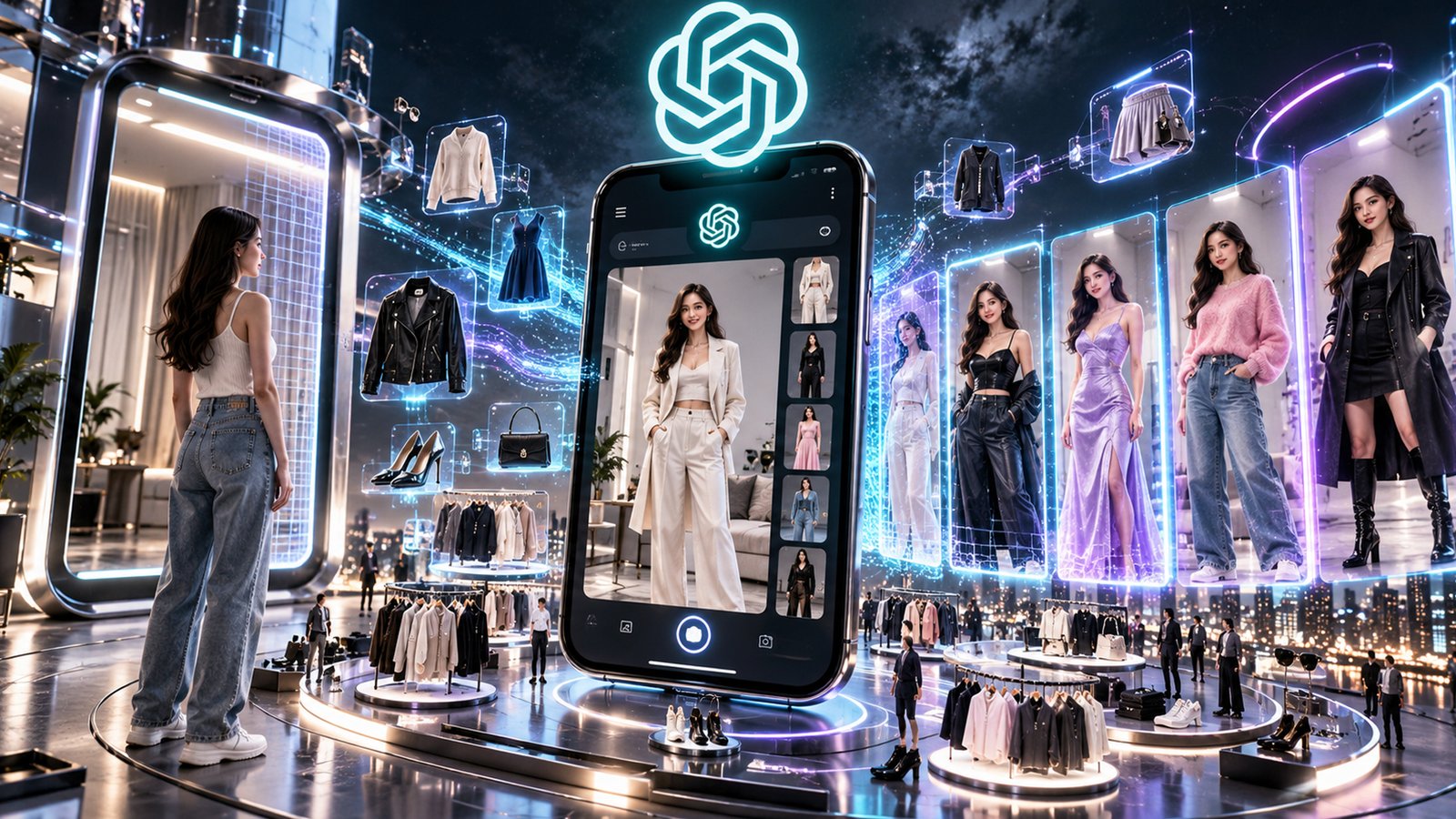
Online shopping is becoming more visual, and ChatGPT is taking another step in that direction. OpenAI has introduced a virtual try-on feature that lets users see how clothes and accessories could look on them before making a purchase, along with a new Favorites tool for saving products they may want to revisit.
The features began rolling out globally on October 1 and are available on both the web and mobile versions of ChatGPT. The update expands the platform’s existing shopping capabilities, allowing users to move from discovering products to visualising them on themselves without leaving the conversation.
The virtual try-on experience is designed to be simple. When ChatGPT displays an eligible clothing or accessory product, users can select a new “Try on” button and upload a selfie. ChatGPT then generates an image showing the person wearing the selected item.
Users are not limited to products that appear directly in ChatGPT’s shopping results. They can also upload a picture or screenshot of clothing or an accessory from another website and ask ChatGPT to show how the item might look on them. That makes the feature useful even when a shopper has already found an outfit elsewhere online.
The technology behind the feature comes from OpenAI’s ChatGPT Images 2.5 model. OpenAI says the model offers more natural lighting, richer textures, improved adherence to editing instructions and faster image generation. These improvements are important for virtual fashion previews, where shoppers expect the generated image to look reasonably natural rather than like a simple digital overlay.
The idea addresses one of the biggest uncertainties in online fashion shopping: knowing what an item might look like before ordering it. A product photograph on a retailer’s website can show the colour, design and overall appearance, but it cannot show how the same item might appear on every shopper.
ChatGPT’s virtual try-on attempts to bridge that gap by using the shopper’s own photograph. A person considering a jacket, dress, shirt, pair of trousers or accessory can generate a preview before deciding whether to buy it.
There is, however, an important limitation. The generated image is only a visual representation and does not confirm that an item will actually fit. OpenAI warns that try-on images may not reproduce the product or the user’s appearance exactly and should not be treated as a guarantee of size or fit.
Shoppers are therefore still advised to check the retailer’s measurements, product specifications and return policy before placing an order.
The new feature also introduces a practical question around personal photographs. Reference photos uploaded for virtual try-ons are saved so users can reuse them in future sessions without uploading the same image repeatedly.
OpenAI says users can manage these photographs through Settings → Personalization → Reference photos. A saved image can be changed or deleted, giving users control over the photographs used for future try-ons.
Alongside virtual try-on, OpenAI has introduced Favorites, designed to make product discovery less fleeting. Users can bookmark products they like and save them in their ChatGPT Library. They can also create folders to organise products, allowing them to return to shortlisted items later.
The combination of these tools changes the way a shopping conversation can unfold. A user could ask ChatGPT to find a particular style, compare products, preview selected clothing on their own photograph and then save the preferred options for later consideration.
That broader shopping experience builds on features OpenAI has introduced previously. ChatGPT can already help users discover products, compare options and research purchases through conversational searches. The new visual tools bring another layer to that process by allowing shoppers to interact with products through images rather than descriptions alone.
The development also places ChatGPT in an increasingly competitive AI shopping market. Google has already offered virtual try-on capabilities that allow shoppers to see themselves wearing different clothing items. Other technology and retail platforms have also been investing in visual search and AI-powered shopping experiences.
ChatGPT’s difference is that the virtual try-on sits inside a conversational assistant. A shopper does not necessarily have to move between separate search, image and shopping tools. They can ask follow-up questions, change preferences and continue exploring products within the same conversation.
The feature could be particularly useful for people who find online fashion shopping difficult because product images do not provide enough context. Seeing a generated version of an outfit on oneself may offer another reference point before making a purchase.
At the same time, the technology remains an aid rather than a replacement for traditional shopping information. Generated images can provide an impression of appearance, but they cannot reliably establish fabric feel, exact colour, garment construction or physical fit.
That distinction matters because an attractive AI-generated preview could create expectations that the real product does not completely match. Checking size charts, material details, customer reviews and return conditions remains important.
OpenAI’s latest move reflects a wider shift in how artificial intelligence is being integrated into everyday commerce. Shopping assistants are moving beyond simple product searches towards experiences that can help consumers discover, compare, visualise and organise potential purchases.
With virtual try-on and Favorites now available on ChatGPT’s web and mobile platforms, the company is positioning the AI assistant as more than a place to ask questions. It is increasingly becoming a space where shoppers can explore an item, picture themselves using it and decide whether it belongs on their shortlist.