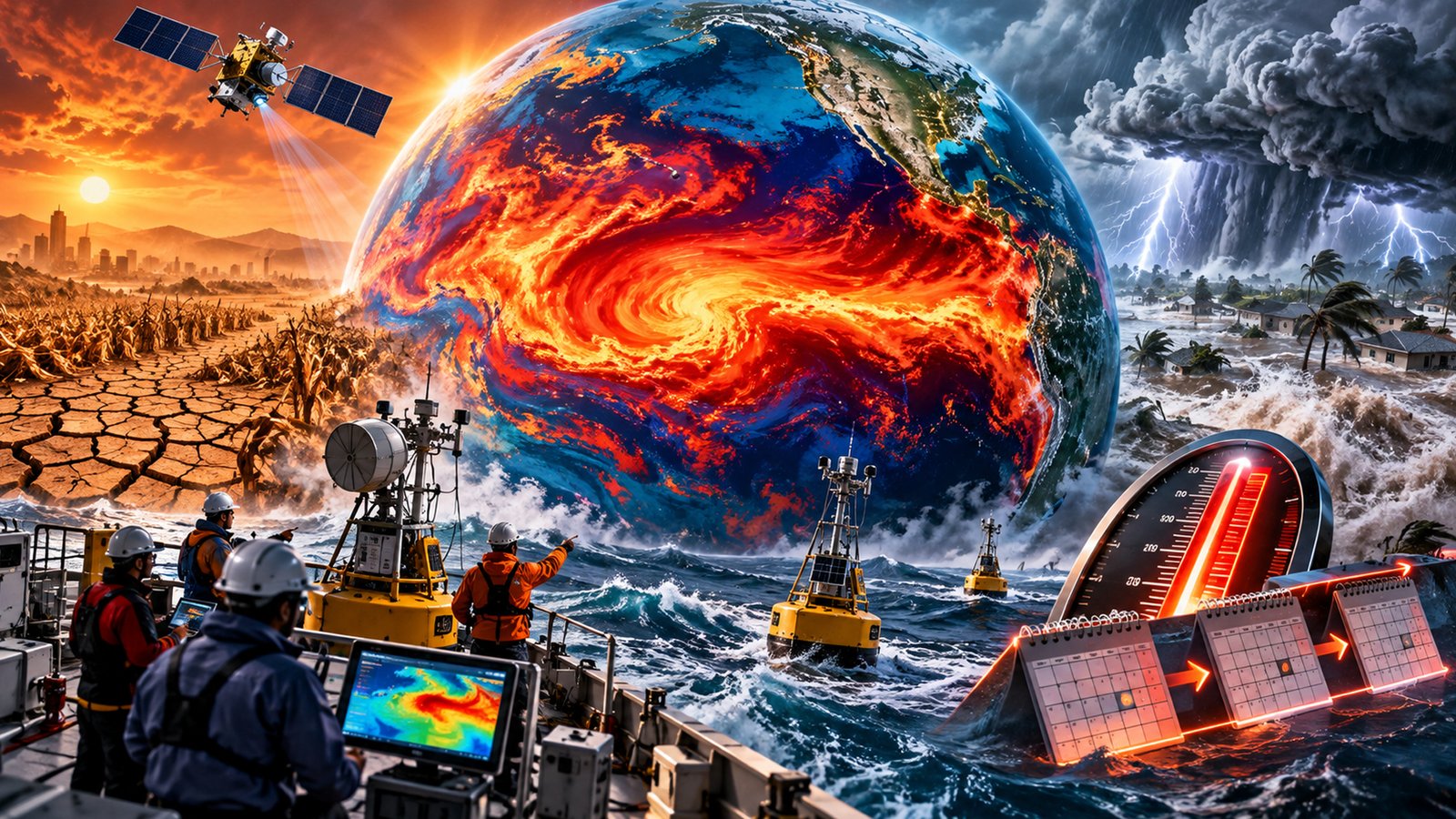
The world is preparing for a potentially powerful El Niño event that could intensify in the coming months and influence weather patterns across several regions until February 2027. The World Meteorological Organization (WMO), the United Nations’ weather agency, has warned that the developing climate phenomenon could rank among the strongest recorded since 1950.
The outlook has raised concerns about unusual temperatures, changing rainfall patterns, droughts and flooding, with possible consequences for agriculture, water supplies and energy demand. The WMO expects the event to strengthen towards the end of 2026, with conditions potentially peaking around December.
El Niño is a natural climate phenomenon characterised by warmer-than-average sea surface temperatures in the central and eastern tropical Pacific Ocean. This warming affects atmospheric circulation, changing wind patterns and the distribution of rainfall across the world. Its effects vary by region, meaning some countries may experience drier conditions while others face heavier rain.
Scientists are monitoring the event closely because its effects will unfold against the backdrop of human-caused climate change, which has already raised global temperatures and increased the risks associated with extreme heat.
Pacific Ocean warming signals stronger event
El Niño is part of the El Niño-Southern Oscillation (ENSO), a climate pattern that moves between El Niño, La Niña and neutral phases. During El Niño, changes in ocean temperatures and atmospheric circulation can influence weather far beyond the tropical Pacific.
The WMO’s latest outlook points to a strengthening event that could continue through February 2027. Forecasts indicate that the warming may become particularly pronounced during October-December, although its final intensity and regional effects will depend on how ocean and atmospheric conditions develop.
A strong El Niño can influence global average temperatures by releasing additional heat into the atmosphere. Its warming effect may be particularly visible in the year the event develops and the following year. However, it does not determine global temperatures on its own, as long-term greenhouse gas emissions and other climate patterns also play important roles.
The possibility of a strong event is drawing attention because of the scale of its potential effects on weather-sensitive sectors, including farming, transport, energy and public health.
Drought, floods and pressure on food supplies
El Niño can alter seasonal rainfall, increasing the likelihood of drought in some areas and heavy precipitation in others. Dry conditions can reduce soil moisture, damage crops and increase the need for irrigation. Prolonged heat and a shortage of rain may also raise wildfire risks and put pressure on drinking water supplies.
In regions that receive unusually heavy rainfall, flooding can damage homes, roads, farmland and other infrastructure. Disrupted transport and agricultural production can affect supply chains and contribute to price volatility in food markets.
Energy systems may also come under pressure. Hotter weather can increase electricity demand for cooling, while drought may reduce water availability for hydropower generation in some countries. These combined effects can create additional costs for households, businesses and governments.
El Niño is not responsible for every extreme weather event, and its impact differs according to geography and local conditions. Scientists assess the phenomenon alongside other climate drivers to determine where risks are most likely to emerge.
What El Niño could mean for India
India will be watching the evolving conditions because El Niño has historically been associated with an increased risk of below-normal southwest monsoon rainfall. The relationship is not automatic, however, and the outcome of each monsoon depends on several interacting factors.
The WMO’s outlook indicates a greater likelihood of below-normal rainfall over the Indian subcontinent during the October-December period. This is a seasonal climate signal and should not be interpreted as a definitive forecast for India’s 2027 southwest monsoon, which occurs later in the year.
Even so, the developing event could have implications for agriculture, water management and rural livelihoods if dry conditions persist in vulnerable areas. Rain-fed crops are particularly exposed to uneven rainfall, while lower reservoir levels can affect irrigation and water availability.
The Indian Ocean Dipole, regional sea temperatures and atmospheric circulation can influence how El Niño affects India. Forecasts from the India Meteorological Department will therefore be important in assessing the implications for the next monsoon season.
Higher temperatures could add to pressure on public health and electricity demand. Authorities may need to monitor water resources and prepare for periods of heat or rainfall disruption, depending on how regional forecasts evolve.
Climate change adds to the concern
The expected El Niño comes as the world continues to experience the effects of global warming. Greenhouse gas emissions have raised the baseline temperature, meaning that natural climate variations now operate within a warmer climate system.
An El Niño event can add to that warming, increasing the likelihood of unusually high temperatures in some regions. The combination makes climate monitoring and early preparation particularly important, although the precise impact will vary from country to country.
The WMO and national meteorological agencies will continue tracking Pacific sea surface temperatures, atmospheric circulation and changes in the ENSO pattern. As fresh observations become available, forecasts should provide a clearer picture of the event’s strength and likely regional effects.
Governments, farmers and businesses can use seasonal forecasts to plan crop choices, manage water supplies, prepare infrastructure and strengthen early-warning systems. Such measures cannot prevent El Niño, but they can reduce the damage caused by extreme weather.
With the event expected to intensify and potentially persist until February 2027, its development will remain a key focus for climate scientists and policymakers. The coming months will help determine how strong it becomes and which regions face the greatest risks.