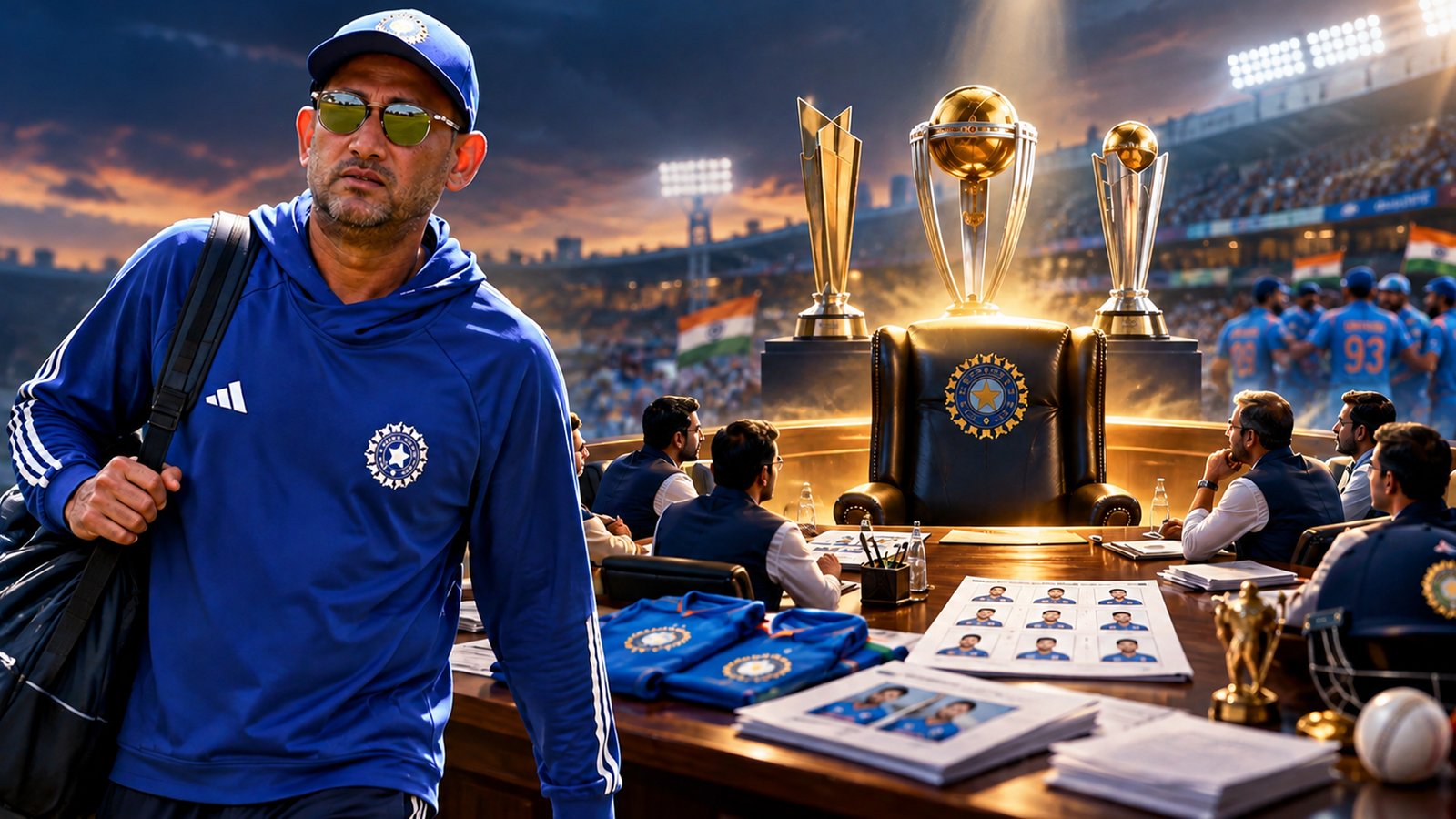
Ajit Agarkar’s three-year tenure as chairman of the Board of Control for Cricket in India’s (BCCI) senior men’s selection committee has come to an end, leaving behind a record of major tournament victories, difficult selection decisions and debates over the future of Indian cricket.
Agarkar’s contract expired on October 4, 2026, and he chose not to seek an extension. The BCCI subsequently invited applications for the vacant position, bringing an end to a tenure that began in July 2023 and coincided with one of India’s most successful periods in international cricket.
During his time as chief selector, India won three major International Cricket Council (ICC) trophies: the T20 World Cup in 2024, the Champions Trophy in 2025 and another T20 World Cup in 2026. The team also reached the final of the 2023 ODI World Cup, won two Asia Cup titles and secured consecutive gold medals in men’s cricket at the Asian Games.
The results give Agarkar a strong record on paper. However, his tenure was not without setbacks, with selection controversies, disappointing Test performances and questions over the treatment of senior players attracting considerable attention.
Agarkar took charge after India’s semifinal exit at the 2022 T20 World Cup exposed the need for a fresh approach to the shortest format. The selection committee subsequently backed a more aggressive style of cricket and began preparing a younger core for the future.
His first major success came at the 2023 Asia Cup, which India won after defeating Sri Lanka in the final. The team then enjoyed an impressive run at the ODI World Cup on home soil, winning 10 consecutive matches before losing to Australia in the final in Ahmedabad.
The disappointment of that defeat was followed by a remarkable turnaround in T20 cricket. India won the 2024 T20 World Cup, ending an 11-year wait for a major ICC men’s trophy. The team added the Champions Trophy in 2025 before winning the T20 World Cup again in 2026.
The achievements strengthened Agarkar’s legacy as chief selector. India also continued to perform well in bilateral cricket, while several young players received opportunities to establish themselves at the international level.
The BCCI praised Agarkar’s contribution, highlighting the three ICC titles, two Asia Cup victories, two Asian Games gold medals and the 2023 ODI World Cup final appearance.
India head coach Gautam Gambhir also thanked Agarkar, crediting his conviction and team-first approach for helping the side achieve success.
One of Agarkar’s most significant responsibilities was managing the transition between generations. Following India’s T20 World Cup disappointment in 2022, the selection committee sought to develop a younger team capable of playing more attacking cricket.
Players such as Yashasvi Jaiswal, Sarfaraz Khan and Dhruv Jurel received opportunities during his tenure, while the selectors continued to assess the balance between established performers and emerging talent.
The transition gathered pace after India’s 2024 T20 World Cup triumph, when Rohit Sharma, Virat Kohli and Ravindra Jadeja retired from the format. Their departures allowed the team to move further towards a younger T20 setup.
However, managing senior players’ futures proved more complicated in other formats. Discussions around Rohit and Kohli, particularly their prospects of playing in the 2027 ODI World Cup, became a recurring subject of debate.
Agarkar’s public comments and selection decisions often attracted intense scrutiny, reflecting the high expectations surrounding India’s leading cricketers.
Ravindra Jadeja’s selection history became one of the talking points during Agarkar’s tenure. The all-rounder was left out of India’s ODI squads for the 2024 Sri Lanka series and the 2025 Australia tour. Jadeja said he wanted to continue playing and acknowledged that selection decisions rested with the team management and selectors.
On October 7, following the announcement of the vacancy for the chief selector’s position, Jadeja posted a brief, cryptic comment on the BCCI’s social media post asking about the application process. The remark fuelled speculation about a possible disagreement, although there has been no confirmation of a personal rift between the two former India teammates.
Other decisions also drew criticism. The continued absence of experienced players such as Cheteshwar Pujara and Ajinkya Rahane from the national setup raised questions among supporters who believed domestic performances deserved greater consideration. Mohammed Shami’s fitness and availability also became subjects of debate as he continued playing domestic cricket.
Agarkar’s committee additionally faced scrutiny over the handling of players whose international careers appeared uncertain. Such decisions are part of a selector’s job, but the visibility of Indian cricket means that even routine squad changes can become national talking points.
While India’s white-ball record improved significantly, Test cricket brought major disappointments. India lost a home Test series 3-0 to New Zealand in 2024, a result that ended a long unbeaten home-series run.
The team also lost the 2024-25 Border-Gavaskar Trophy in Australia by a 3-1 margin, surrendering the series after several years of dominance. These defeats raised questions about squad balance, the transition in red-ball cricket and India’s ability to maintain consistency across formats.
The end of Agarkar’s tenure now leaves the BCCI with the task of appointing a successor who can preserve the team’s success while addressing those weaknesses. Former India spinner Pragyan Ojha has taken on the interim role as the board begins the selection process.
Agarkar leaves with a trophy cabinet that few chief selectors can match, but his tenure also illustrates the difficult balance between winning immediately, building for the future and making unpopular decisions. His final assessment will rest not only on the titles India won, but also on how effectively the next selection committee builds on that success.