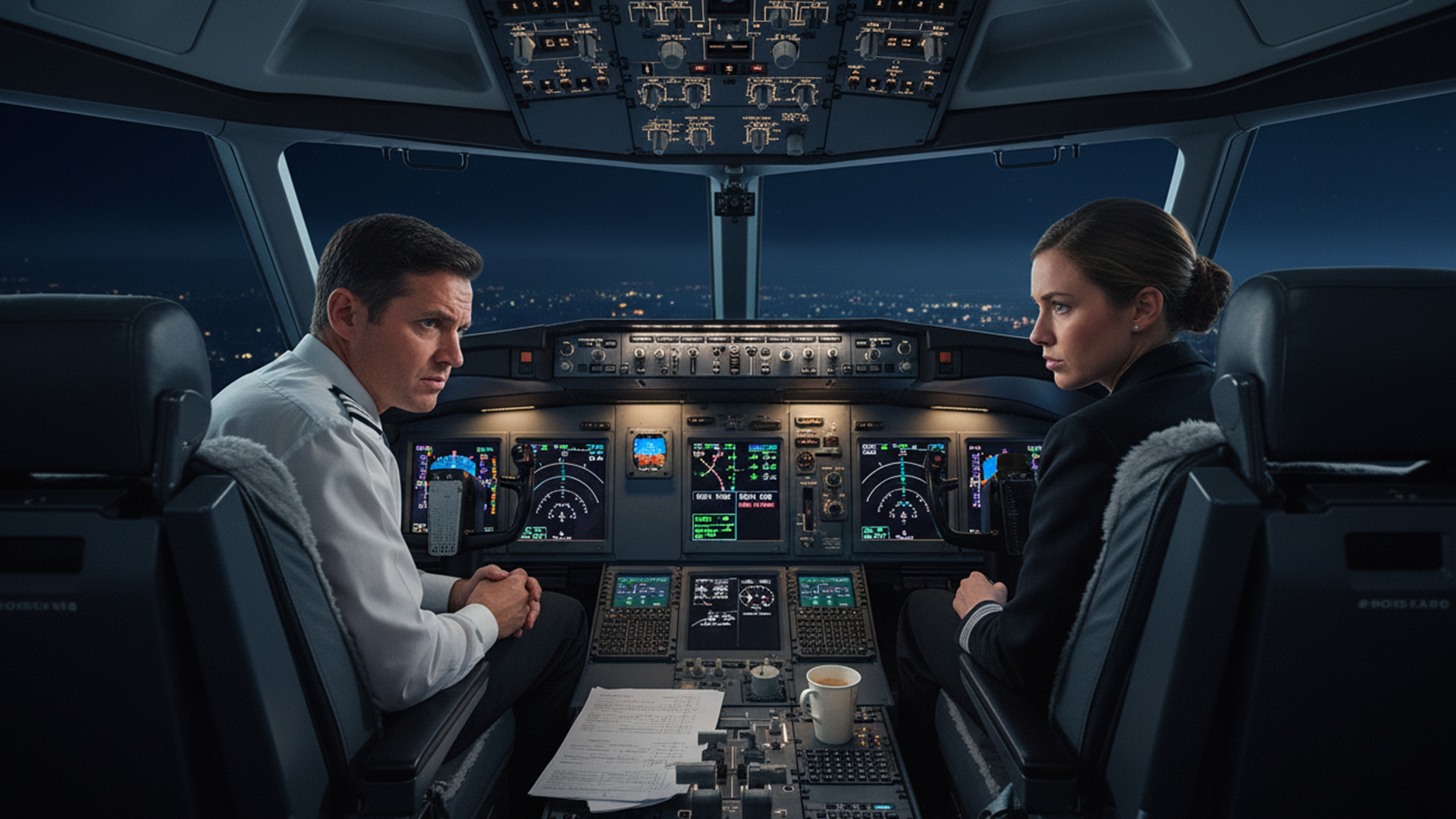
The Airline Pilots’ Association of India (ALPA India) has formally requested the Directorate General of Civil Aviation (DGCA) to reconsider its recent decision to extend flight duty limits for two-pilot Boeing 787 Dreamliner operations.
The revised regulations increase the Flight Duty Time Limitation (FDTL) from 10 to 10.5 hours and the Flight Duty Period (FDP) from 13 to 14 hours.
ALPA India argues that these changes elevate the risk of fatigue-related errors, especially during long-haul flights that cross multiple time zones and operate during the night.
In a letter dated October 26, ALPA India emphasized that the original FDTL and FDP limits were established based on extensive scientific research into human fatigue and its impact on flight safety.
The association contends that the DGCA’s decision appears to prioritize operational convenience over pilot welfare and passenger safety.
Additionally, ALPA India highlighted concerns regarding the Boeing 787’s cockpit design, specifically the limited reclining capability of the captain’s seat. This restriction, mandated by a U.S. Federal Aviation Administration (FAA) directive, significantly diminishes the effectiveness of in-flight rest for pilots.
The association argues that the combination of extended duty hours and compromised rest conditions creates a “scenario ripe for fatigue-induced errors.”
To mitigate these risks, ALPA India has called for the DGCA to revert to the previous flight duty time limits and to mandate three-pilot crews for long-haul or night flights exceeding eight hours.
The association also urges the DGCA to conduct a comprehensive fatigue risk assessment in consultation with flight crew representatives before approving any further deviations from established safety standards.
The DGCA has yet to respond to ALPA India’s request. The outcome of this appeal could have significant implications for aviation safety standards and labor relations within India’s airline industry.
Also Read: Delhi Airport’s T2 Reopens with Smoother Travel Experience