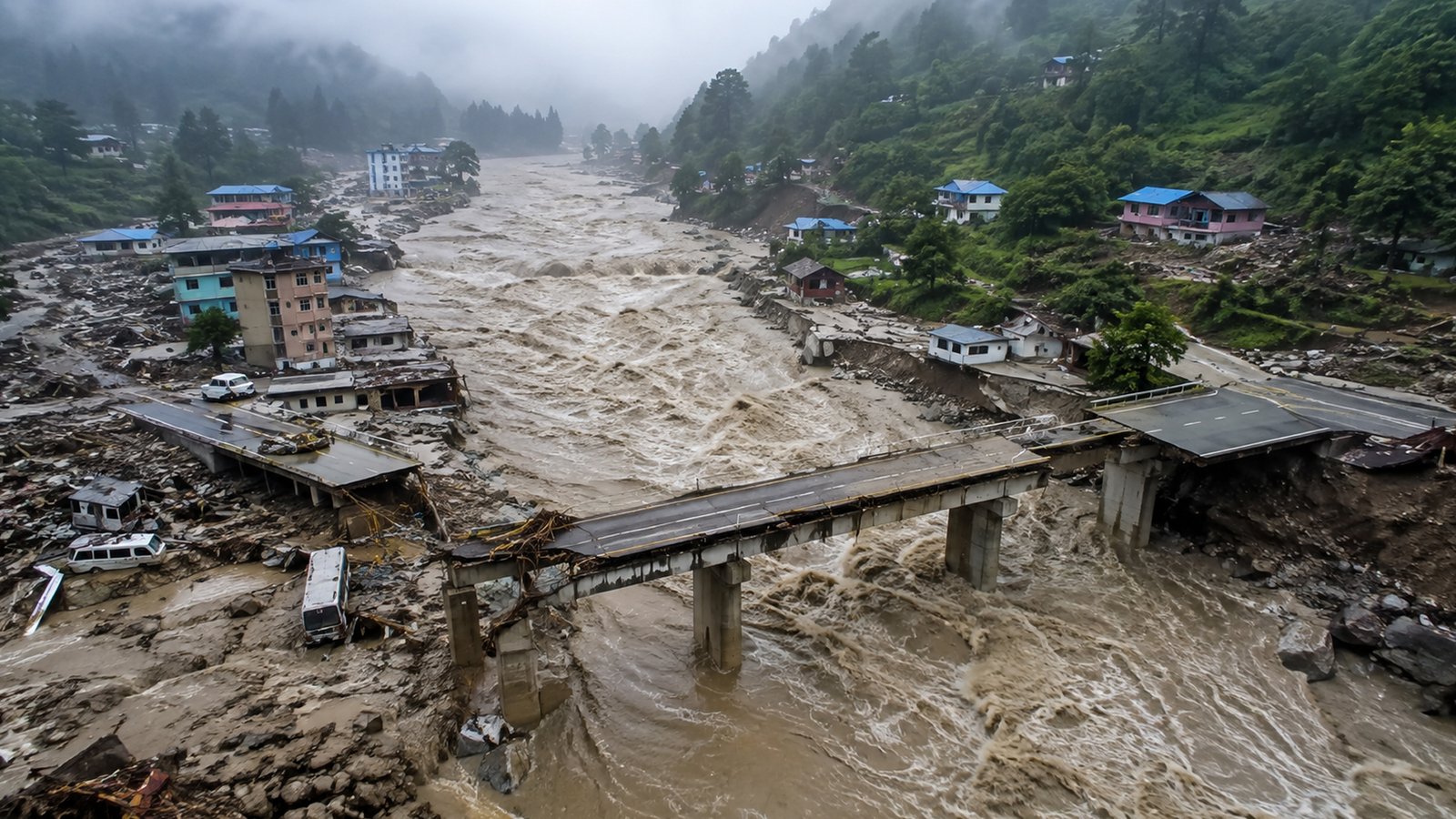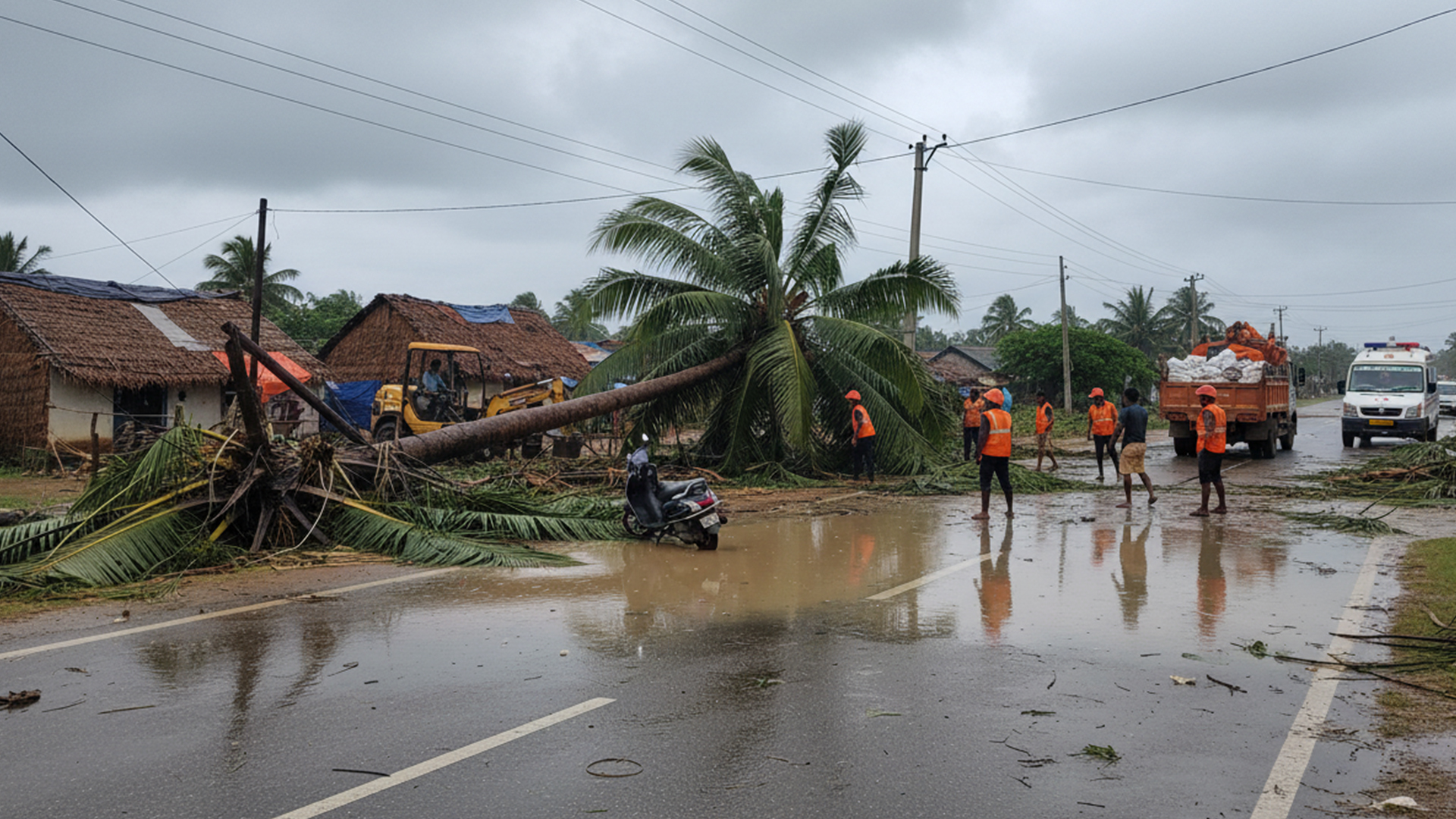
Cyclone Montha made landfall late Tuesday evening near Kakinada on the Andhra Pradesh coast, unleashing strong winds, torrential rain, and widespread damage across parts of Andhra Pradesh and southern Odisha before weakening into a cyclonic storm.
According to the India Meteorological Department (IMD), Montha struck between Machilipatnam and Kalingapatnam with wind speeds of 90–100 kmph, gusting up to 110 kmph. The storm uprooted trees, flooded roads, damaged crops, and disrupted road, rail, and air transport across the region.
One woman was killed in Andhra Pradesh’s Konaseema district when a palmyra tree collapsed on her house. Several others were injured in rain-related incidents. Authorities in Andhra Pradesh evacuated over 76,000 people from coastal and low-lying areas to cyclone shelters, while in Odisha, around 11,000 residents were moved to safety across eight districts including Ganjam, Gajapati, and Koraput.
Public infrastructure suffered extensive damage. Roads in Guntur, East Godavari, and Vizianagaram were blocked by fallen trees and electric poles, prompting restoration work through the night. Power and mobile networks were disrupted in several areas. Railways cancelled more than 120 trains in the South Central zone and diverted several others. Flight operations at Visakhapatnam and Vijayawada airports were also affected due to strong winds and poor visibility.
Initial reports indicate that over 38,000 hectares of farmland and 1.38 lakh hectares of horticultural crops were damaged by heavy rainfall and flooding. Fishermen have been advised not to venture into the sea due to rough conditions.
The Andhra Pradesh government deployed disaster response teams, set up over 200 medical camps, and distributed 865 tonnes of animal fodder in affected areas. Odisha activated nearly 2,000 cyclone and flood shelters to accommodate evacuees.
The IMD said Montha has now weakened into a deep depression and is moving northwestward, likely to bring heavy to very heavy rainfall over north coastal Andhra, south Odisha, and parts of Chhattisgarh. Red and orange alerts remain in place as officials assess damage and focus on restoring essential services.
Also Read: Delhi Conducts Cloud-Seeding Trial to Curb Pollution