Delhi and the surrounding National Capital Region (NCR) woke up to hazardous air quality and thick fog on Tuesday, as the Air Quality Index (AQI) surged into the severe range. Data from 40 monitoring stations showed that 27 locations recorded AQI above 400, with Anand Vihar and Mundka even exceeding 450, entering the ‘severe plus’ category. Such levels pose serious health risks, particularly for children, the elderly, and those with respiratory conditions.
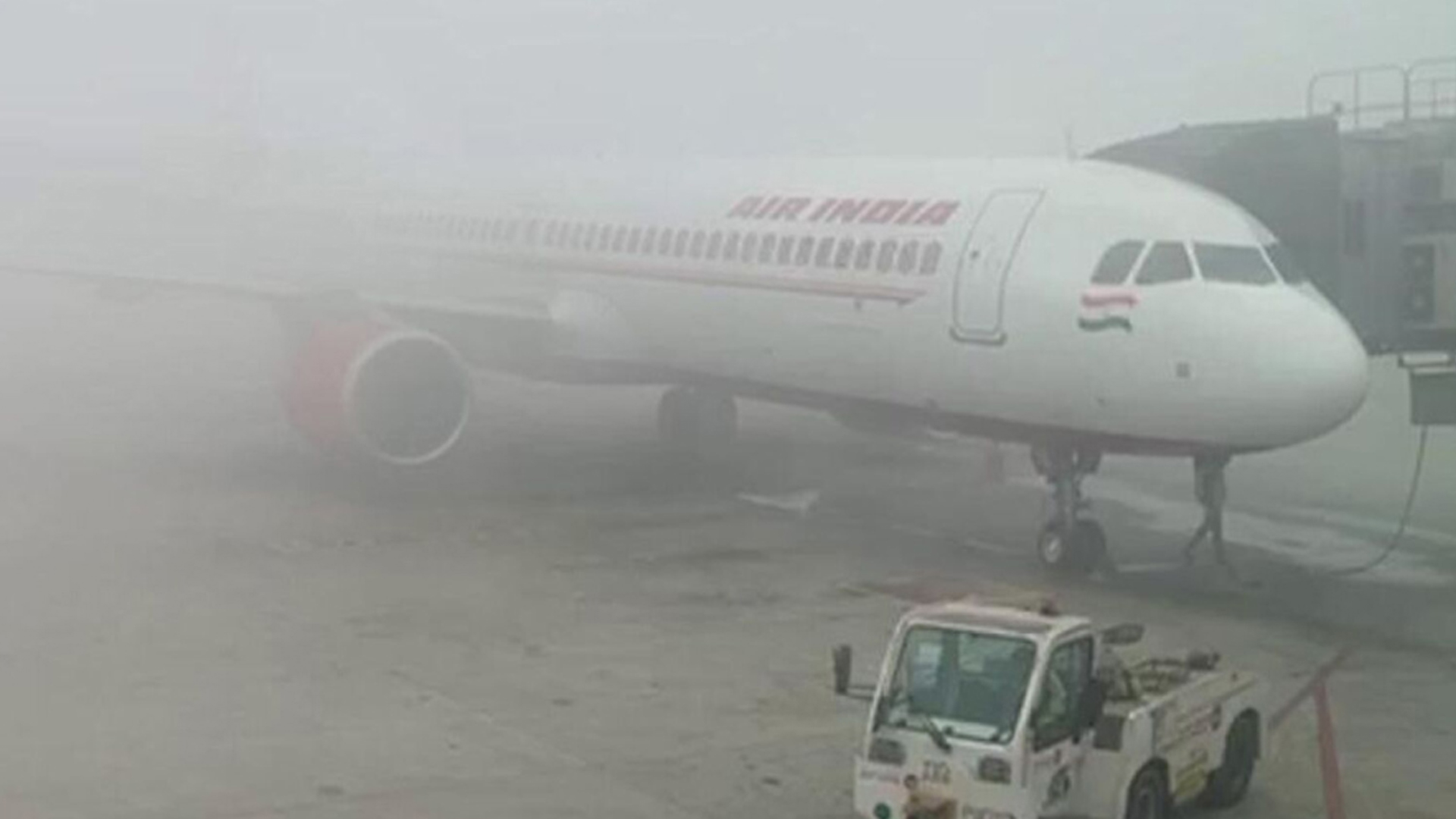
Fog further worsened conditions, reducing visibility drastically across Delhi, Ghaziabad, and Noida. On many roads, visibility dropped to near zero, causing slow traffic and travel delays. At Indira Gandhi International (IGI) Airport, visibility fell to about 100 metres, resulting in over 200 flight delays and several cancellations, affecting passenger movement across domestic and international routes.
The India Meteorological Department (IMD) issued an orange alert for dense fog, warning residents and commuters to exercise caution. Calm winds and low temperatures have trapped pollutants near the ground, prolonging the smog and maintaining unhealthy air quality levels.
Authorities’ emission control measures under the Graded Response Action Plan (GRAP‑IV) are facing scrutiny. While over 2 lakh vehicles were recently issued Pollution Under Control (PUC) certificates, more than 10,000 vehicles failed emission tests. Experts say that current testing methods may not fully capture harmful pollutants, leaving the true extent of air pollution underreported.
Neighboring cities, including Noida, Greater Noida, and Ghaziabad, also recorded very poor air quality, with AQI nearing or above 350. Forecasts suggest that without changes in weather patterns, hazardous conditions may persist in the coming days.
Health officials have advised limiting outdoor activity, especially for vulnerable groups, and urged the public to follow precautions, including using masks and air purifiers, to reduce exposure to pollution while the region deals with this peak winter smog.