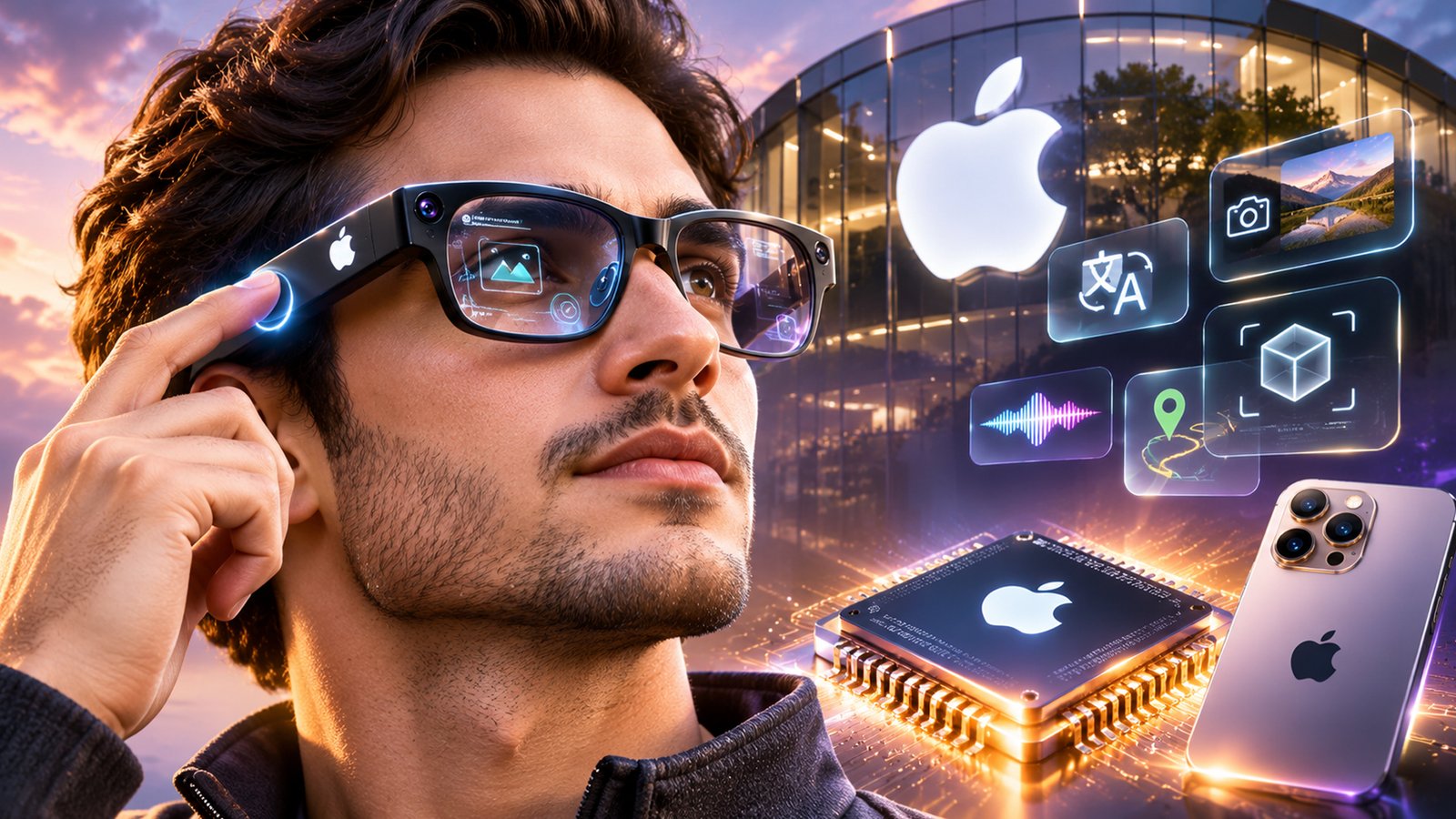
Apple is stepping up its efforts to develop its first smart glasses, with the company reportedly planning to introduce the wearable device in 2027. Designed to bring artificial intelligence into everyday activities, the glasses will combine cameras, microphones, speakers and an upgraded Siri assistant, allowing users to access digital services without constantly reaching for their iPhones.
According to reports by The Verge and Bloomberg, Apple is working towards unveiling the device at its Worldwide Developers Conference (WWDC) in June 2027. Commercial shipments are expected to begin before the end of the year, although the schedule could change depending on the progress of hardware and software development.
The proposed smart glasses represent Apple’s attempt to enter a market where Meta has already established a presence through its Ray-Ban partnership. Rather than introducing a device centred on immersive digital experiences, Apple is reportedly prioritising convenience, voice-based interactions and closer integration with its existing ecosystem.
Unlike the Apple Vision Pro, the company’s first smart glasses are not expected to feature built-in augmented reality displays. Instead, they will resemble conventional eyewear, with technology integrated into the frame. The approach is intended to make them lighter and more suitable for regular use.
Apple is reportedly testing several frame designs, materials and colours. The prototypes, internally identified as N50, are said to be slightly thinner than Meta’s second-generation Ray-Ban smart glasses. The company is also experimenting with a magnetic charging connector positioned near the end of the left temple arm. The small, flat connector is designed to make charging more convenient, although the final design has not been confirmed.
Siri is expected to be the central feature of the device. Apple wants the voice assistant to do more than respond to basic questions, enabling it to interact with applications installed on a connected iPhone. This could allow users to complete everyday tasks through spoken instructions without opening individual apps or navigating their phone screens.
For instance, a user could ask Siri to book a restaurant table, order food, arrange a cab or purchase cinema tickets. The assistant would understand the request and communicate with the relevant third-party application on the paired iPhone to complete the action.
This integration could be a major advantage for Apple, which already has an extensive network of developers and applications. Instead of asking developers to build entirely new software for the glasses, the company is reportedly exploring ways to make existing iPhone applications accessible through Siri. Developers would be able to connect specific app functions to the voice assistant, allowing users to perform tasks directly through the wearable device.
Apple is also expected to strengthen Siri’s ability to understand requests and carry out more complex actions through upcoming software updates. The company is reportedly preparing to introduce improved app controls, initially focusing on its own applications before expanding support to third-party services. These developments are expected to form an important part of its broader artificial intelligence strategy.
The glasses could also build on Apple’s Visual Intelligence technology. Their cameras may allow users to identify landmarks, recognise objects and gather information about places around them. Someone exploring an unfamiliar neighbourhood, for example, could use the device to identify nearby locations or receive directions without looking at a phone.
Other anticipated features include making calls, sending messages, listening to music, accessing calendar updates and receiving notifications. The glasses could also support real-time translation, helping users understand foreign-language signs and conversations. Integration with Apple’s smart home ecosystem may allow voice commands to control compatible household devices.
Audio is another important part of the proposed experience. Built-in speakers and microphones are expected to support music playback, phone calls and conversations with Siri. Apple is reportedly paying particular attention to sound quality, with early feedback on the prototypes suggesting that audio performance is one of their stronger features.
The glasses are likely to rely on a connected iPhone for much of their processing and application-related functions. Their limited size makes it difficult to accommodate the computing power and battery capacity of a standalone device. However, Wi-Fi connectivity could allow certain features, including audio playback, to work even when the paired iPhone is not immediately nearby.
Privacy will remain a critical issue as the device is expected to feature cameras capable of recording images and videos of the surrounding environment. Apple will need to establish clear indicators when the cameras are active and introduce safeguards to address concerns about recording people without their knowledge.
The proposed launch comes as technology companies increasingly look towards AI-powered wearables as the next stage of consumer technology. Meta’s Ray-Ban smart glasses have demonstrated growing interest in devices that combine familiar designs with artificial intelligence and hands-free functionality.
For Apple, the challenge will be to offer something beyond the features already available in competing products. Its strategy appears to centre on making Siri more capable and using the iPhone’s application ecosystem to deliver a connected experience. The company is also exploring other AI-enabled wearables, including camera-equipped AirPods, as it looks to expand artificial intelligence beyond smartphones and computers.
While the reported 2027 launch timeline indicates that Apple’s smart glasses are progressing, several details remain subject to change. The final design, pricing and complete feature set have not been announced. Much will depend on whether Apple can make Siri sufficiently reliable and capable of handling everyday requests. If successful, the device could mark an important expansion of Apple’s wearable technology portfolio and intensify competition in the emerging AI smart glasses market.