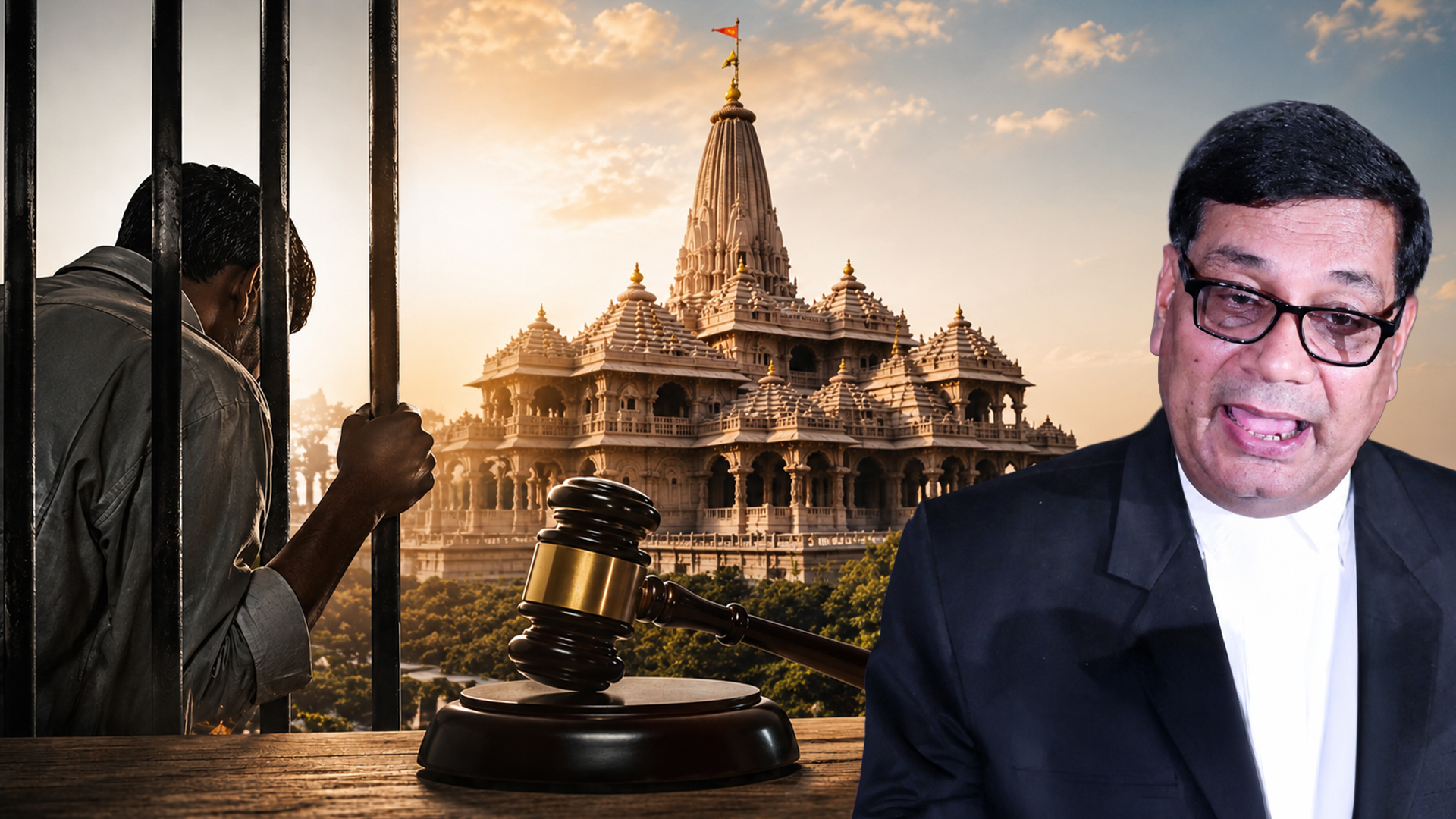
Lawyers in Ayodhya have refused to represent the two men accused of embezzling donations meant for the Ram Temple, sparking a debate over legal ethics and the right to legal representation.
The decision was taken by local bar associations after allegations surfaced that the accused had misappropriated funds donated by devotees. Calling the alleged offence a betrayal of public faith, the associations passed resolutions stating that none of their members would appear on behalf of the accused in court.
The move has drawn widespread attention because every person accused of a crime has the constitutional right to legal representation. Legal experts have pointed out that while individual lawyers are free to decline a case, a collective decision by a bar association asking members not to defend an accused raises concerns about professional ethics and access to justice.
Under the Bar Council of India rules, advocates are generally expected not to refuse briefs without sufficient reason, especially when such decisions affect a person’s right to a fair trial. Several legal experts have argued that resolutions preventing lawyers from representing specific accused persons could amount to professional misconduct.
The controversy stems from an ongoing investigation into the alleged diversion of funds collected for the Ram Temple. Police have booked the accused and are continuing their probe into the alleged financial irregularities. The exact amount involved and the full extent of the alleged fraud are still being investigated.
Meanwhile, the resolutions passed by the Ayodhya bar associations have generated mixed reactions. While many residents have supported the lawyers’ stand, saying the allegations have hurt the sentiments of millions of devotees, others believe that denying legal representation sets a worrying precedent for the justice system.
Senior legal practitioners have stressed that courts are responsible for deciding guilt or innocence and that every accused person must have an opportunity to defend themselves. If necessary, courts can appoint legal aid lawyers to ensure that the trial proceeds fairly and in accordance with the law.
Also Read: Karnataka starts special electoral revision