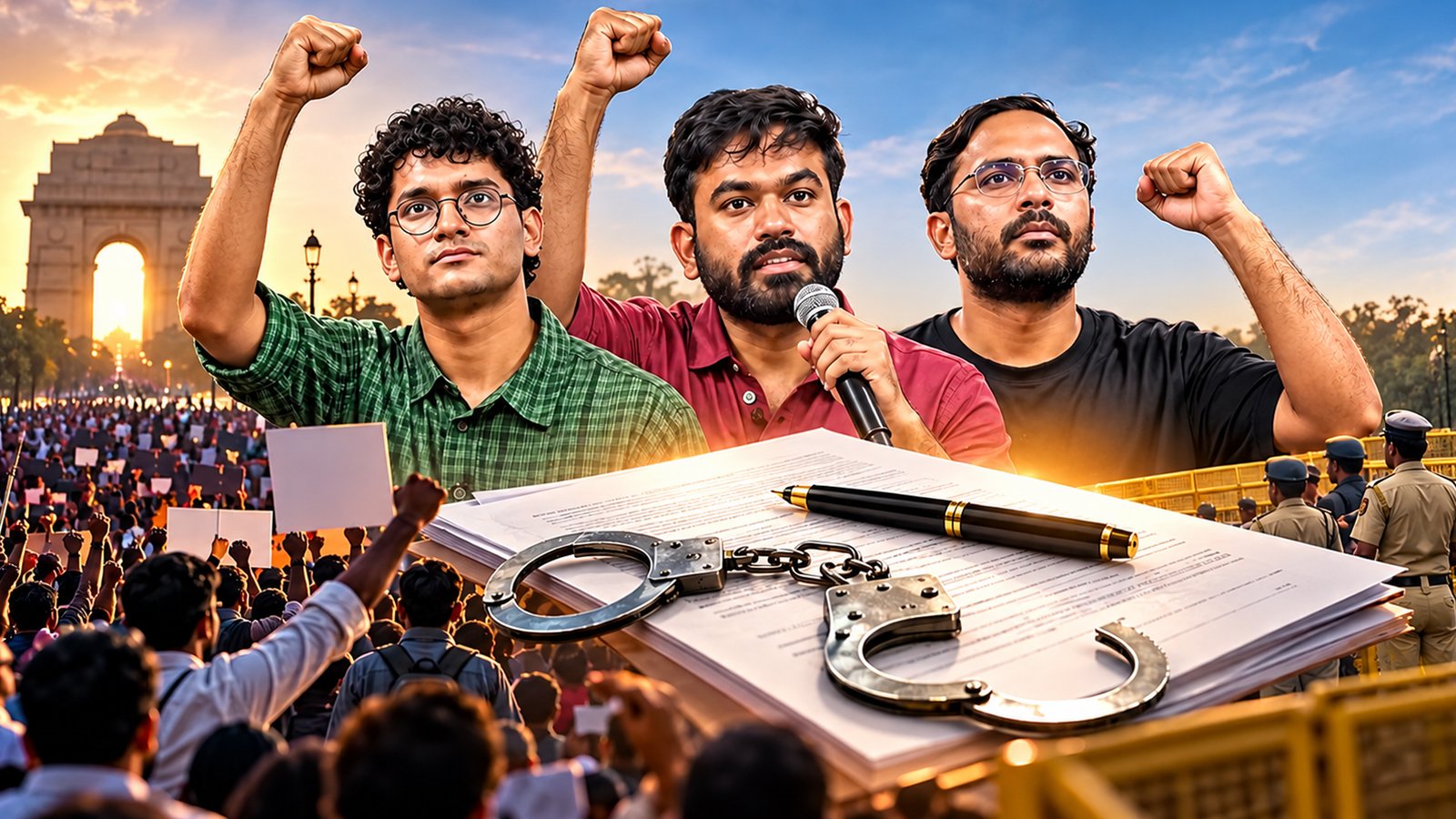
The Cockroach Janta Party (CJP) has vowed to continue protests across India until Chief Election Commissioner Gyanesh Kumar resigns, following the release of three of its leaders from preventive detention in Delhi. The leaders have challenged the restrictions associated with their release and said the campaign against alleged irregularities in electoral rolls would intensify.
CJP founder Abhijeet Dipke and co-leaders Saurav Das and Ashutosh Ranka were released on Sunday, October 11, after spending around 24 hours in custody. They had been detained by Delhi Police on Saturday after arriving in the national capital to lead a protest against Kumar.
An executive magistrate ordered their release after they furnished bonds of ₹50,000 each, with an undertaking to maintain peace and good behaviour for one year. However, Dipke disputed suggestions that he had agreed to stop protesting for the duration of the bond.
Speaking after his release, Dipke said he had not signed any undertaking promising that he would refrain from demonstrations. The CJP leaders maintained that their campaign would continue through peaceful protests and that the conditions imposed on their release should not be interpreted as a ban on dissent.
At a press conference at the Press Club of India, Das accused the authorities of suppressing young people’s voices through arrests and restrictions. Ranka said the leaders would approach Delhi Police to seek permission for another demonstration at Jantar Mantar.
The CJP has made its central demand clear that Kumar should resign, and the protests will continue until that happens.
The agitation centres on the Election Commission of India’s Special Intensive Revision (SIR) of electoral rolls. Opposition parties and activists have alleged that the exercise has led to large-scale deletions of voter names, potentially depriving eligible citizens of their voting rights.
Reports have put the number of names removed from electoral rolls during the revision exercise at more than 130 million. Critics have questioned whether adequate safeguards were followed to prevent eligible voters from being excluded. The Election Commission, however, has maintained that the exercise is intended to update electoral rolls by removing entries of deceased, relocated or otherwise untraceable voters. It has also said people whose names were wrongly deleted can apply for re-enrolment through the prescribed process.
The controversy has widened beyond the CJP, drawing student groups, activists and opposition parties into demonstrations demanding greater transparency and accountability from the poll panel.
Delhi sees fresh security restrictions
The release of the CJP leaders did not bring an immediate end to the protests. Delhi remained under heightened security on Monday, October 12, as opposition parties and demonstrators prepared further mobilisation against the Chief Election Commissioner.
Authorities imposed traffic restrictions and temporarily shut several Metro stations as protesters planned to march towards the Supreme Court. Police maintained a heavy presence in central Delhi to prevent gatherings in areas where demonstrations had not been authorised.
Around 200 protesters were reportedly detained on Sunday as the agitation continued. The earlier police action had also disrupted transport and communication services in parts of the capital, prompting criticism from activists and opposition leaders.
Following a special hearing by the Supreme Court on Sunday, some restrictions were eased, with Metro stations reopening and internet services being restored. The developments brought renewed attention to the handling of preventive detention, access to legal assistance and the right to peaceful assembly.
CJP leaders alleged that protesters had been detained without adequate notice and that some were denied access to lawyers or had their phones seized. They also raised concerns about the handling of their electronic devices. These allegations have not been independently established, and the investigation and legal proceedings will determine the facts.
Opposition joins the campaign
The CJP has called on political parties across ideological lines to unite over concerns about electoral roll revisions. Opposition leaders have also demanded accountability from the Election Commission, arguing that voter registration and deletion procedures must be transparent and accessible.
The agitation has increasingly become a wider political dispute over electoral integrity and institutional accountability. While protesters say the SIR exercise risks excluding eligible voters, the Election Commission maintains that updating voter lists is necessary to preserve their accuracy.
The government and ruling-party leaders have rejected calls for Kumar’s resignation. They have defended the electoral roll revision process and criticised demonstrations that they say disrupt public life. The contrasting positions have left little indication of an immediate resolution.
For the CJP, the release of its leaders has not changed the campaign’s direction. Ranka’s plan to seek permission for a fresh protest suggests the group intends to continue its agitation through further demonstrations, even as police maintain restrictions on gatherings in the capital.
The coming days are likely to test how authorities balance public order with the right to peaceful protest. The larger debate remains focused on the accuracy of electoral rolls, the process for restoring wrongly deleted names and the accountability of institutions responsible for conducting elections.