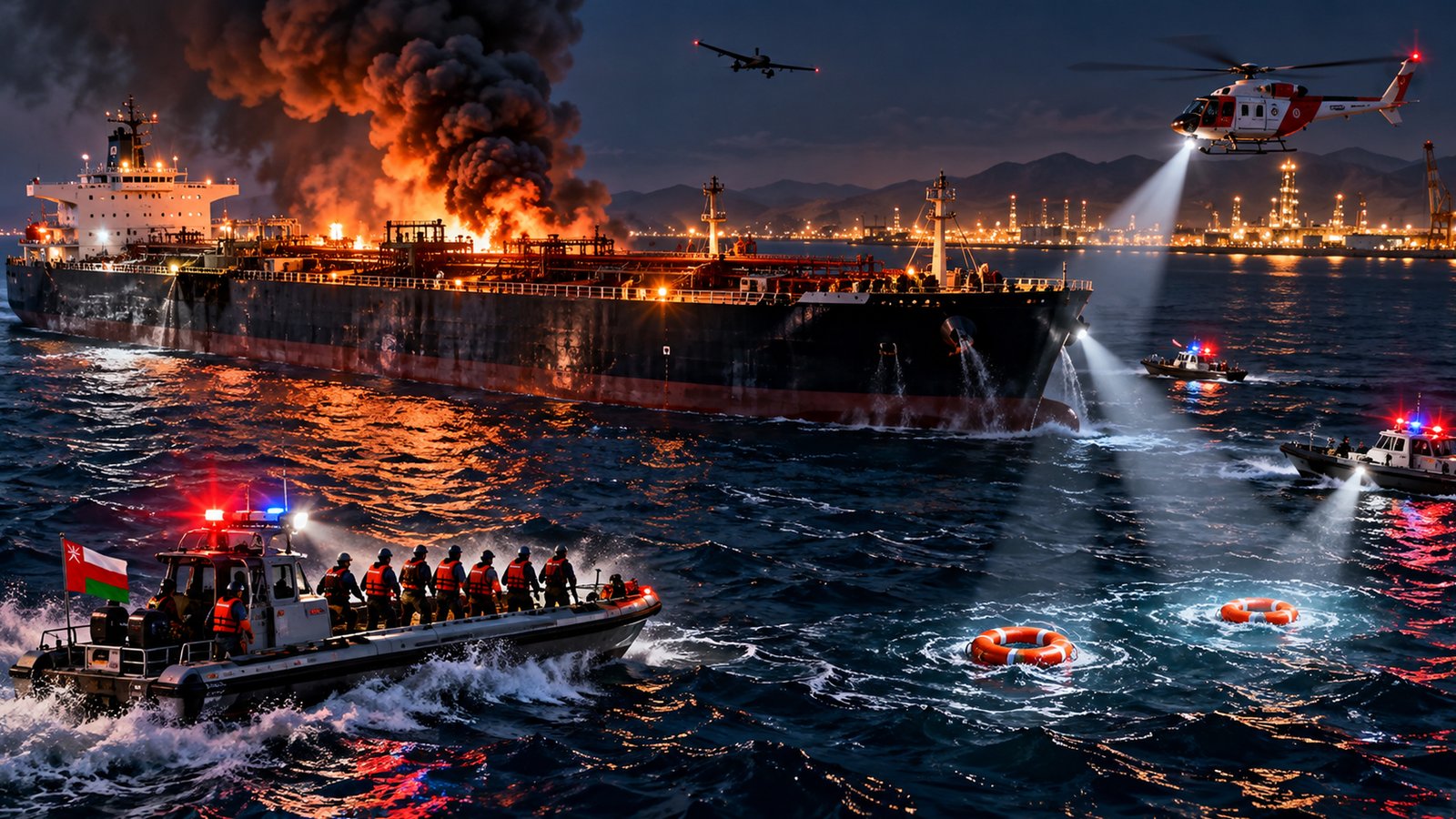
A drone attack on an oil tanker anchored off Oman has left two Indian seafarers missing, while nine others have been rescued safely. The incident has renewed concerns about the safety of commercial shipping as unmanned aerial systems and other weapons pose growing risks to vessels operating in conflict-affected waters.
The attack took place on October 11, 2026, at Sohar Anchorage in Oman, targeting the Nicaragua-flagged tanker MT Petro Dolphin. Union Minister for Ports, Shipping and Waterways Sarbananda Sonowal confirmed the incident, stating that nine Indian crew members had been rescued and two remained missing. Local Coast Guard authorities are conducting search-and-rescue operations.
Sonowal said Indian authorities were coordinating with the relevant agencies to support the rescue effort and locate the missing crew members. The Indian Embassy in Oman has also confirmed that it is closely monitoring the situation and maintaining contact with local authorities.
The immediate priority remains finding the missing seafarers. The incident also highlights the risks faced by thousands of Indian maritime workers who operate commercial vessels across international shipping routes.
The attack on MT Petro Dolphin comes amid heightened regional tensions and a series of incidents involving commercial vessels in waters around the Gulf and the Strait of Hormuz. The use of drones against shipping has added another layer of uncertainty for ship operators, crew members and maritime authorities.
Unmanned aerial vehicles, commonly known as drones, can be deployed remotely and may be used for surveillance or attacks. Their use in conflict zones has complicated efforts to protect commercial shipping, particularly in regions where vessels transport essential commodities and energy supplies.
Unlike conventional military platforms, drones can be relatively inexpensive and difficult to detect in certain circumstances. Their deployment against merchant vessels raises questions about the adequacy of existing maritime surveillance systems, early-warning mechanisms and emergency response arrangements.
However, authorities have not publicly identified those responsible for the attack on MT Petro Dolphin. The circumstances surrounding the incident, including the type of drone used and the extent of damage to the vessel, have not been fully established in the available reports.
The concerns extend beyond the attack at Sohar Anchorage. A second commercial vessel, MT Valthera, was also struck by an unidentified projectile in a separate incident in the Strait of Hormuz region. The strike reportedly caused a fire onboard, although all 11 Indian seafarers aboard the vessel were reported safe.
The two incidents have intensified attention on the vulnerability of commercial vessels operating in strategically important waterways. The Strait of Hormuz is a critical passage for global energy shipments, making the security of vessels navigating the region important to international trade and energy markets.
Attacks on commercial shipping can have consequences beyond the immediate damage to a vessel. They may disrupt cargo movements, increase insurance costs, force shipping companies to reassess routes and expose seafarers to serious danger.
The growing use of drones and unidentified projectiles against merchant vessels also places greater pressure on maritime operators to strengthen risk assessments, emergency preparedness and communication with coastal authorities.
India has expressed serious concern over the attacks on commercial vessels and called for the safety of seafarers and the security of international shipping routes to be protected. The government has emphasised the need for de-escalation and a diplomatic resolution to regional tensions.
The Indian Embassy in Muscat is coordinating with the Omani authorities over the missing crew members. The government is also monitoring developments involving Indian nationals working aboard commercial vessels in the region.
India is among the world’s major sources of maritime professionals, with Indian seafarers serving on merchant ships across international waters. Incidents involving Indian crew members therefore carry significant implications for maritime employment, crew welfare and the responsibilities of shipping companies.
The latest attack also underscores the importance of cooperation between governments, coast guards, shipping companies and international maritime organisations. Timely information sharing and coordinated search-and-rescue operations can be crucial when vessels come under attack or crew members go missing.
The increasing threat to merchant vessels has placed renewed focus on technologies that can improve maritime security. Vessel-monitoring systems, satellite communications, radar surveillance and automated threat-detection tools can help operators maintain awareness of surrounding conditions and respond more effectively to emergencies.
Drones themselves are increasingly used for maritime surveillance, inspection and search-and-rescue support. However, their use as weapons presents a contrasting challenge, highlighting how the same broad technology can serve civilian purposes or threaten maritime safety, depending on its application.
Technology alone cannot eliminate these risks. Effective protection also depends on reliable intelligence, trained personnel, clear emergency protocols and cooperation among countries sharing responsibility for international waters.
As the search for the two missing Indian seafarers continues, the incident serves as a reminder that regional security developments can quickly become humanitarian emergencies. Ensuring the safety of crew members and maintaining secure commercial shipping routes will remain essential as maritime operators navigate an increasingly uncertain security environment.