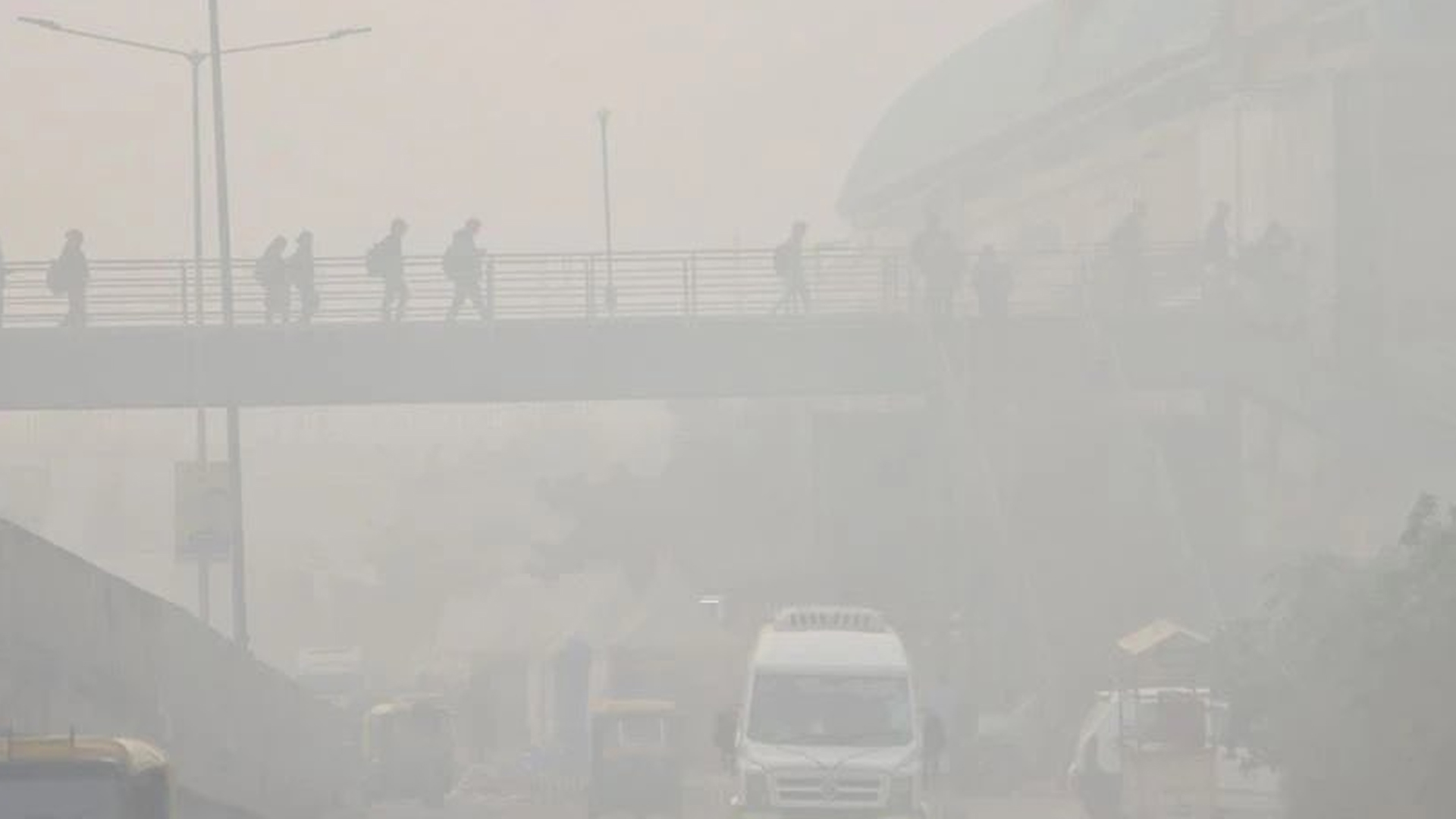
Delhi was shrouded in a thick blanket of smog on Monday, with air quality plunging into the “very poor” to “severe” category across much of the city. Data from the Central Pollution Control Board (CPCB) placed the overall Air Quality Index (AQI) at 316, while private monitoring platforms recorded marginally lower but still dangerous readings.
Levels of fine particulate matter (PM2.5) climbed to 168 µg/m³—over 11 times the World Health Organization’s recommended limit of 15 µg/m³. Experts warned that breathing Delhi’s air was equivalent to smoking nearly eight cigarettes a day, highlighting grave health risks, especially for children, the elderly, and those with respiratory or cardiac conditions.
Neighbouring areas in the National Capital Region fared no better. Ghaziabad recorded an AQI of 360, Greater Noida 306, and Gurugram 201, while local hotspots such as Shahdara, Mustafabad, and Holambi Khurd touched “hazardous” levels above 400.
Meteorological officials attributed the sharp rise in pollution to stagnant wind conditions, vehicular and industrial emissions, and smoke from stubble burning in Punjab and Haryana. Cooler temperatures and calm winds have trapped pollutants close to the surface, worsening visibility and breathing conditions.
According to the Indian Institute of Tropical Meteorology’s Air Quality Early Warning System, pollution levels are expected to remain elevated for several days due to slow wind speed and lack of rain. Authorities have advised residents to stay indoors during peak hours, use N95 masks when stepping out, and limit outdoor exercise.
The city has also seen a 7% increase in pollution compared with last year, reflecting a persistent failure to contain its annual winter smog crisis. Meanwhile, the Delhi government has reactivated the Graded Response Action Plan (GRAP), restricting construction and urging vehicle curbs to mitigate further deterioration.